Red and White Christmas Lights for Elegant Holiday Decor
Red and White Christmas Lights, a classic combination, evoke a powerful sense of nostalgic charm and crisp, festive elegance, instantly transforming any space into a holiday wonderland. This iconic pairing leverages the bold cheer of crimson and the pure brightness of snow, creating displays that are both sophisticated and deeply traditional. We’ll explore how to master this aesthetic, ensuring your display captures the timeless spirit of the season.
Far from being a simple, repetitive theme, this color combination offers immense versatility, allowing for everything from subtle indoor accents to dazzling commercial displays. Whether you prefer the cozy glow of warm white or the sharp contrast of cool white LEDs, learning the techniques to balance the two hues is key. Get ready to dive into the ultimate guide to planning and installing the perfect red and white holiday lighting scheme.
The Enduring Popularity of Red and White Christmas Lights
The longevity of Red and White Christmas Lights stems from their association with universally recognized holiday motifs. Think of candy canes, Santa’s iconic suit, and the comforting image of a warm fire against a snowy backdrop. This inherent symbolism makes the color scheme an emotional shortcut to festive cheer, appealing across generations and decorative styles.
Furthermore, this duo provides excellent visual contrast, which is essential for impactful outdoor lighting. Unlike complex multi-color schemes that can appear busy, the clean separation of red and white allows each color to pop, creating a vibrant yet tidy appearance that photographs beautifully and stands out from a distance.
Classic Candy Cane Lighting Schemes
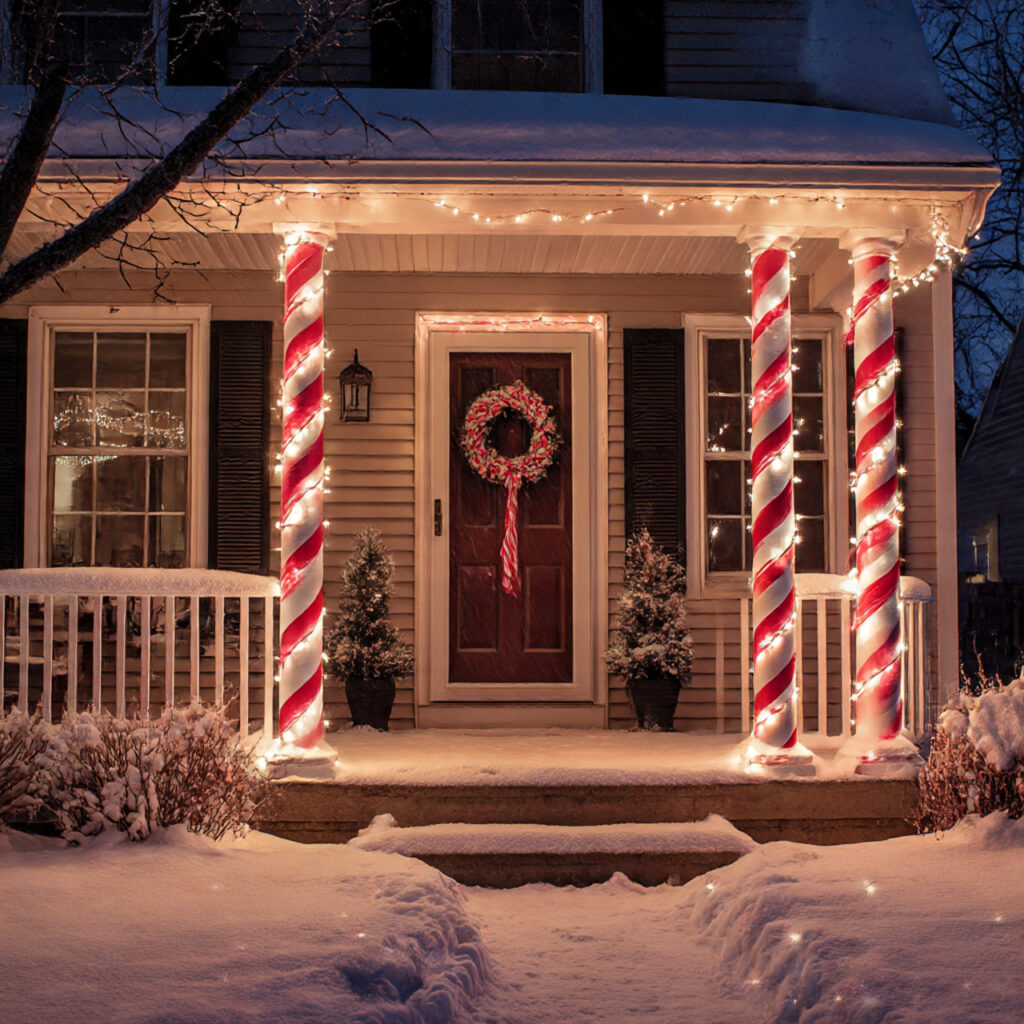
This technique involves alternating red and white Christmas light strings to mimic the spiraling stripes of a candy cane, particularly effective when wrapping columns, porch railings, or large tree trunks. For maximum authenticity, ensure the wraps are tight and evenly spaced, giving the illusion of a continuous spiral from top to bottom. The visual impact is immediate and playful, strongly signaling a traditional, family-friendly holiday theme.
To execute this precisely, start both the red and white strings at the bottom and wrap them simultaneously, maintaining consistent tension and spacing between the colors. This prevents one color from dominating the other and ensures the iconic striped pattern is clearly visible even from a distance. You can enhance the effect by adding actual red ribbon or bows at the base of the wrapped structure.
Professional Tips for Red and White Roofline Lighting
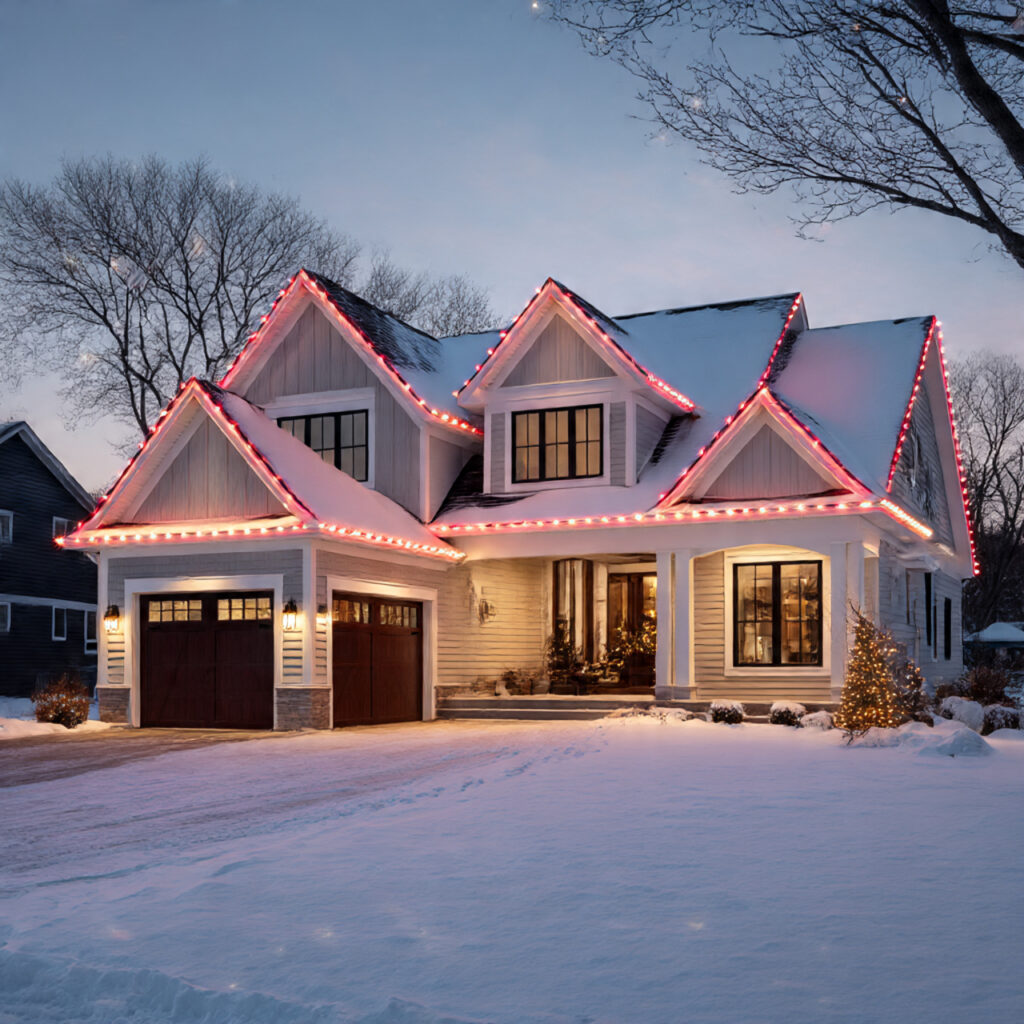
For a polished roofline, use commercial-grade clips and ensure that the bulbs in your Red and White Christmas Lights setup are spaced evenly—typically 12 or 15 inches apart—along the gutter or shingle line. Consistent spacing is a hallmark of professional installation, creating a rhythmic and organized look that appears clean and aesthetically pleasing both up close and from a distance.
To enhance architectural definition, try a layered approach where the red lights from your Red and White Christmas Lights highlight the roof peaks and gables, while the white lights trace the straight horizontal lines of the eaves and gutters. This method draws attention to the home’s highest points and creates a clear, intentional separation of color that looks expert and beautifully structured.
Pairing Red and White with Natural Greenery
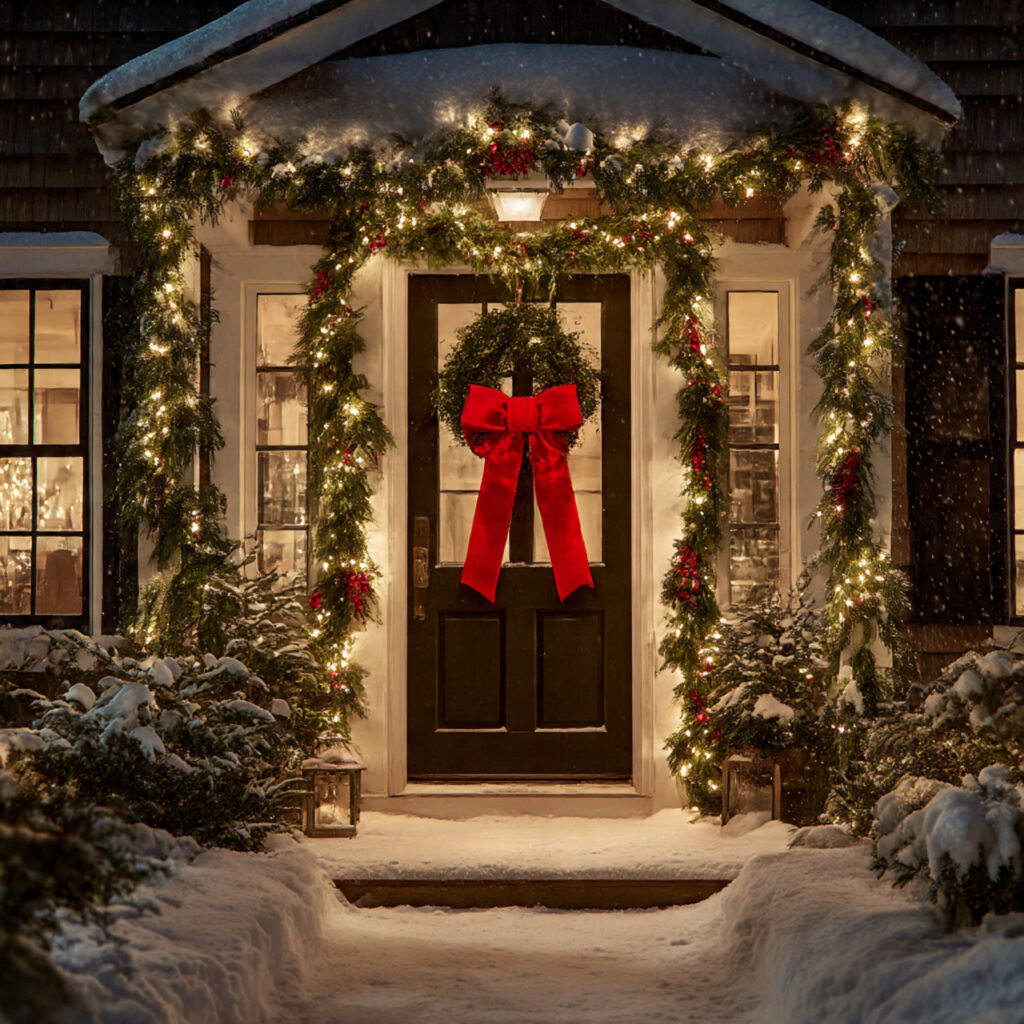
Utilize the deep green of pine, spruce, or cedar wreaths and garlands as the perfect backdrop for your Red and White Christmas Lights. The dark green acts as an effective neutralizing third color that naturally makes the crimson appear richer and the white look cleaner, instantly elevating the traditional aesthetic while adding depth to your holiday décor.
When integrating the lights, aim for a balanced distribution across the foliage. Red bulbs from your Red and White Christmas Lights display can highlight large clusters of pinecones or berries, while the white bulbs should be woven deeper into the branches to create a warm internal glow. This balance ensures the lights enhance, rather than overwhelm, the natural texture and beauty of the greenery.
Creating a Snowy White and Crimson Display
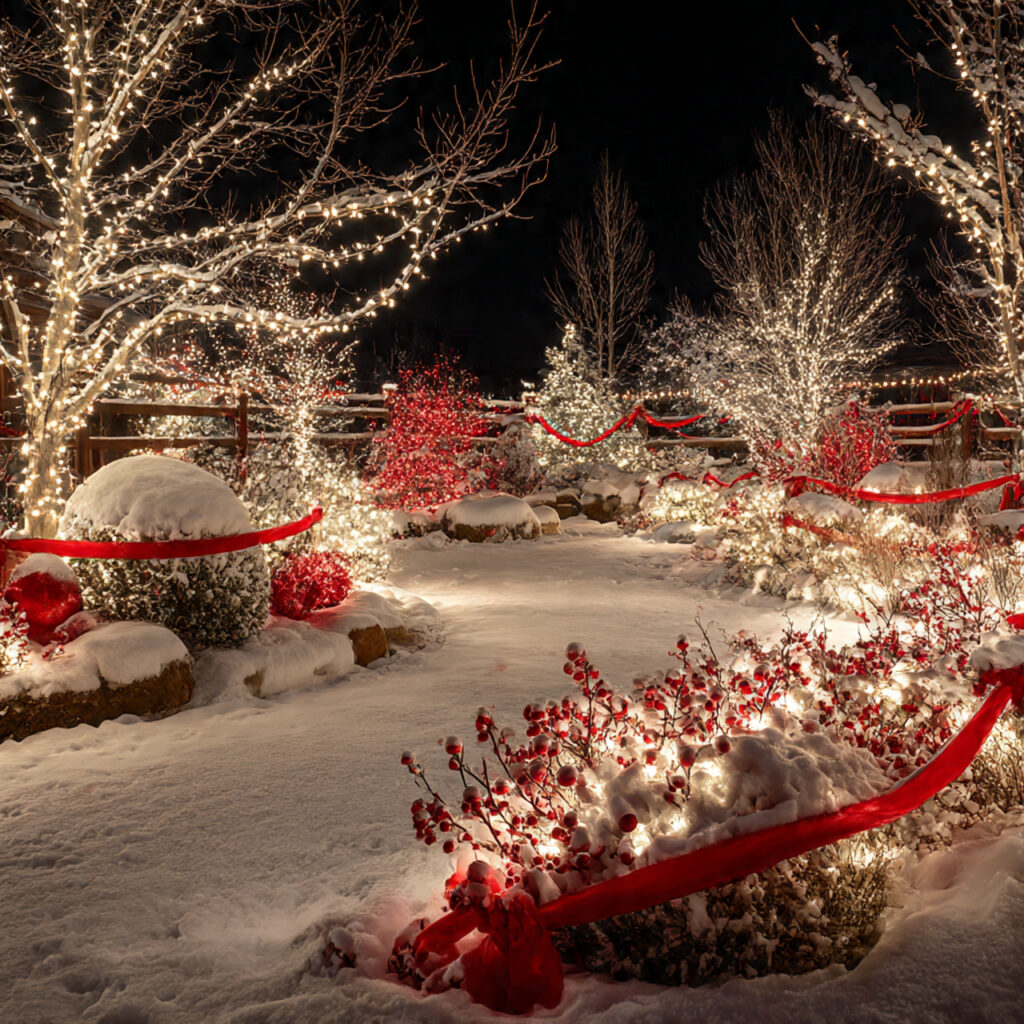
Achieve a highly contrasting, dramatic look by maximizing the white bulbs in your Red and White Christmas Lights setup on surfaces like shrubs and walls, allowing the red bulbs to serve as concentrated focal points. This technique mimics the effect of a snowy landscape illuminated by vivid red accents, resembling glowing berry clusters or festive ribbons.
To enhance the “snowy” effect even further, use cool white lights with heavy density on flat surfaces and keep the rest of the yard lightly wrapped. Reserve the brightest, most saturated red bulbs from your Red and White Christmas Lights for architectural borders or tall vertical features like columns, ensuring the eye is naturally drawn to the intentional burst of contrasting color.
Red and White C9 Bulb Applications
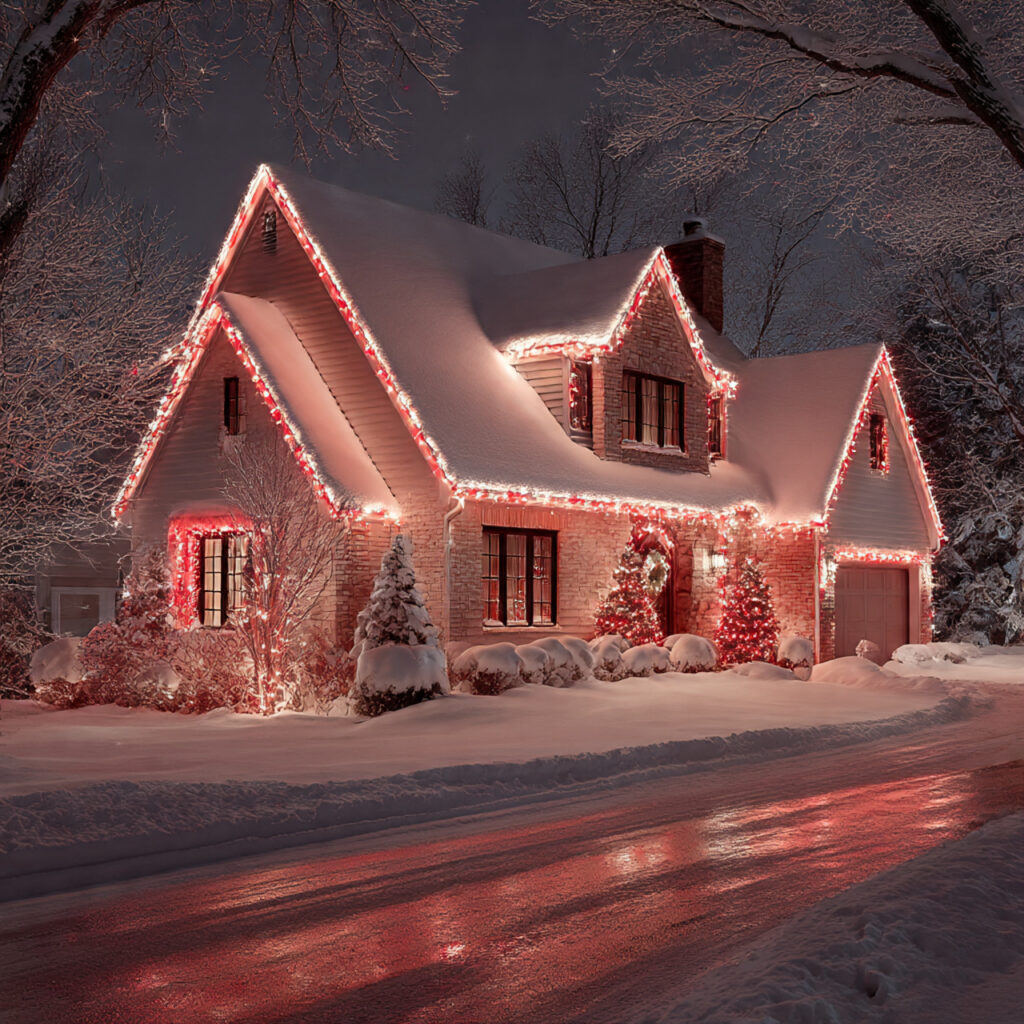
C9 bulbs, the large traditional screw-in style used in many Red and White Christmas Lights displays, are ideal for high visibility and for achieving that classic, vintage look reminiscent of mid-century holiday nostalgia. Because of their size, they work best when placed exclusively along the roofline, ground perimeter, or wrapped around large tree trunks where scale truly matters.
A bold and popular technique with Red and White Christmas Lights is to alternate one red and one white C9 bulb in every socket along the display line. This creates a clean, graphic pattern that remains highly visible on large structures and makes the color scheme instantly recognizable—even from across a busy street or a wide front yard.
Utilizing Red and White Net Lights on Bushes
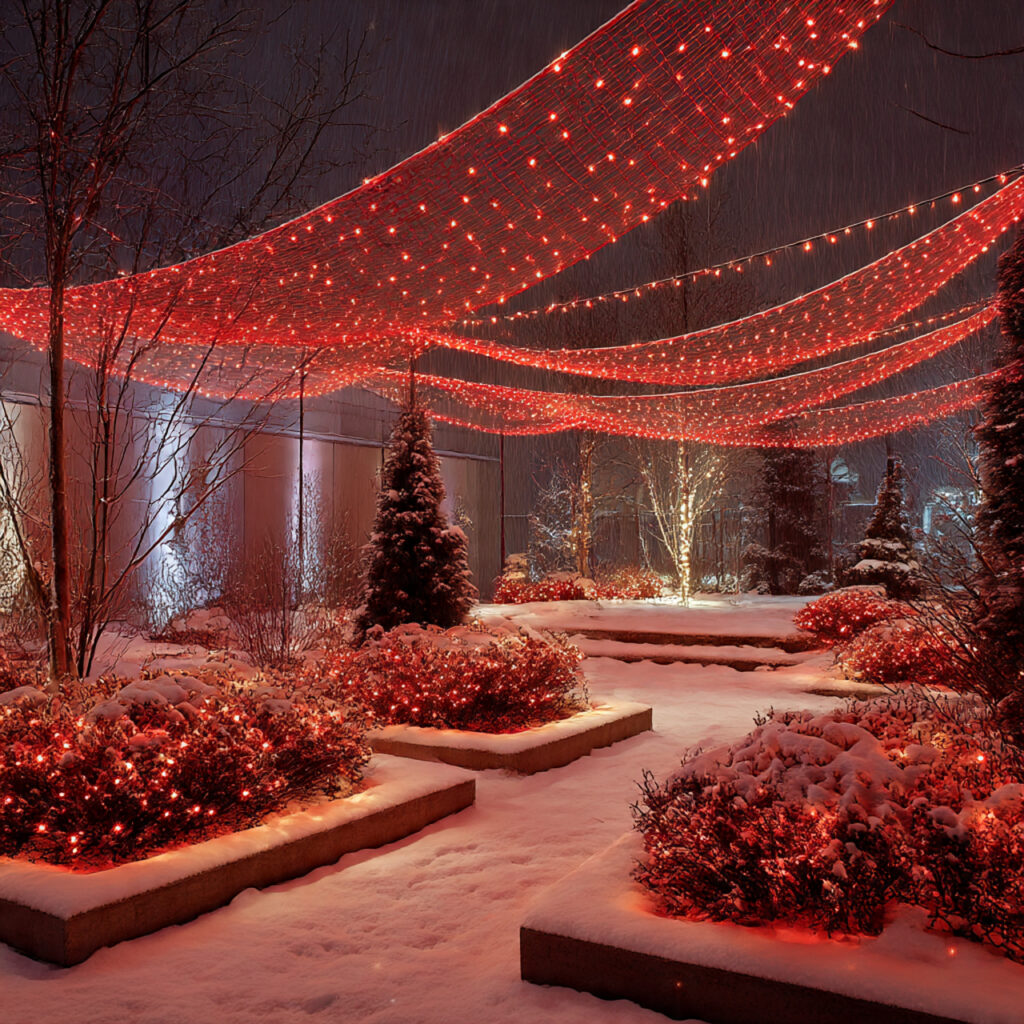
Net lights are excellent time-savers for evenly covering dense shrubs or low hedges, providing a uniform texture of light without the hassle of tedious wrapping. When working with Red and White Christmas Lights, the key is to use this built-in uniformity to your advantage by creating large, defined blocks of alternating colors.
You can achieve a striking, structured display by placing a red net light over one group of bushes and a white net light over the adjacent group, forming a simple checkerboard or segmented pattern. This quick technique ensures your Red and White Christmas Lights look purposeful and well-organized, especially when spread across multiple low shrubs.
Integrating Red and White into Porch Decor
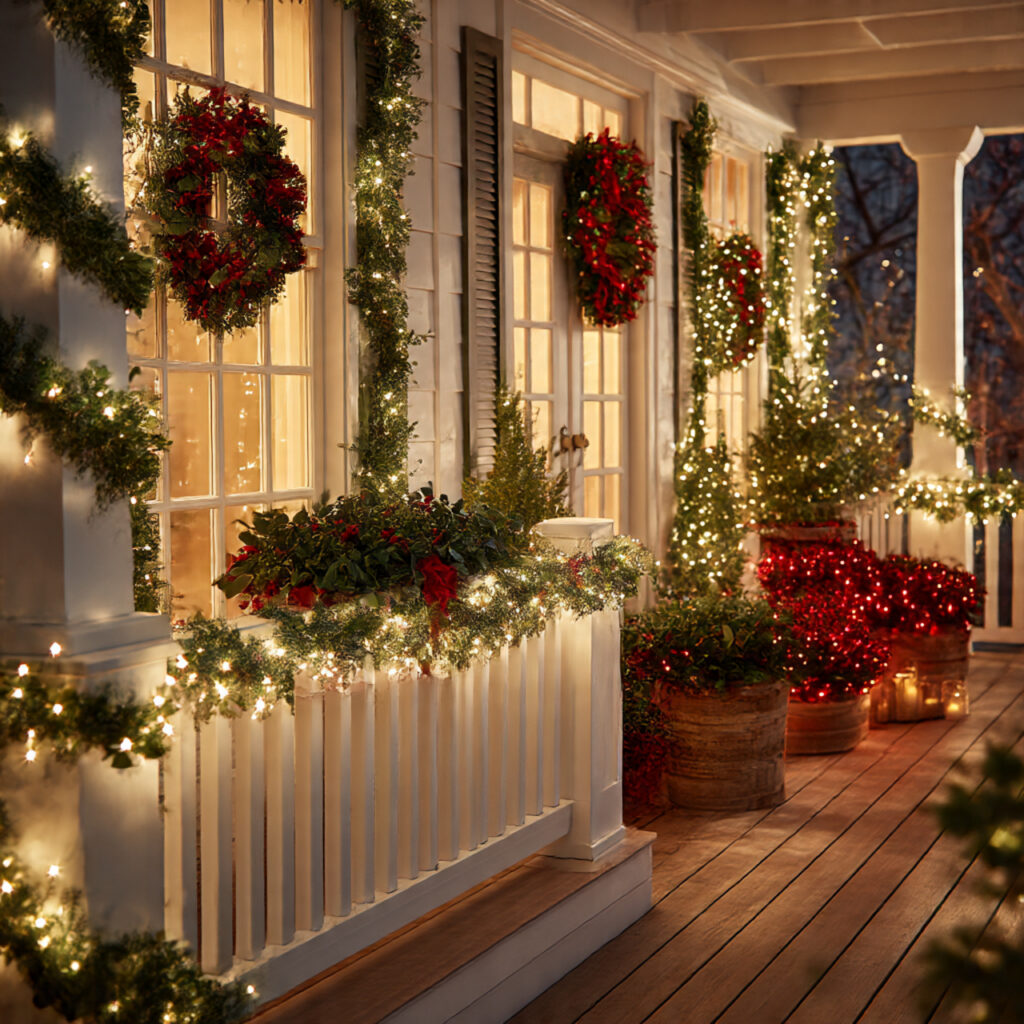
Your front porch is the most visible transition zone and the perfect canvas for showcasing Red and White Christmas Lights up close. A stunning way to highlight this theme is by wrapping the main structural columns entirely with white lights, allowing them to stand out sharply against the darker entryway.
Next, use the red bulbs from your Red and White Christmas Lights to accentuate circular elements like wreaths on the door or window boxes filled with evergreen cuttings. You can also thread a single red string through a thick, pre-lit white garland, instantly creating a cohesive and festive red-and-white display that ties the entire space together.
Subtle Red and White Indoor Lighting Accents
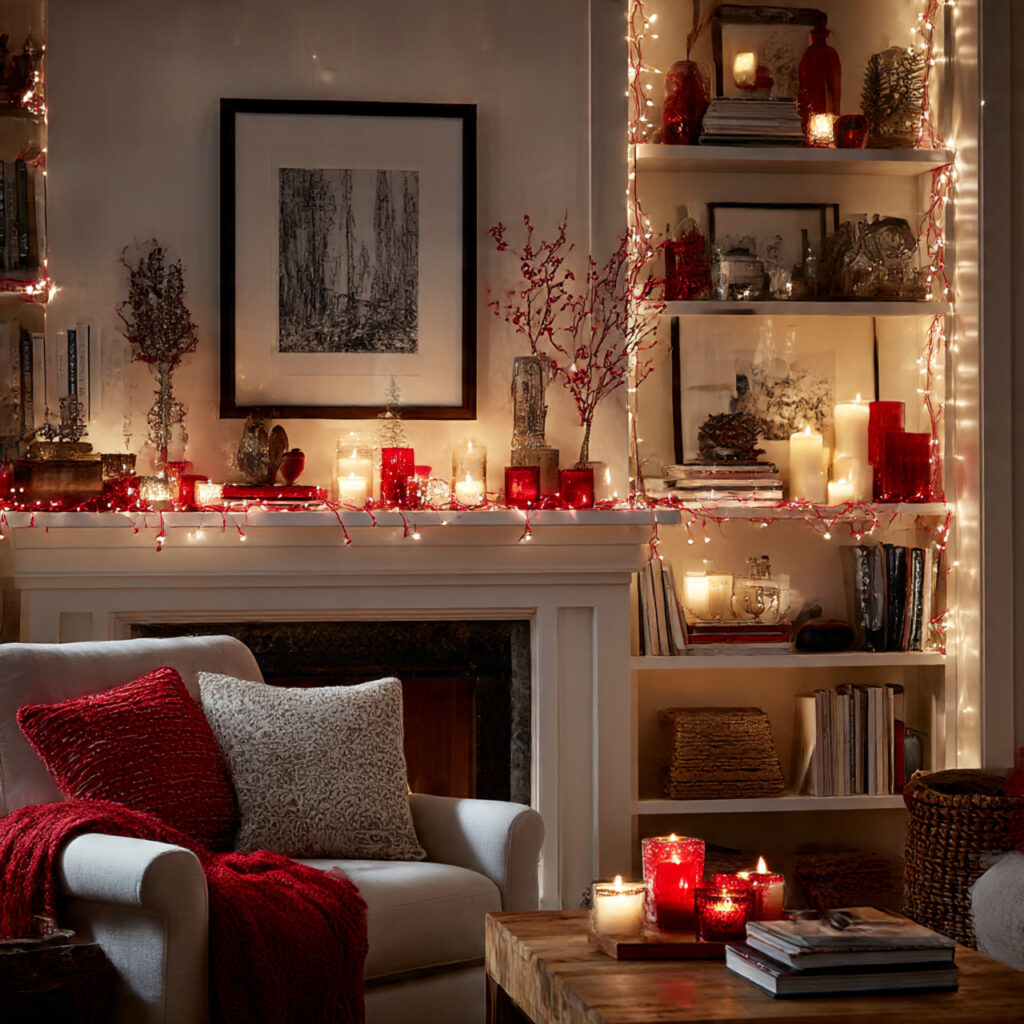
Indoors, the focus is often on creating a cozy ambiance rather than overwhelming brightness, making subtle accents ideal for your Red and White Christmas Lights display. Use delicate red and white battery-operated micro-lights to highlight bookshelves, wind them through mantelpiece arrangements, or tuck them into table centerpieces.
This subtle application prevents harsh indoor lighting while adding a gentle, festive sparkle that complements existing holiday décor, such as ceramic villages or stockings. Since these small Red and White Christmas Lights are battery-operated, they can be easily placed in areas without wall outlets, maintaining a clean and elegant look throughout your home.
The Psychological Impact of Red and White Hues
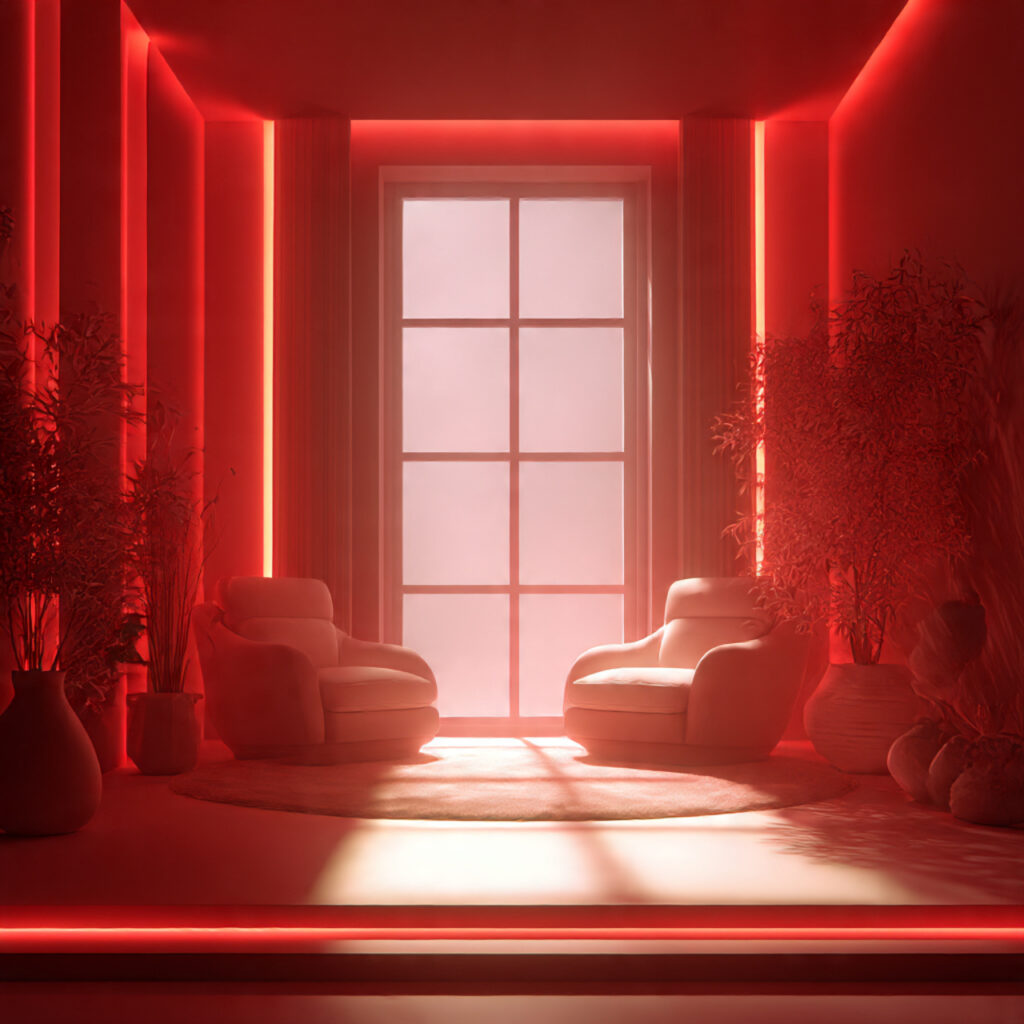
The pairing of red and white in Red and White Christmas Lights is psychologically powerful, as the colors trigger contrasting yet complementary emotional responses. Red evokes energy, passion, warmth, and excitement—the very feelings tied to holiday anticipation and cozy celebrations.
White, on the other hand, conveys peace, purity, and clarity, often evoking images of fresh snow or a pristine winter scene. Together, Red and White Christmas Lights create a beautifully balanced emotional effect that is both exhilarating and calming, engaging viewers while maintaining an elegant and refined holiday aesthetic.
Red and White Christmas Light History and Tradition
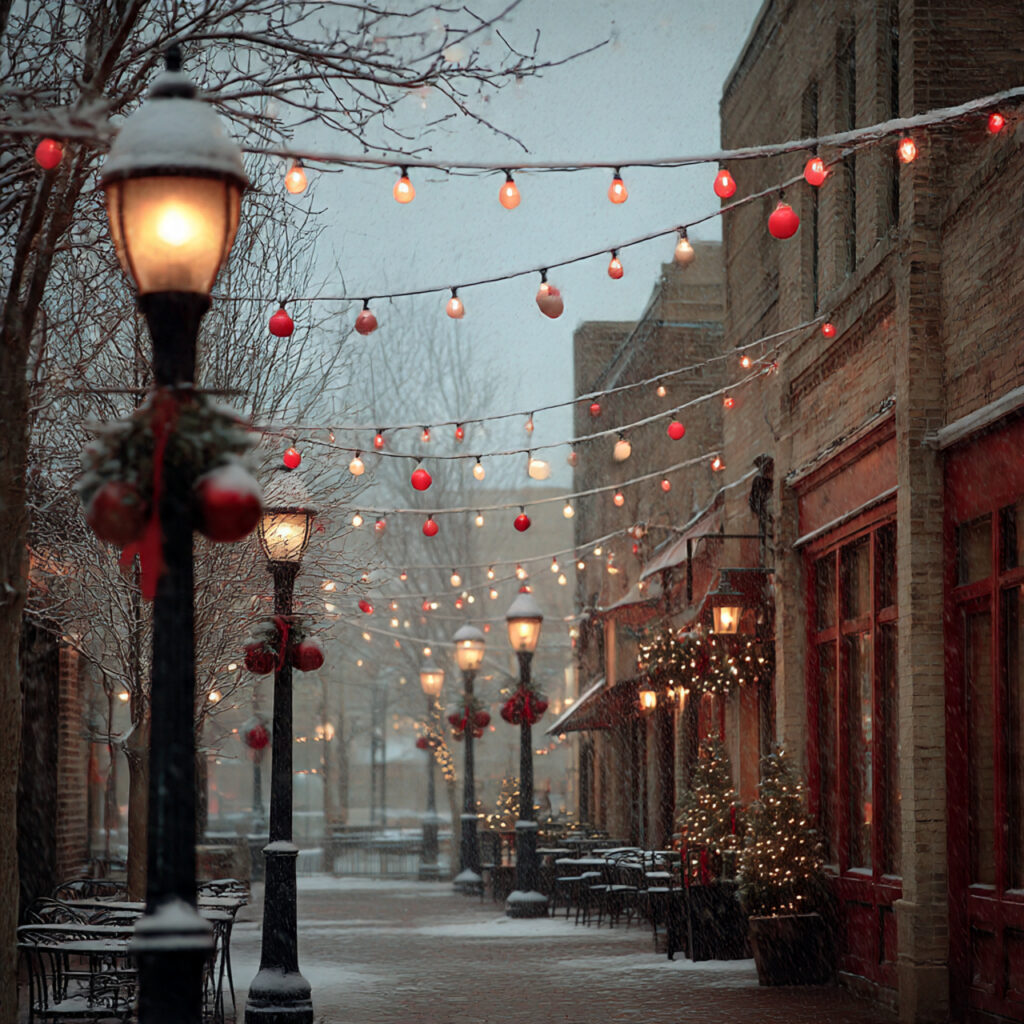
Historically, red was one of the first reliable colors used in electric Christmas lighting due to the relative stability and easy availability of red glass dip dyes. Paired with clear or white bulbs, this simple combination of Red and White Christmas Lights quickly became the standard for early 20th-century holiday displays.
This prevalence in early electric decorations cemented its status as a nostalgic classic, instantly evoking memories of Christmases past. By choosing Red and White Christmas Lights today, you are embracing a century-old holiday tradition, giving your home a timeless, deeply rooted festive charm.
Modernizing the Classic Red and White Look
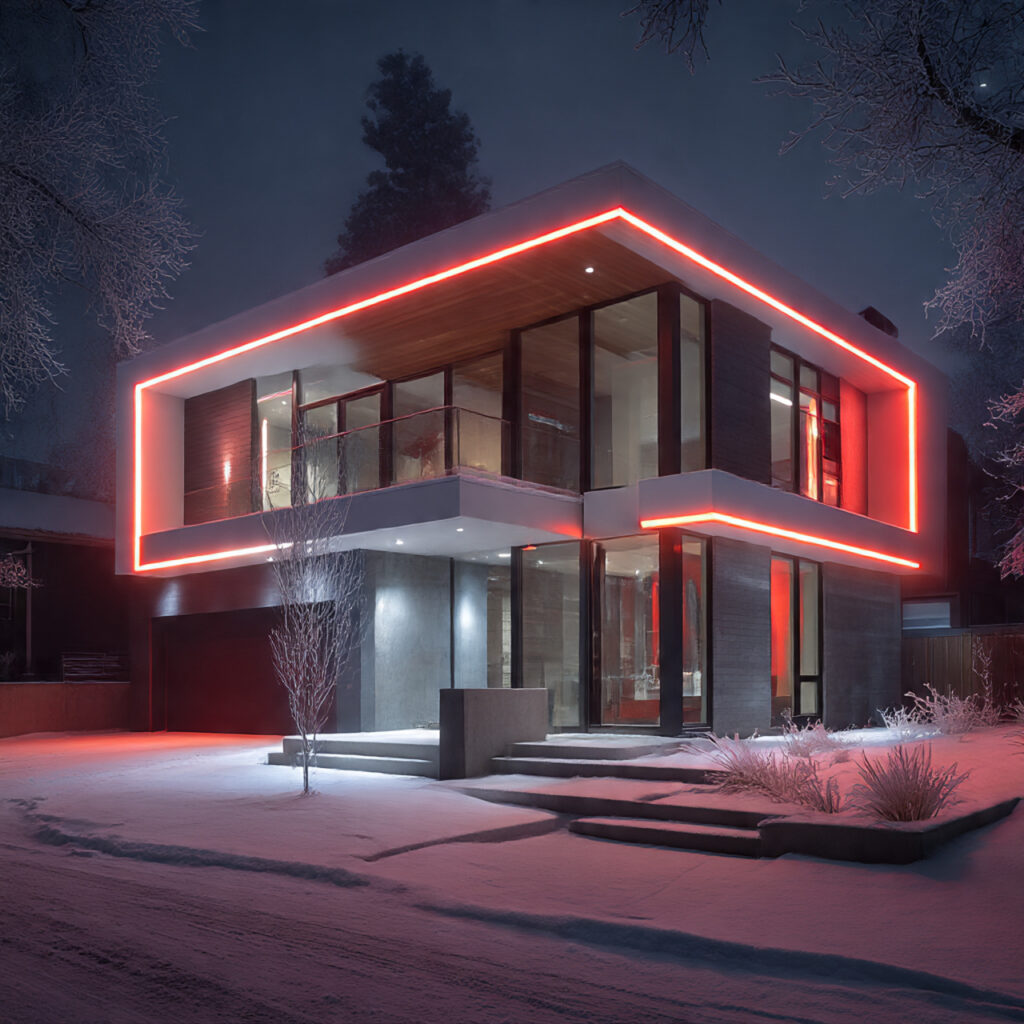
To give the classic red and white aesthetic a modern twist, contemporary Red and White Christmas Lights displays should emphasize minimalism and technical precision. Using cool white LED commercial-grade bulbs creates a cleaner, high-tech finish compared to the warmer, vintage look of traditional bulbs.
Limit the color application to sharp, geometric lines rather than dense, chaotic wrapping. For example, use the red lights from your Red and White Christmas Lights to trace vertical columns and the white lights to highlight straight roof edges. This intentional, sparse approach produces a chic, high-definition display that feels both modern and meticulously planned.
Choosing the Right Wire Color for Visibility
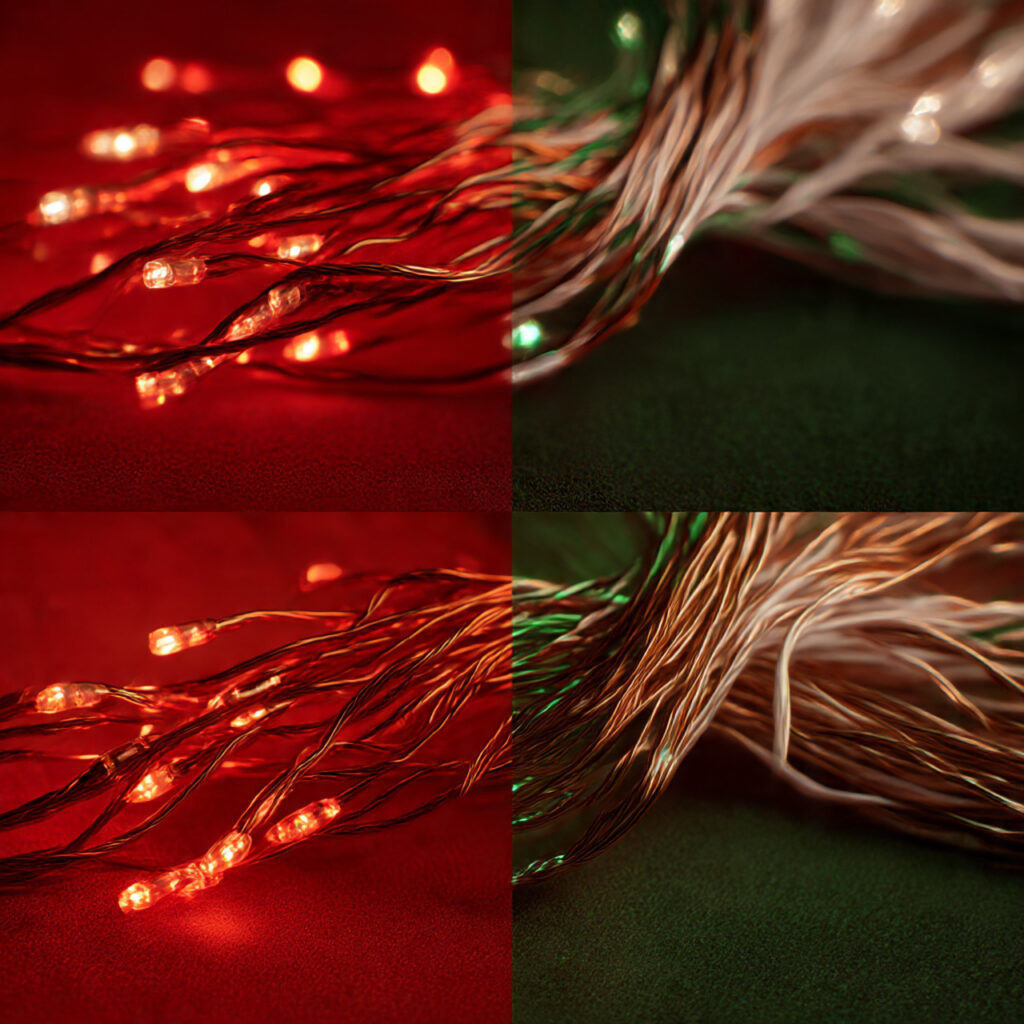
The color of the wire—green, brown, or white—can dramatically affect the display’s appearance during the day, which is crucial for overall curb appeal. To make the lights disappear into the background, use green wire for blending seamlessly into evergreen foliage, hedges, and trees.
Alternatively, use white wire for eaves, white gutters, or light-colored porch railings to minimize daytime visibility against painted trim. For maximum concealment against dark brick, asphalt shingles, or dark wood decking, utilize brown or black wire colors so the light strings fade completely into the background.
DIY Red and White Garland Ideas

Create custom, high-quality red and white lighted garlands by intertwining two separate, full-density light strings (one red, one white) with unlit natural cedar or fir branches. This method allows you to control the exact mix and density of the light, customizing the look beyond pre-made options.
The dual string approach offers a critical practical benefit: if one color fails, only that string needs to be replaced, simplifying maintenance. Furthermore, wrapping the two colors separately around the thick natural garland allows the colors to peek out from the greenery, giving the entire piece more volume and depth.
Creative Uses for Red and White Pathway Markers
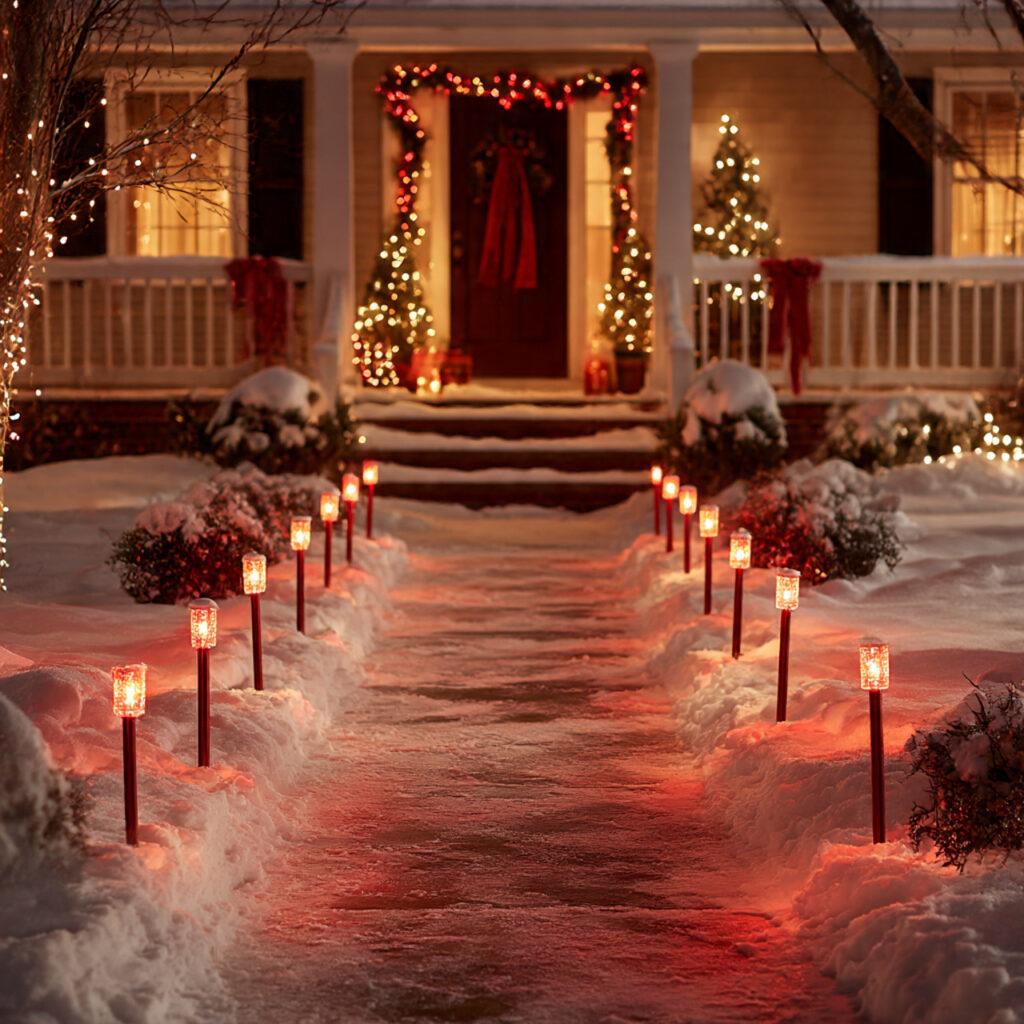
Pathway markers are essential for guiding guests and adding light at ground level. Line your walkways with standard stake lights, creating a distinctive pattern by alternating one red and one white marker to guide guests with a festive flair that is orderly and easy to follow.
For added visual interest and to break the monotony of a single height, consider using a slightly taller, brighter red marker every few feet along the path. This subtle vertical element draws the eye, highlights the main entrance, and creates a sense of rhythmic movement as one approaches the home.
Visit Also : White Living Room Ideas
Troubleshooting Red and White Light String Issues
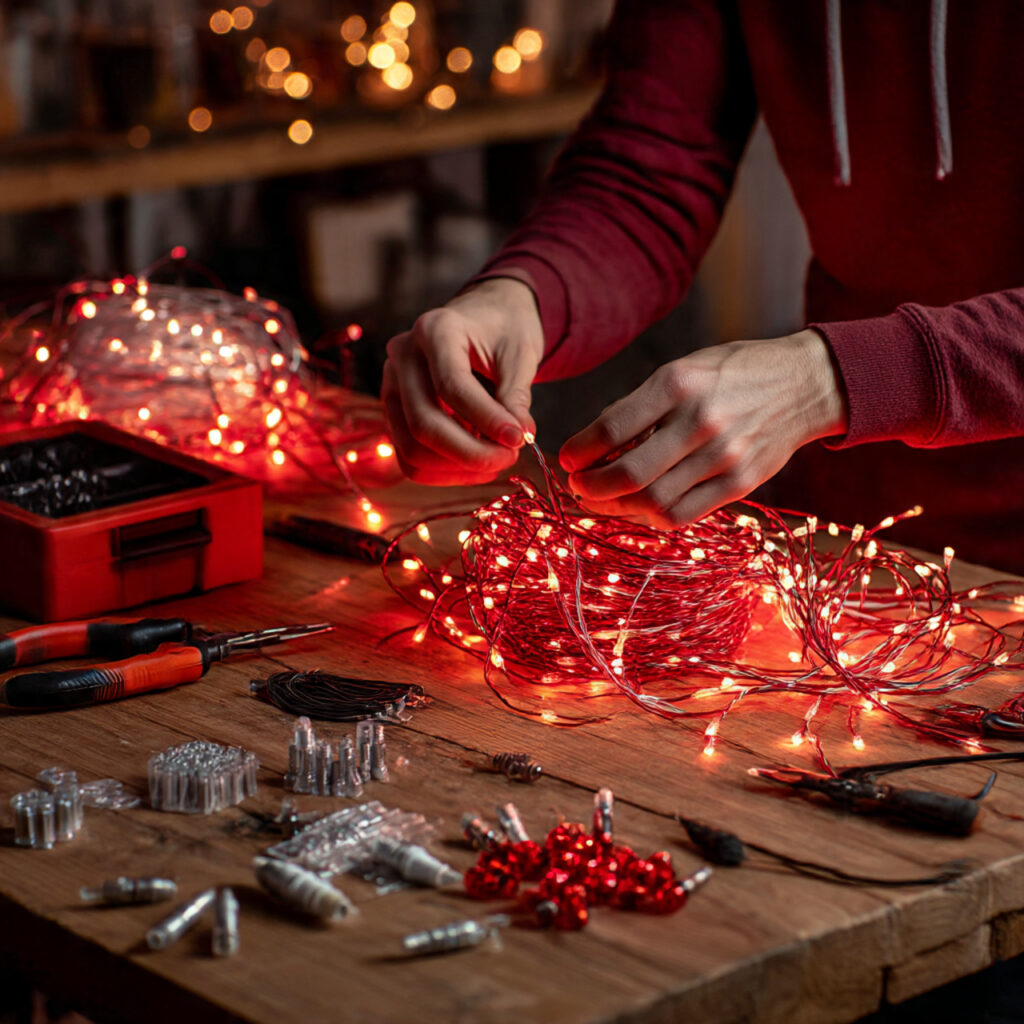
When a section or portion of a light string fails, the first step is always to check for a single faulty or loose bulb, as this is the most common and simplest fix for both incandescent and mini-LEDs. Carefully check each socket connection, especially at the end where strings connect.
For modern LED strings, which are wired differently, the issue is sometimes a bad rectifier chip or an inverted plug connection where the positive and negative ends are misaligned. If the standard troubleshooting steps fail, you may need to check the entire section with a voltage meter to isolate a dead segment before replacing the entire string.
Layering Red and White Lights for Visual Depth
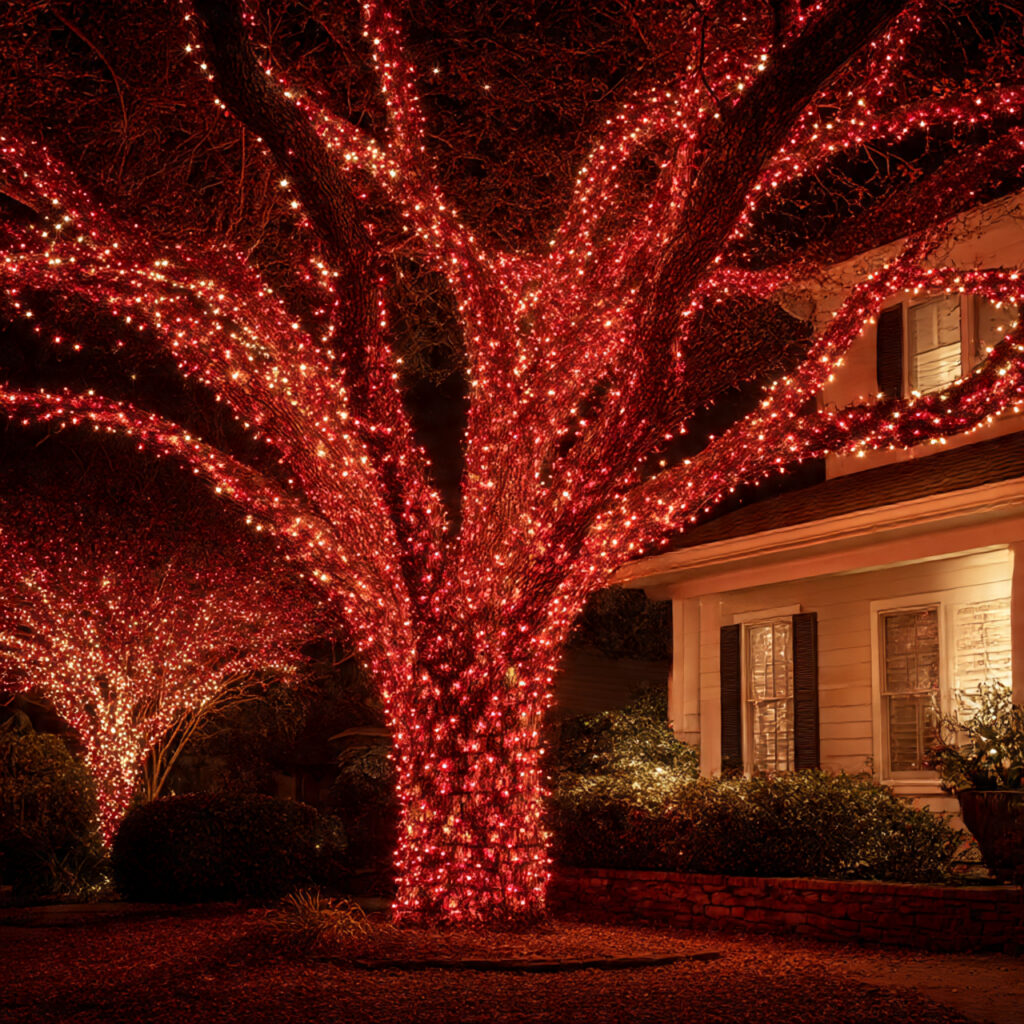
Depth is the secret to a professional-looking display, and it is achieved by using different sizes and intensities of light on various planes. For example, begin by wrapping the thick, interior branches and trunks of a tree with dense red mini-lights, which serve as the warm “underlayer.”
Next, drape large, sparse white C7 or C9 bulbs (the “top layer”) over the canopy and along the outer branch tips. This two-step process creates a rich, multi-dimensional effect where the bright white lights shimmer against the deeper, more constant red glow, giving the tree incredible volume.
Red and White Light Sculptures and Motifs
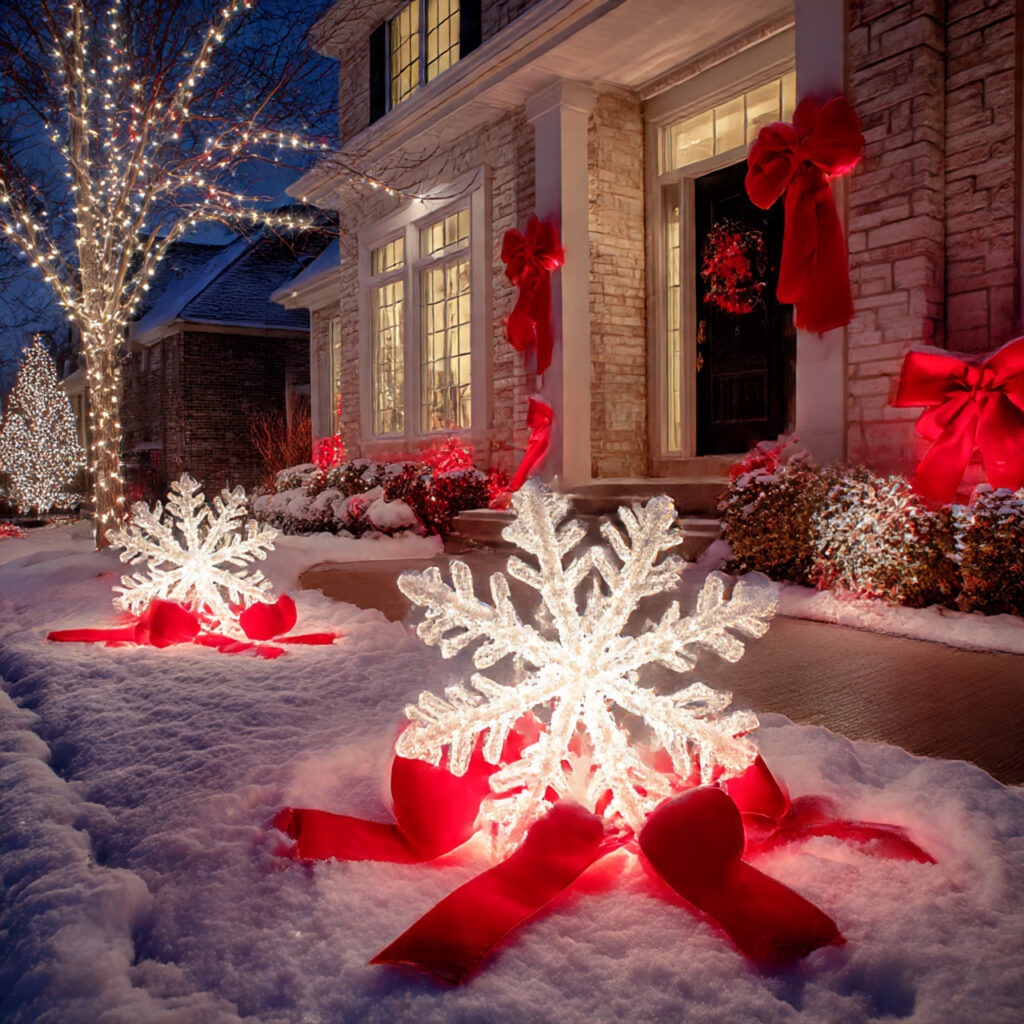
Using light sculptures and motifs is an easy way to introduce large, clear shapes into your display. These should typically use only white lights (snowflakes, stars, or deer) to represent purity and winter.
The contrasting red element can then be introduced by using red net lights or powerful red LED floodlights positioned behind the white motif. This contrast creates a dramatic silhouette and ensures the white motif stands out brightly, while the red wash provides the necessary festive background color.
Combining Red and White with Gentle Motion Effects
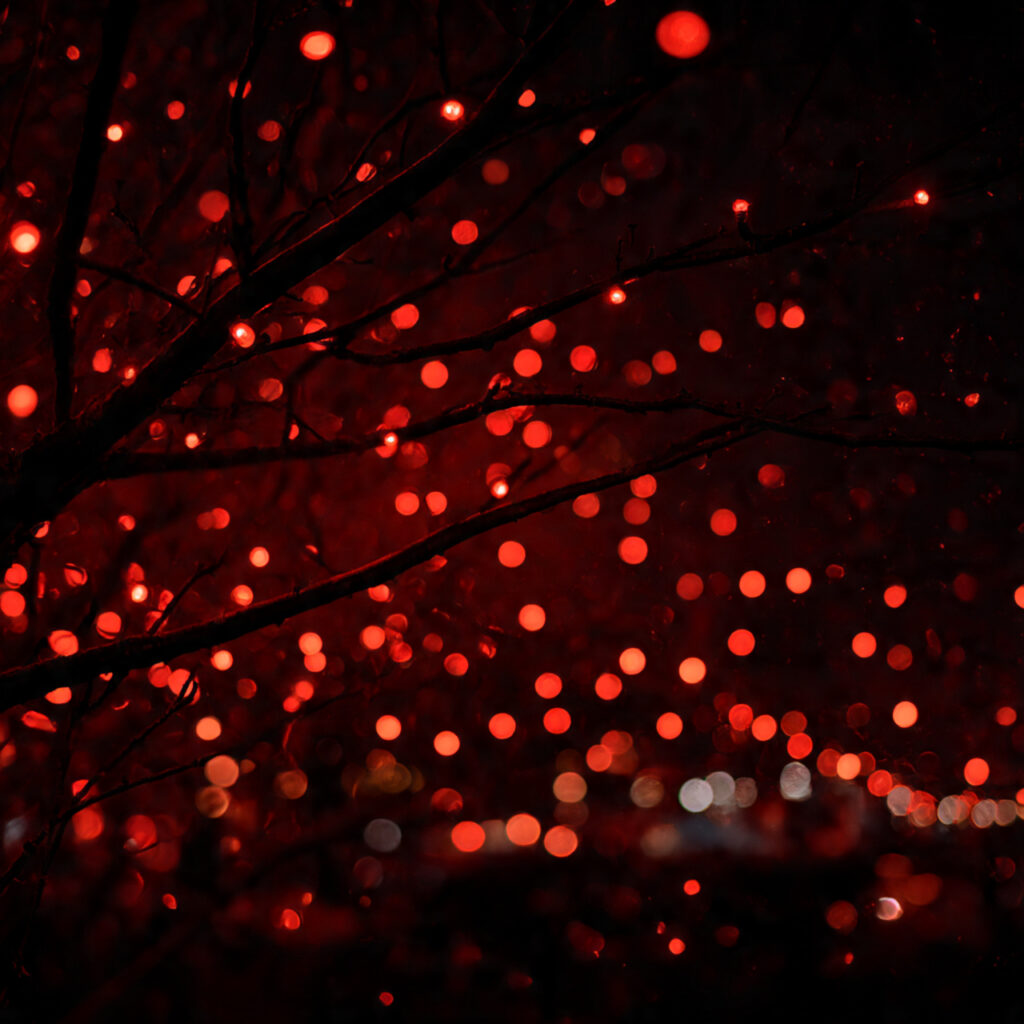
While the use of fast blinking or strobing can make a sophisticated display feel cheap and jarring, introducing a gentle motion effect can add dynamic interest. A slow, gentle dimming or “breathing” pattern applied only to the red lights is highly effective.
This technique simulates a warm, pulsing ember glow, creating a feeling of constant movement and warmth against the steady, crisp white lights. It’s a subtle way to make the lights feel alive without detracting from the overall elegant and traditional aesthetic of the red and white theme.
Red and White Icicle Light Installation Tips
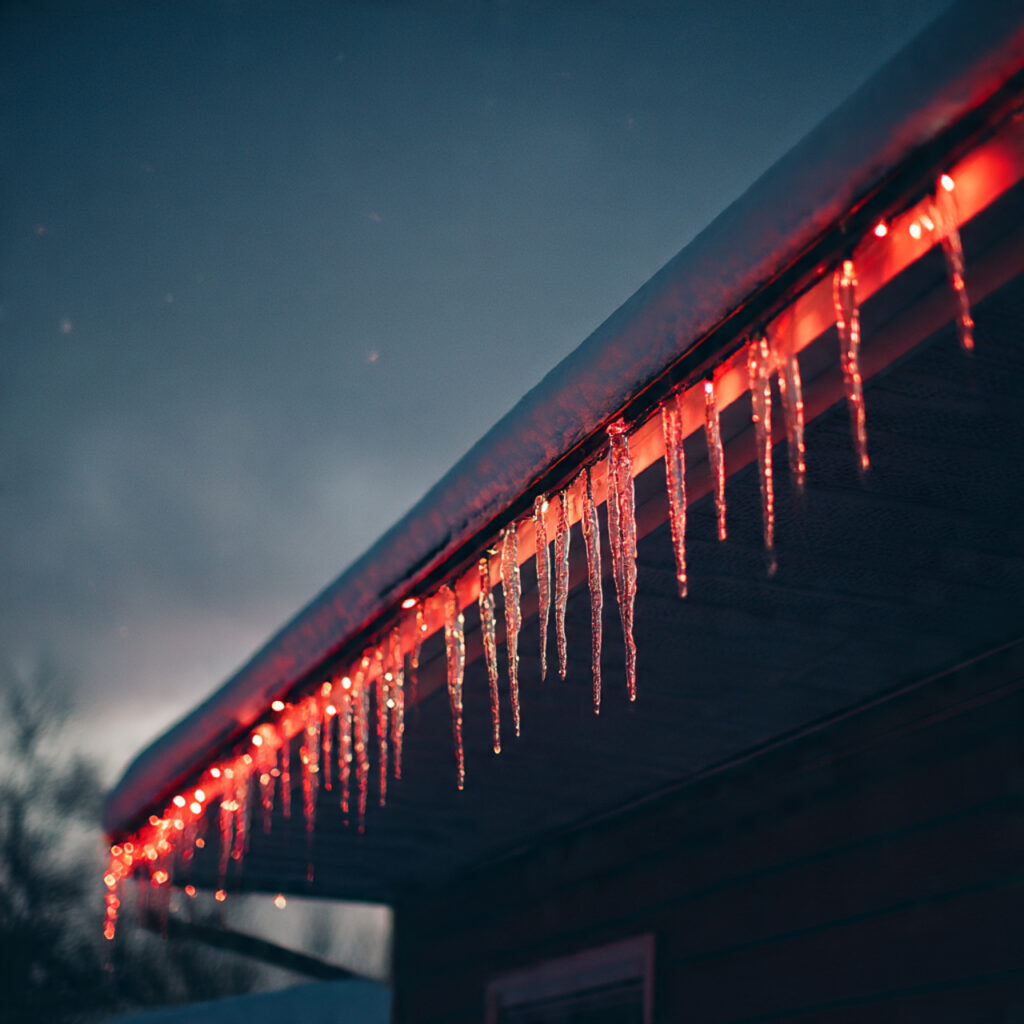
Icicle lights are perfect for highlighting the straight, linear features of your home, such as eaves, railings, and window bottoms. To maintain the crisp definition of the red and white theme, ensure the red and white strands are perfectly aligned side-by-side without any overlap.
Mount the strands using uniform clips so they hang at the same height and distance from the structure, creating a clean, vertical stripe pattern. This precision-focused approach emphasizes the architectural lines of the structure, giving the home a classic, formal holiday look.
Using Red and White Mini Lights on Small Trees
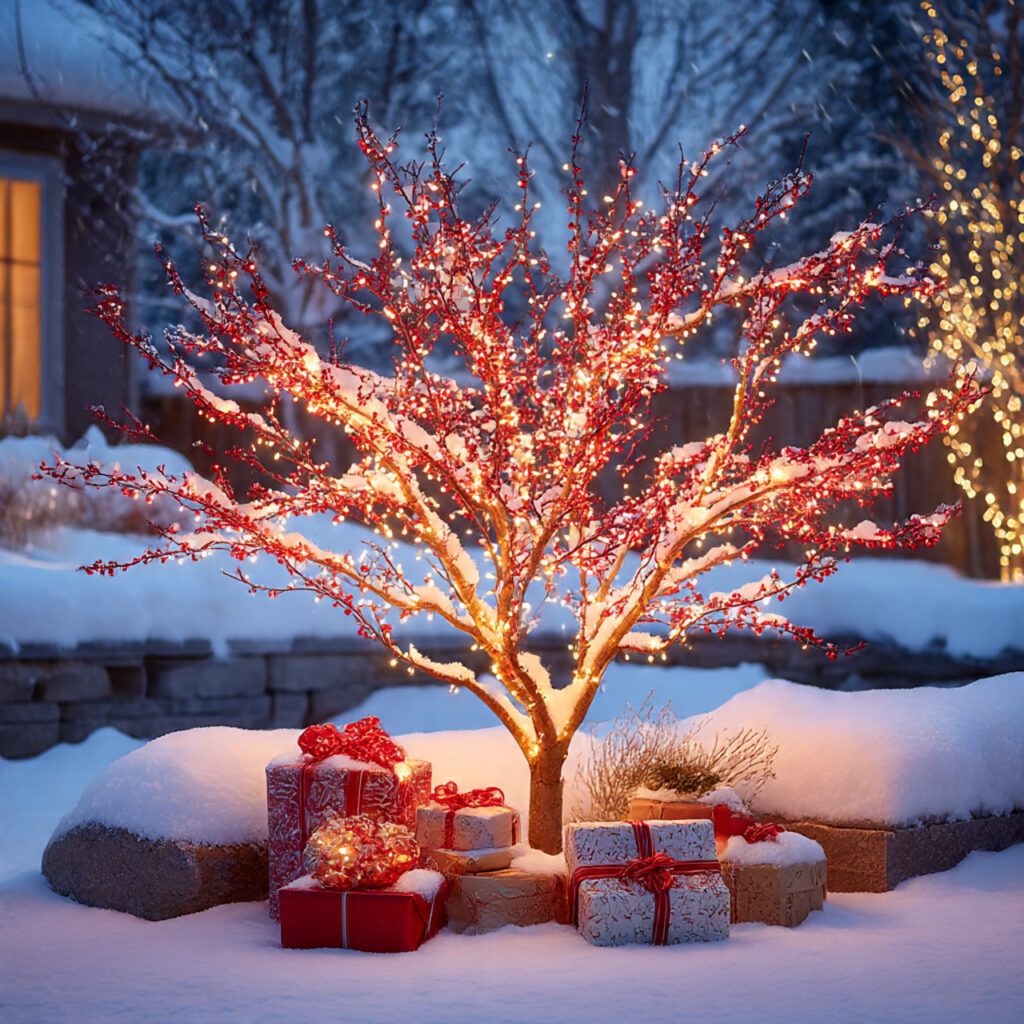
Mini lights are best suited for smaller indoor trees, table-top displays, or small outdoor accent trees where they can be densely packed close to the branches without overwhelming the scale. For maximum luminous density, always opt for the versions with tighter spacing (e.g., 4 or 6 inches between bulbs).
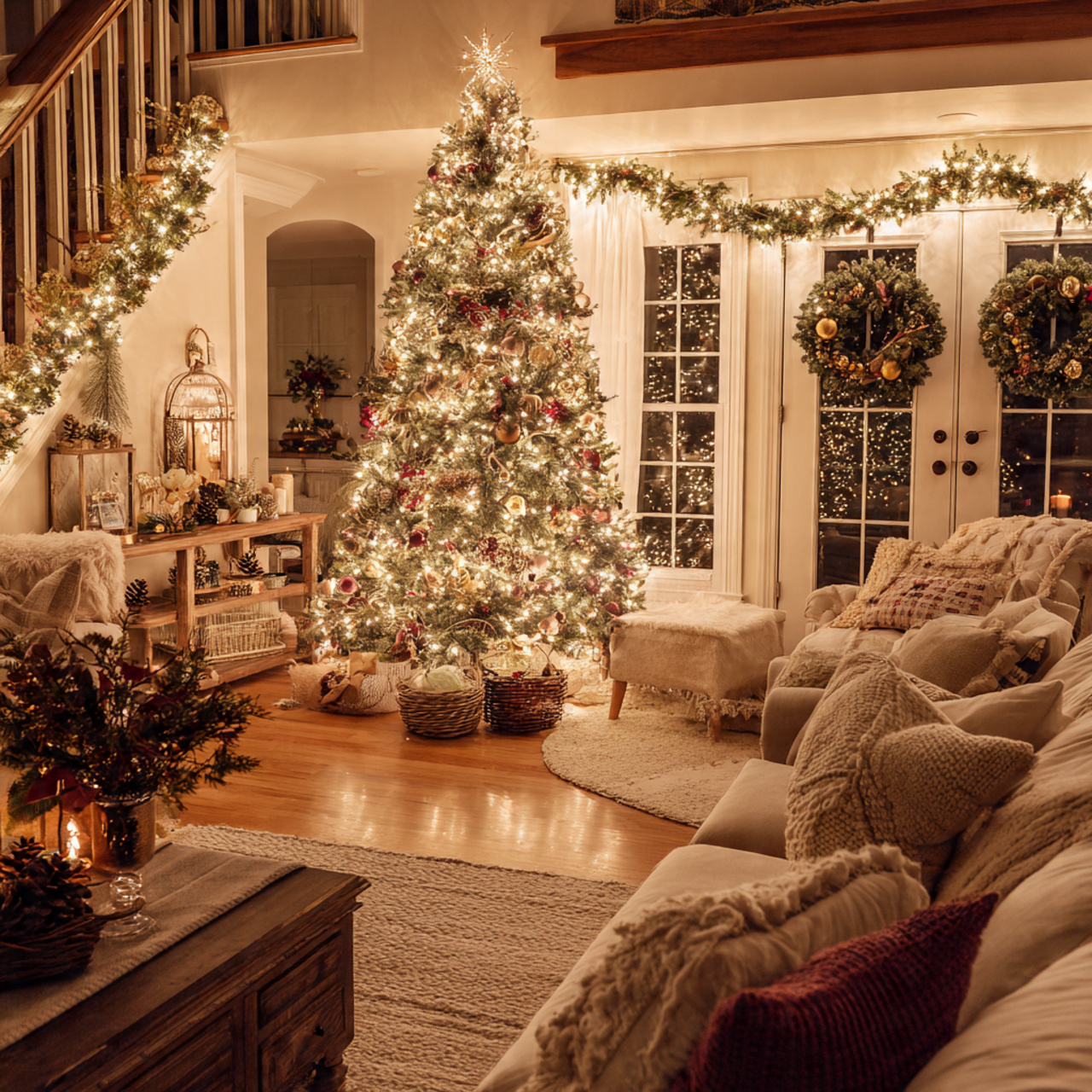
When wrapping, focus on wrapping branches individually rather than just draping strings over the tree. This technique ensures the lights are evenly distributed throughout the tree’s volume, guaranteeing a full, rich, and luminous red and white effect that glows from within.
Red and White Lighting for Commercial Displays
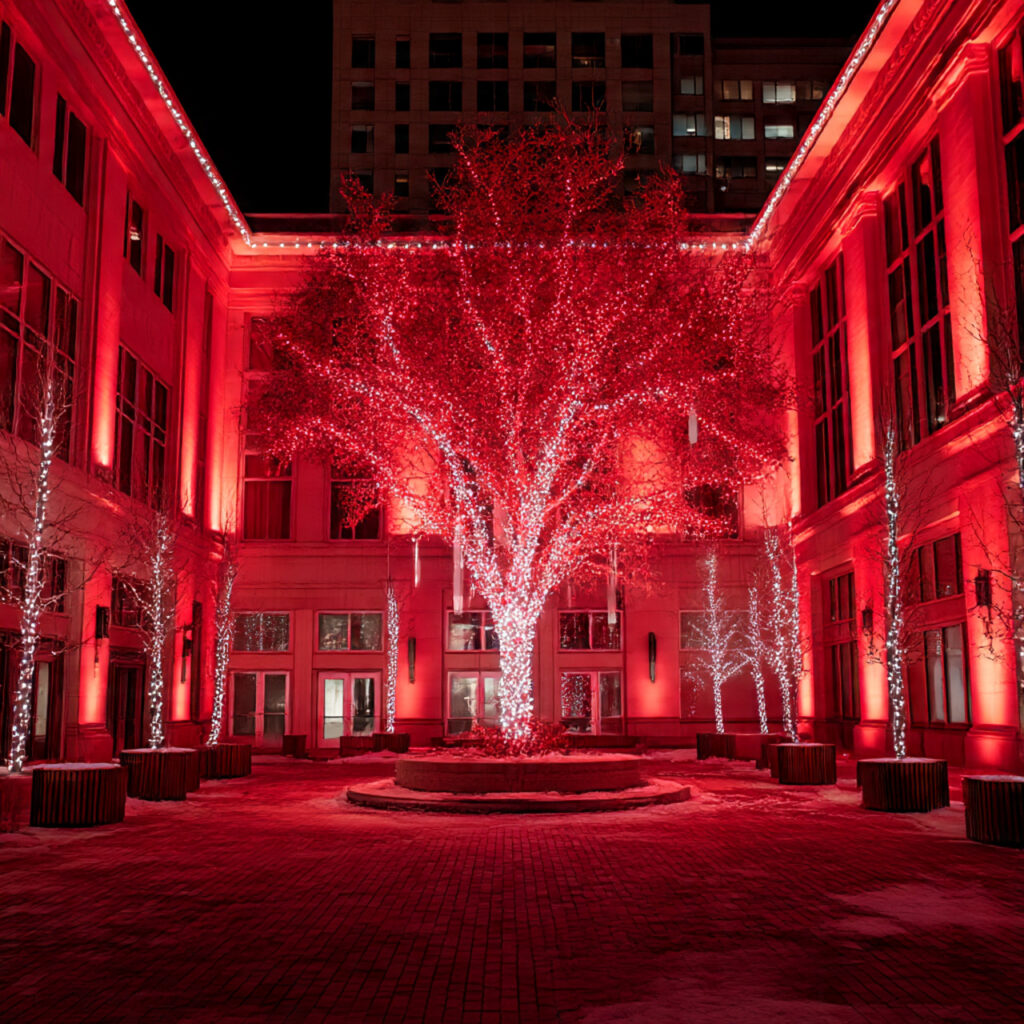
Commercial displays demand high visibility and clear messaging, making the high contrast of red and white perfectly suited for this application. A powerful technique is to use high-output LED floodlights in red to “wash” large, featureless sections of a building facade.
This large red wash is then perfectly contrasted by bright white rope lights used exclusively to outline architectural features like windows, doors, and signage. The resulting display is bold, instantly readable, and utilizes the colors for high-impact visual branding.
Comparing Incandescent vs. LED Red and White Lights
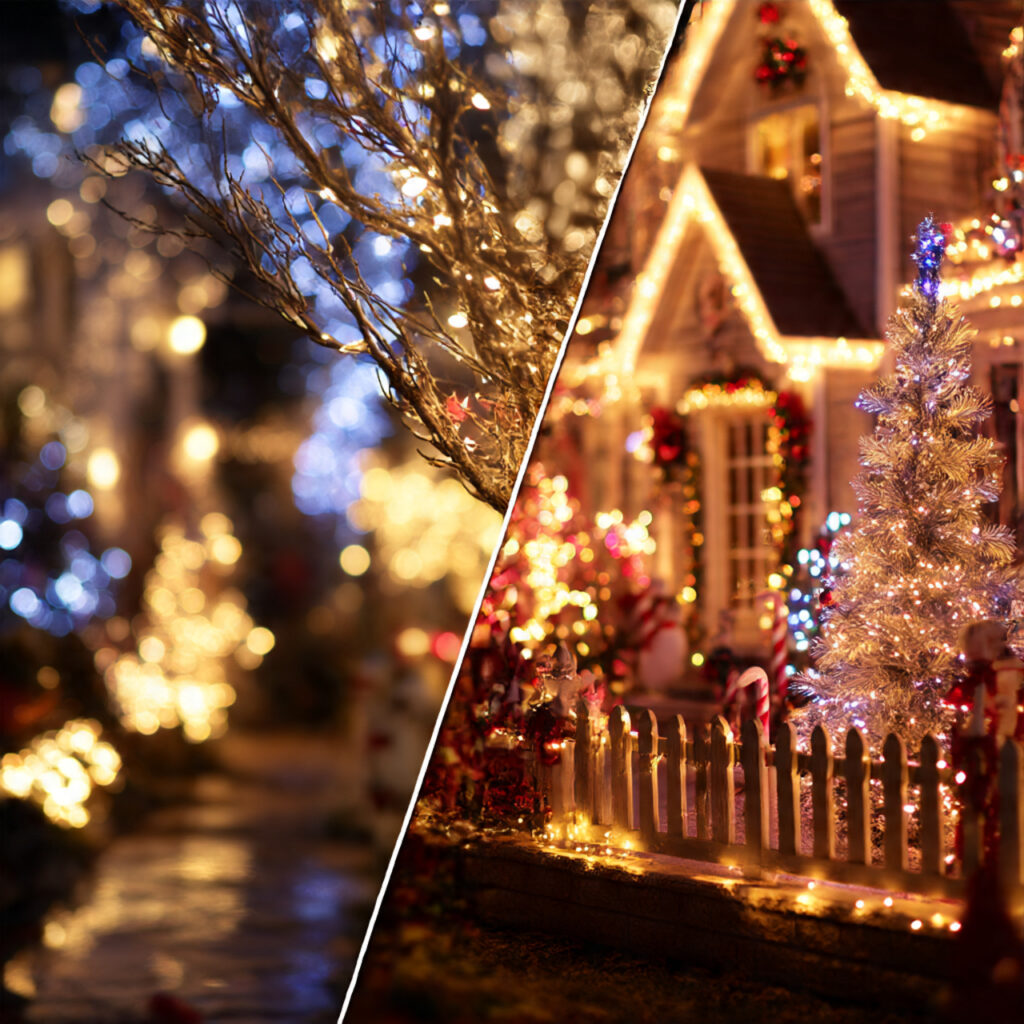
The main difference lies in the quality of light and efficiency. Incandescent bulbs offer a warmer, often deeper red and a soft, traditional glow, but they consume excessive power and generate heat, posing a greater fire risk and running up electricity bills.
LEDs, while sometimes having a slightly “cooler” hue, provide intense, vibrant color, superior durability (lasting 25 times longer), and significant energy savings. Given their lower maintenance and cost-effectiveness over time, LEDs have become the modern, practical standard for large-scale and high-quality red and white displays.
Red and White Lighting Safety Precautions
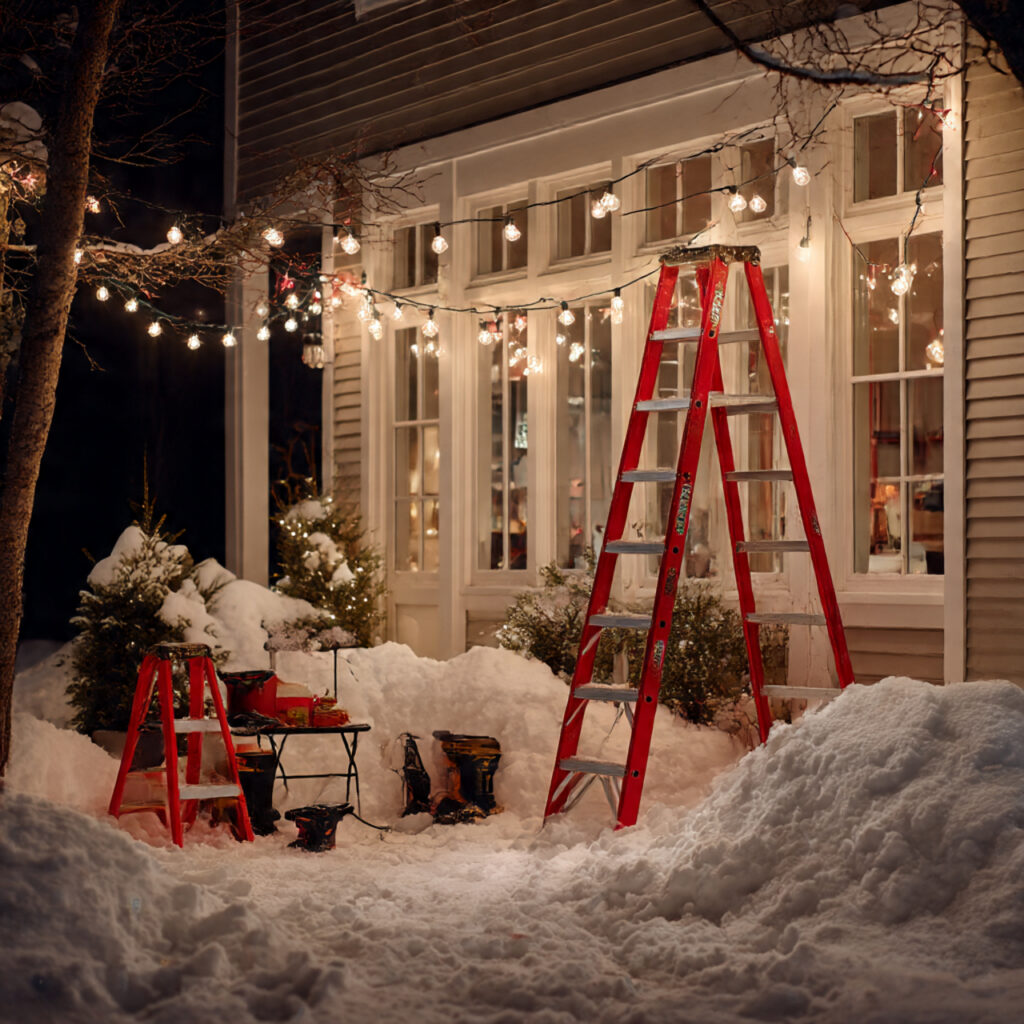
Lighting safety is paramount, especially when installing large outdoor displays. Always ensure that every light string used outdoors is explicitly rated for exterior use, indicated by a UL listing on the packaging, and never use indoor-only lights outside.
Crucially, all exterior light strings must be plugged into GFCI-protected outlets to prevent severe electrical hazards in the event of moisture exposure or damage. Take time to inspect all old strings for cracked insulation, loose sockets, or frayed wires before powering them up.
The Best Red and White Light Twinkle Patterns
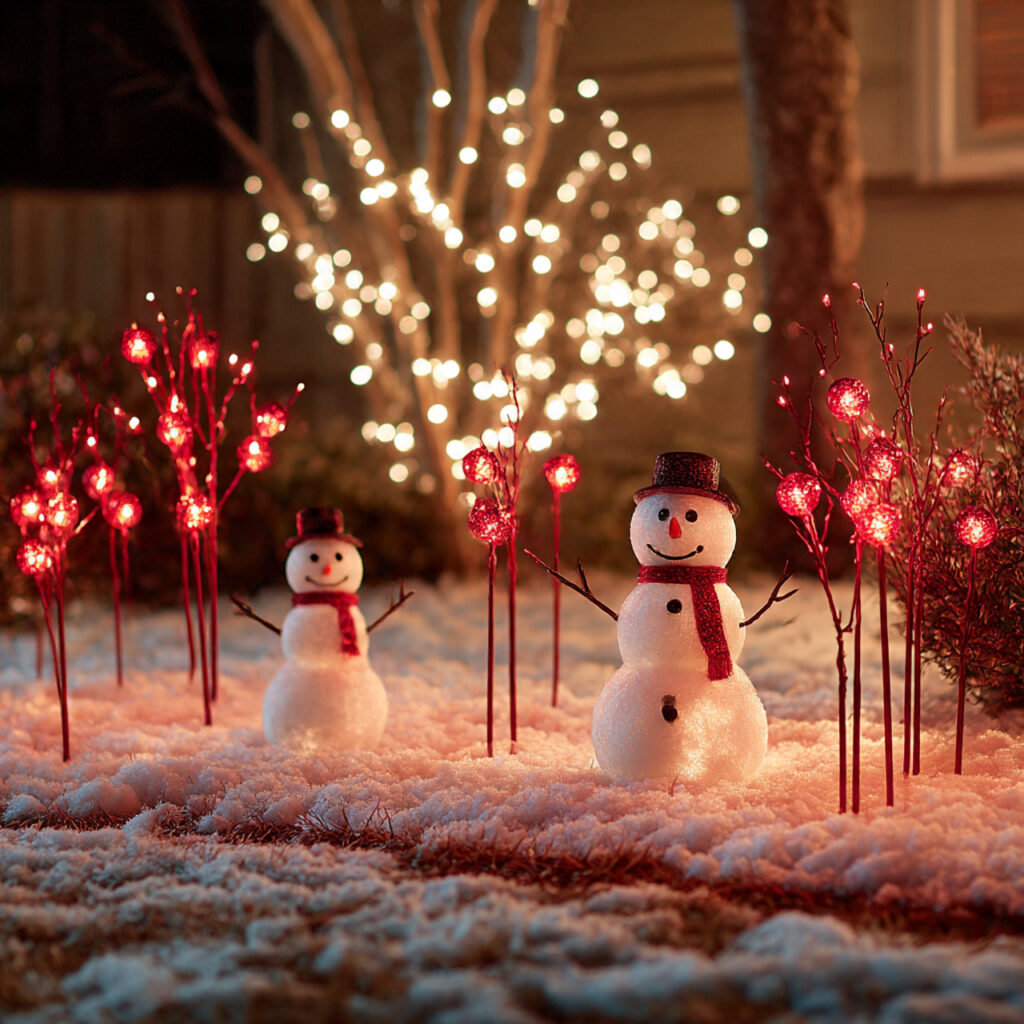
If you want to introduce movement without creating a distracting light show, a gentle, subtle twinkling effect applied only to the white lights is ideal. This leaves the bold red lights steady and constant, allowing them to anchor the display.
The twinkling white lights create a shimmering, snowy, or diamond-like effect that adds elegance and dynamic texture, but because the red remains still, the overall scene stays sophisticated. Avoid applying a rapid strobe or full blinking pattern to the whole display, as this instantly cheapens the classic aesthetic.
Red and White Lighting for Minimalist Aesthetics
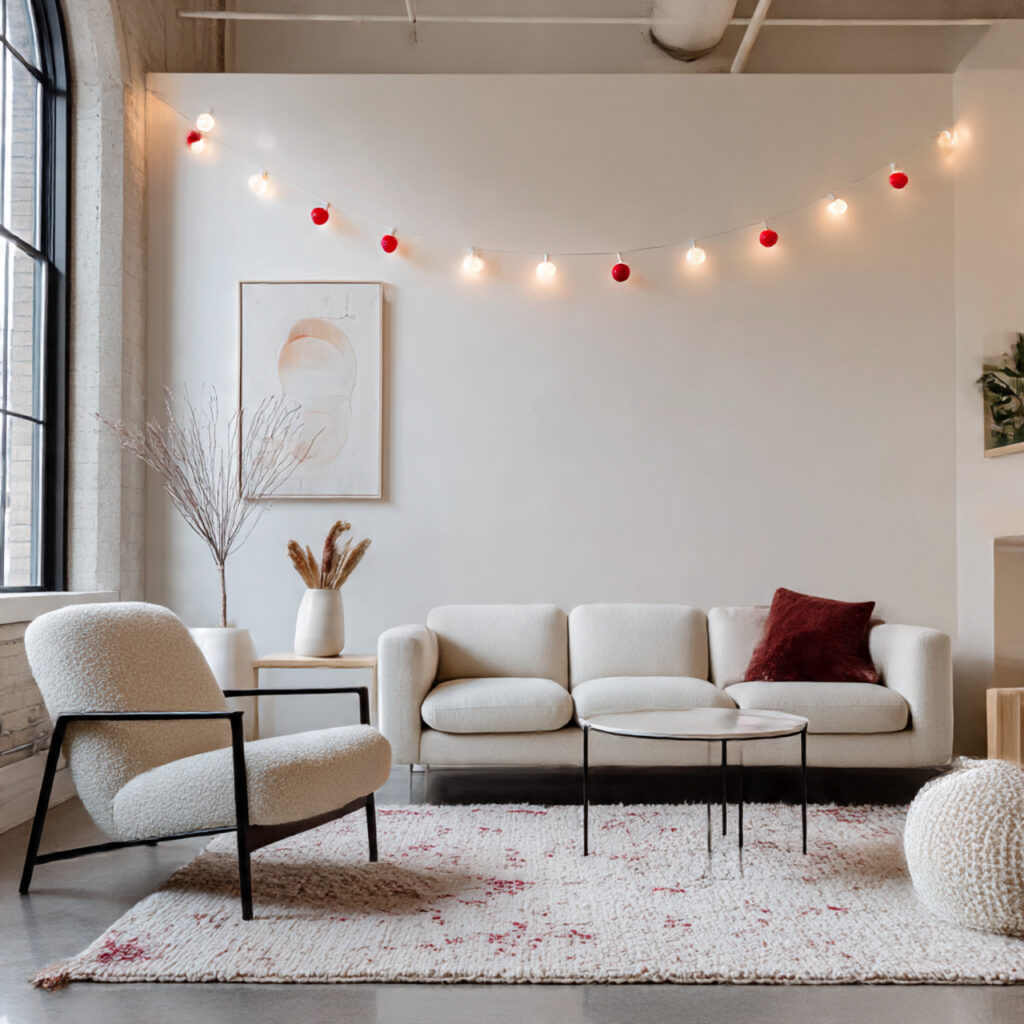
Minimalism focuses on intentional placement and negative space, making the “less is more” principle essential. In a minimalist red and white setting, start by using a single, carefully placed string of high-quality white lights to define a key boundary, like a door frame.
Introduce the red as a scarce accent: perhaps only one strategically placed red bulb every 10 or 20 white lights, or just a single red floodlight highlighting one piece of yard art. This sparse, intentional use of color creates a highly refined and modern holiday look.
FAQs About Red and White Christmas Lights
How do I make my red Christmas lights appear brighter outdoors?
Red lights often appear dimmer because the human eye is less sensitive to the red end of the color spectrum. To boost their perceived brightness, try wrapping them more densely than the white lights, use dedicated high-output LED C9 bulbs, or place them against a highly reflective white or silver surface.
Which shade of white light pairs most effectively with true red?
The most effective pairing depends on your desired mood. Warm white (3000K or lower) creates a cozy, classic, and slightly vintage display, while cool white (5000K or higher) provides a crisp, modern, and high-contrast appearance that makes the red lights pop more aggressively.
Are red and white lights appropriate for non-Christmas winter holidays?
Absolutely. Because the combination is strongly associated with winter, snow, and general warmth, it easily translates to other winter celebrations like Hanukkah (using the white light of the candles and red for warmth) or simple seasonal decor without needing overtly religious themes.
What is the recommended maximum number of strings to connect end-to-end?
For incandescent lights, never exceed 3 to 4 standard mini-light strings (usually around 210 watts total) due to fire risk and circuit overload. For modern LED strings, you can typically connect 40 to 50 sets or more, but always check the manufacturer’s label for the exact maximum recommended run.
Can I use red light bulbs in existing white light strands and bases?
If your existing strands use traditional C7 or C9 screw-in sockets, you can easily replace the clear/white bulbs with red ones, provided they match the voltage and base type (e.g., E12). However, for non-removable mini-light strings, you would need to purchase dedicated red strings.
Conclusion
Mastering the aesthetic of Red and White Christmas Lights is about more than just stringing up bulbs; it’s about understanding contrast, density, and the powerful symbolism of this timeless pairing. By implementing the techniques discussed, from specific C9 applications to modern minimalist spacing, you can craft a display that looks professional and deeply inviting.
Whether you embrace the full-on candy cane motif or opt for a subtle, layered approach using warm whites and gentle crimson accents, this classic combination guarantees holiday success. Take the next step in planning your perfect seasonal glow and let this versatile color scheme become the highlight of your winter decor.