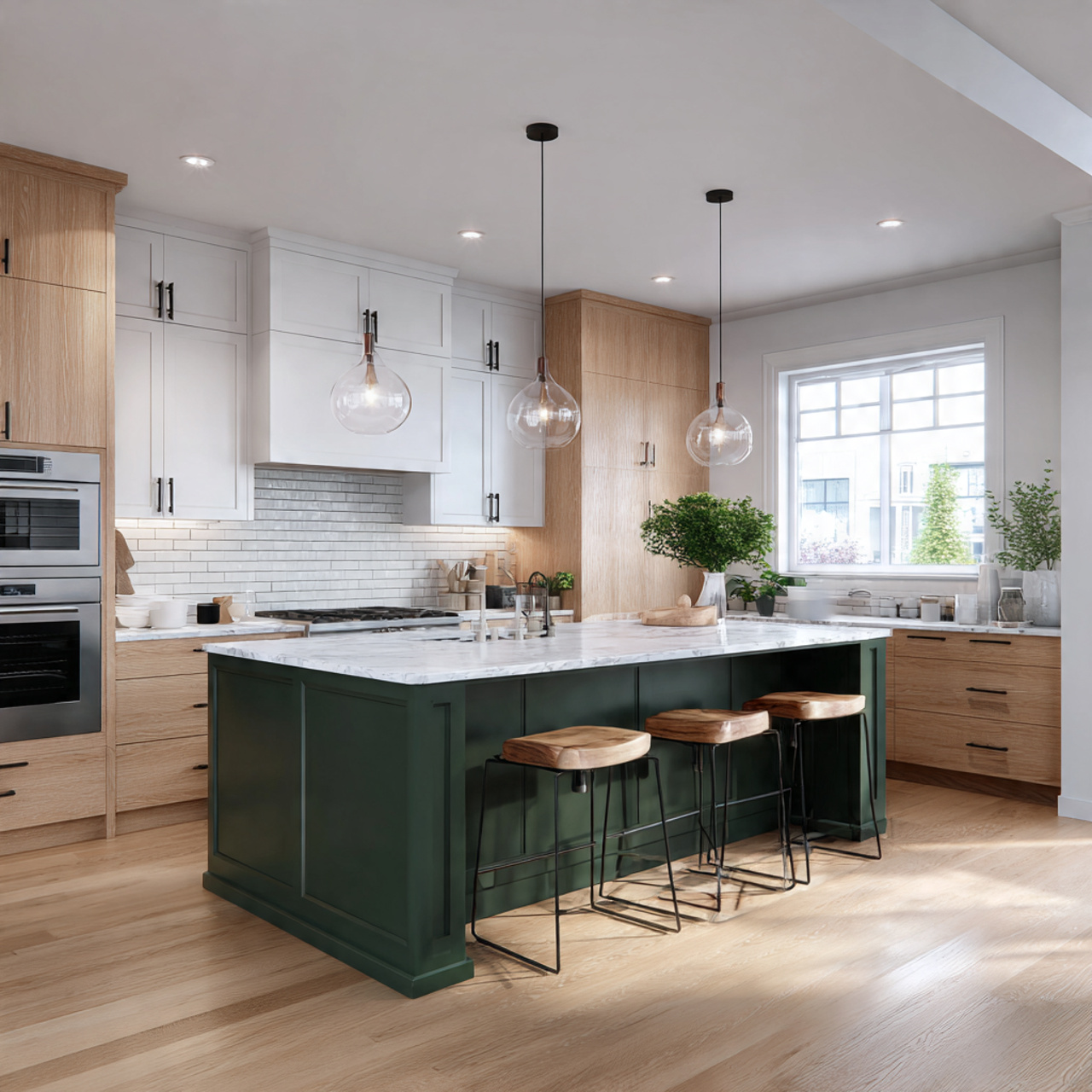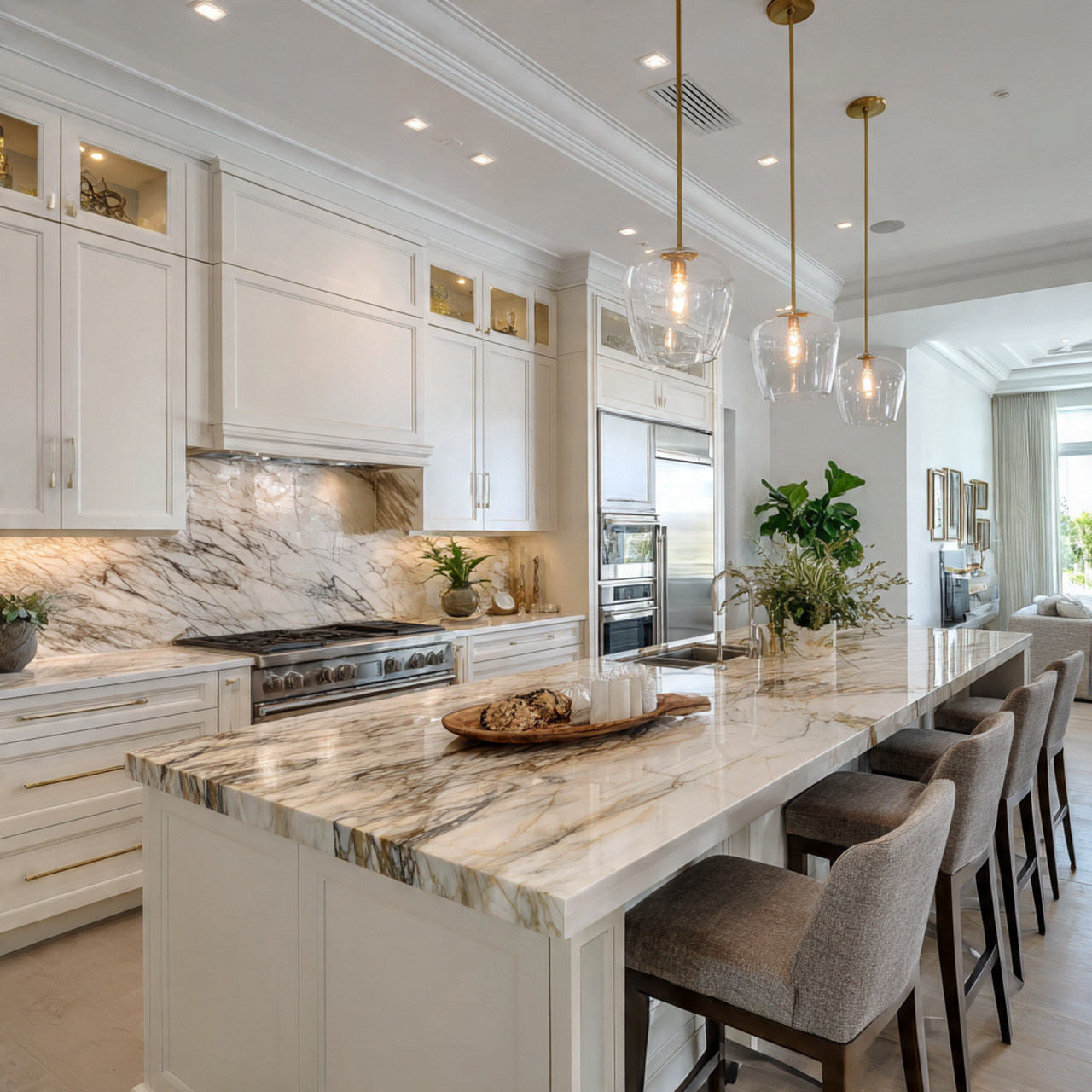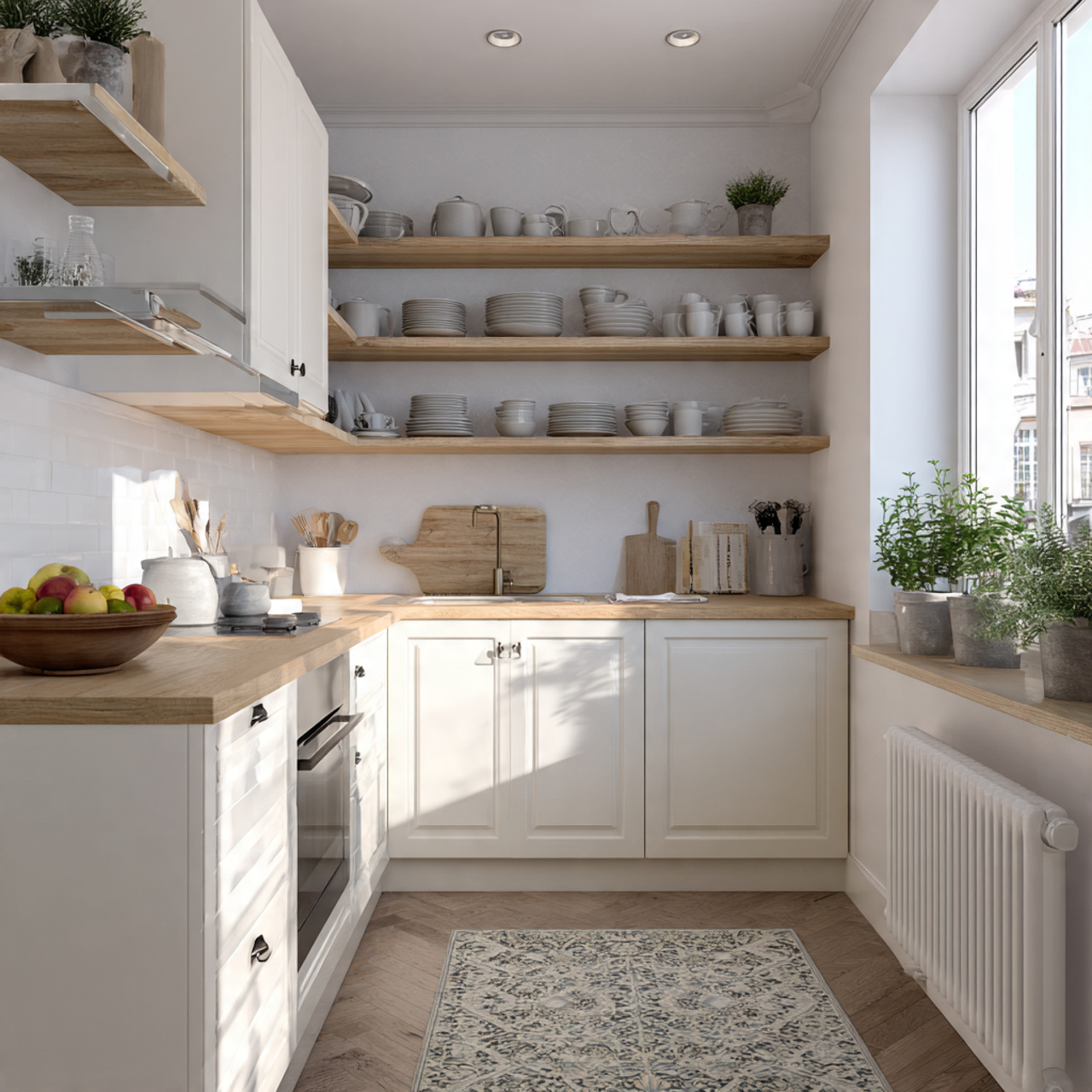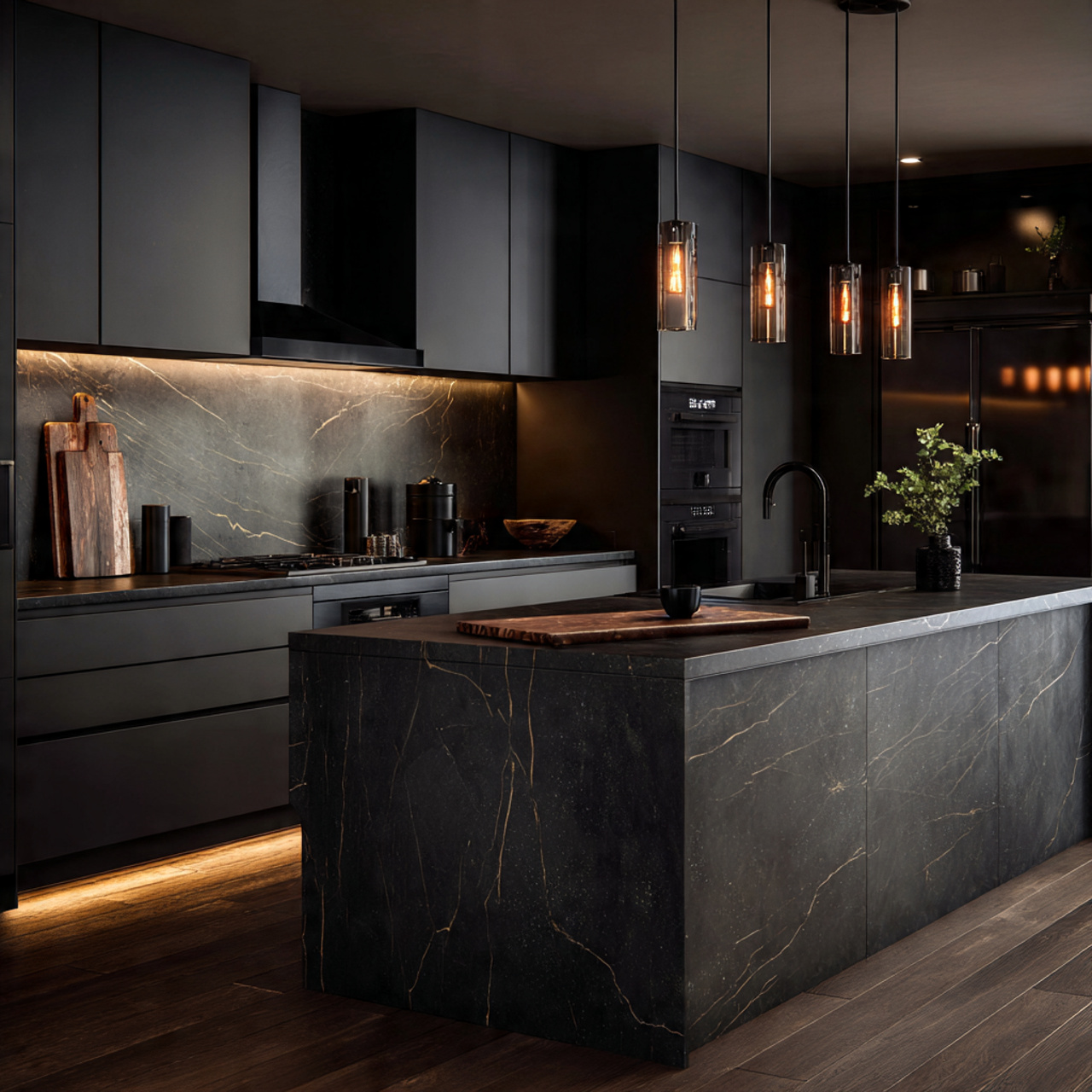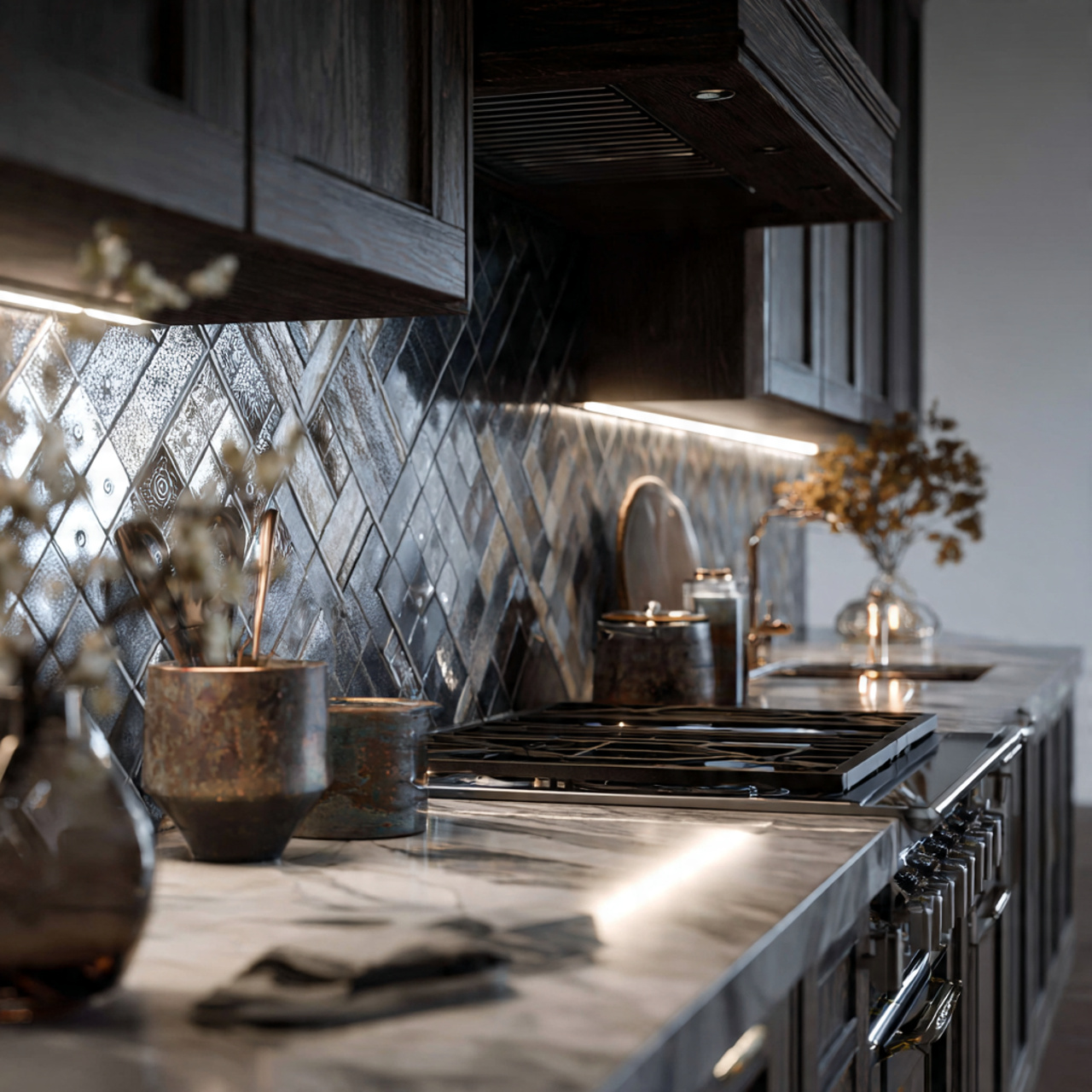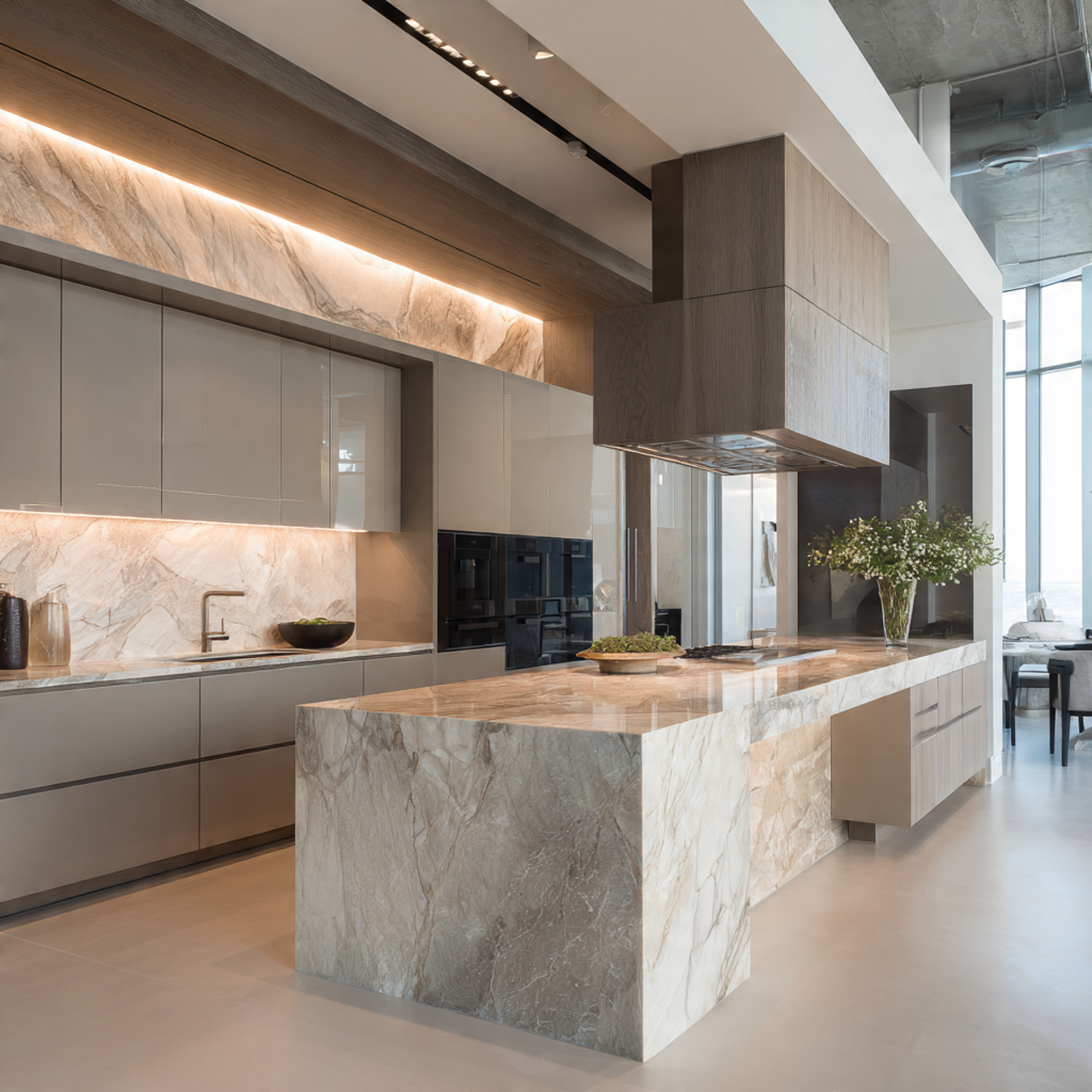
Kitchen Tiles Ideas for Modern, Stylish & Durable Kitchens
Kitchen tiles serve as the primary foundation for both the aesthetic appeal and the functional longevity of one of the most important rooms in any modern home. These versatile surfaces provide a protective barrier against moisture and spills while allowing homeowners to express their unique personal style through various textures.
Selecting the right materials involves understanding the specific needs of your cooking space, from the intensity of daily foot traffic to the likelihood of grease splashes near the stove. By investing in high-quality products, you ensure that your renovation remains beautiful and easy to manage for many years to come.
Choosing the Right Kitchen Tiles for Your Home
When you begin the process of selecting kitchen tiles, it is vital to consider how the material will interact with your existing cabinetry and countertop finishes. The right choice can make a small room feel much larger and more inviting while providing a surface that stands up to the rigors of a busy culinary environment.
Durability is just as important as appearance, especially in a room that experiences constant temperature changes and potential heavy impact from dropped utensils. Modern manufacturing has made it easier than ever to find options that offer the perfect balance between sophisticated design and rugged, long-lasting performance for kitchen tiles.
kitchen tiles
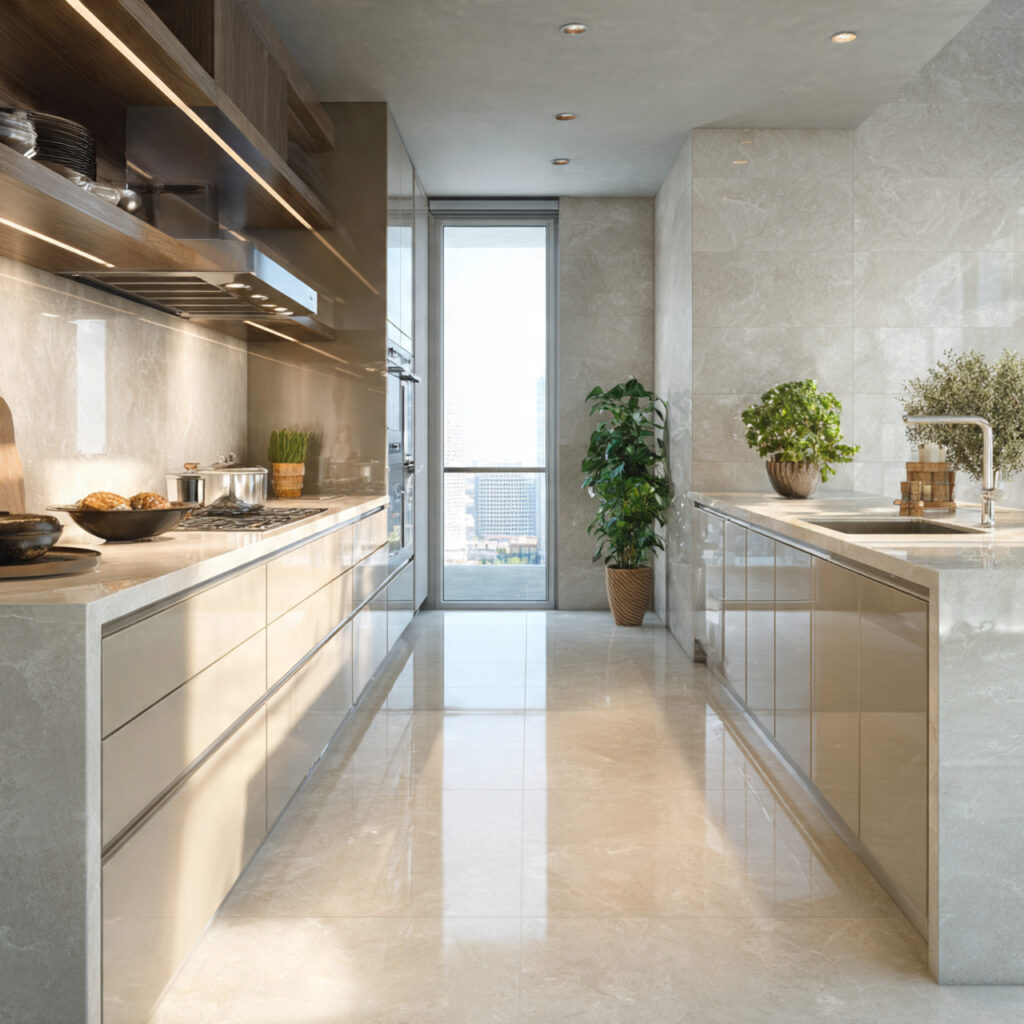
Standard kitchen tiles are available in a staggering array of materials including ceramic, porcelain, and natural stone to suit every possible budget. These units are designed to withstand the humidity and heat common in cooking environments, ensuring the structural integrity of your walls and floors remains intact.
Choosing the best kitchen tiles involves looking at the PEI rating to determine if the specific product is strong enough for the intended application. Most homeowners prefer a glazed finish for easier cleaning, as it prevents oils and food particles from staining the porous interior of the tile body.
kitchen wall tiles
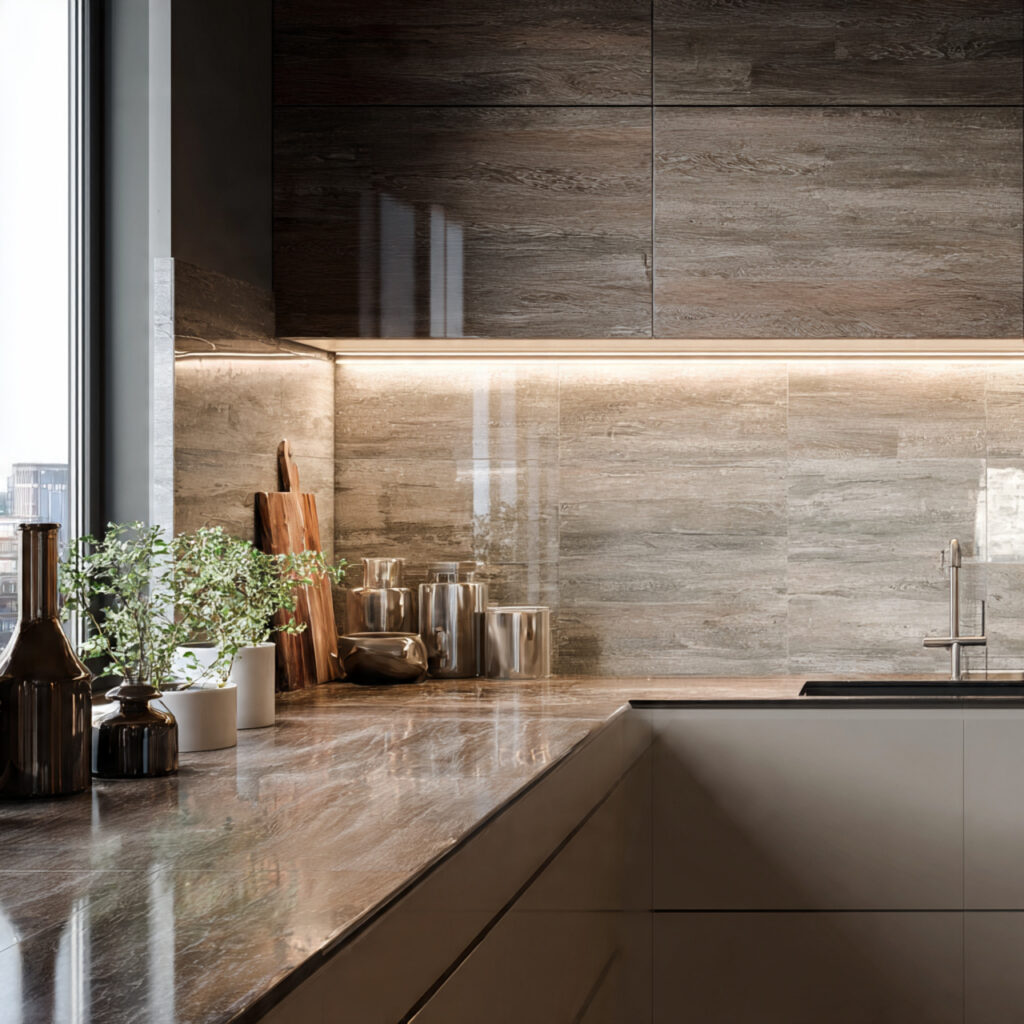
Installing kitchen wall tiles is a practical way to protect your vertical surfaces from steam, grease, and water damage that occurs during daily meal preparation. These tiles are often thinner and lighter than floor options, making them easier to install on drywall or cement board backer systems.
Many people choose kitchen wall tiles that feature a high-gloss finish because they reflect light beautifully, making the entire cooking area feel brighter and more spacious. This vertical application also serves as a primary focal point, allowing for creative patterns that draw the eye toward the heart of the home.
kitchen tiles wall
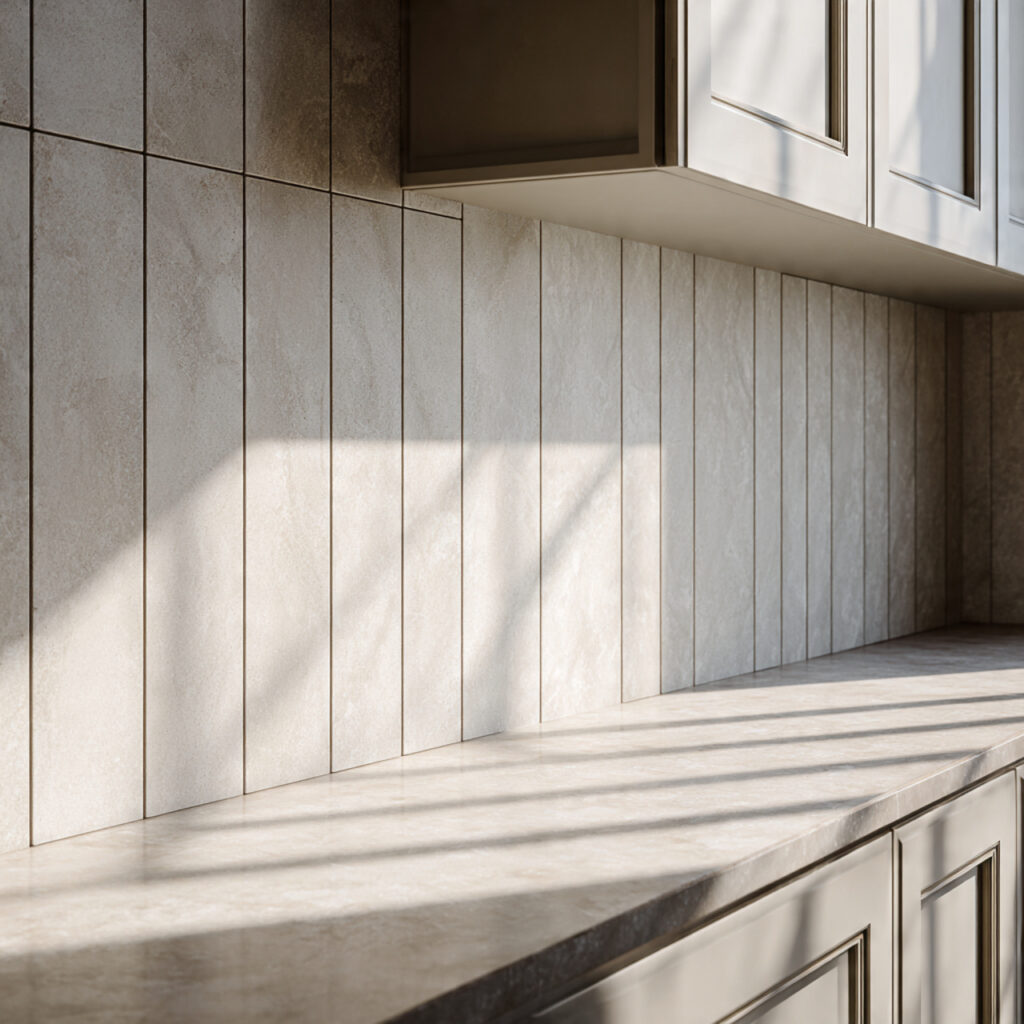
Designing a kitchen tiles wall requires careful planning to ensure the layout is symmetrical and avoids awkward small cuts in the corners or near the ceiling. A well-executed wall installation creates a seamless transition between the upper cabinets and the countertops, providing a cohesive and finished look.
When preparing a kitchen tiles wall, it is essential to use a high-quality adhesive that can support the weight of the tiles without slipping during the curing process. This ensures that the lines remain perfectly straight and the overall finish looks professional and polished for the long term.
kitchen tiles design
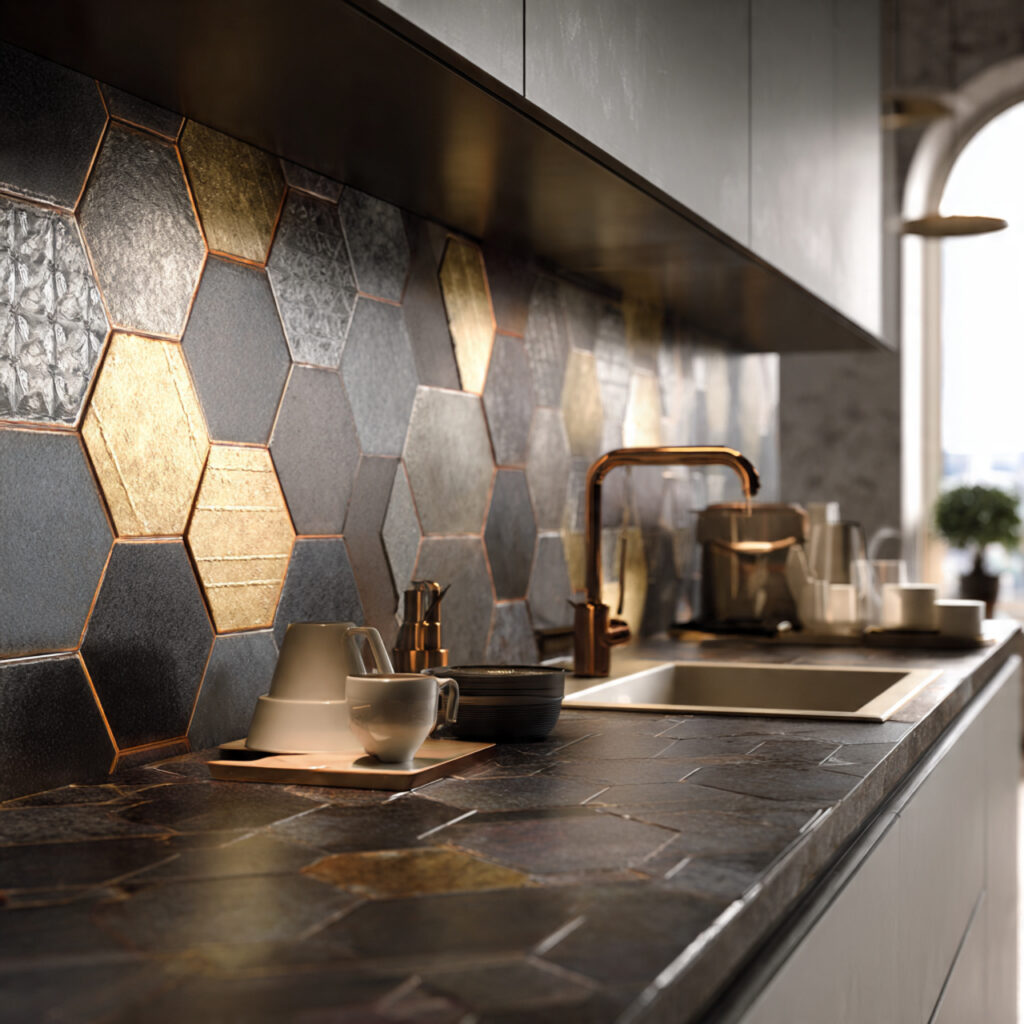
The current landscape of kitchen tiles design emphasizes bold textures and unique shapes like hexagons and pickets to break away from traditional square formats. Mixing different colors or creating a gradient effect can add a sense of movement and depth to an otherwise flat and neutral kitchen space.
Modern kitchen tiles design also incorporates digital printing technology, which allows ceramic surfaces to mimic the appearance of expensive wood or rare marble with incredible accuracy. This gives you the luxury look you desire while maintaining the practical benefits of a waterproof and scratch-resistant surface.
kitchen tile floor
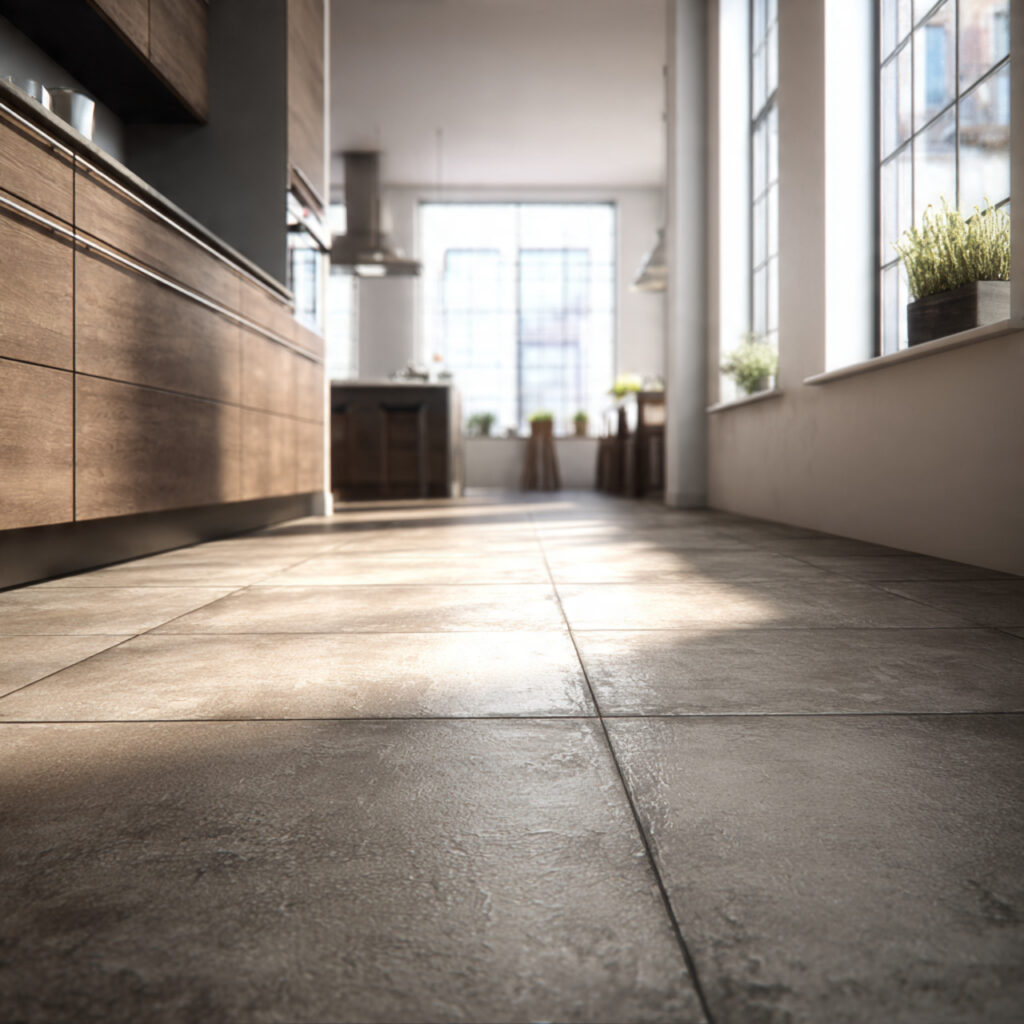
A dedicated kitchen tile floor must be robust enough to handle the weight of heavy appliances and the constant movement of chairs and foot traffic. It is important to select a material that offers a balance between a smooth feel and enough grip to prevent accidents in a wet environment.
Maintaining a kitchen tile floor is relatively simple if you choose a low-porosity material that does not require frequent resealing or specialized chemical cleaners. Frequent sweeping and occasional mopping with a neutral pH cleaner will keep the surface looking brand new for several decades.
kitchen floor tiles
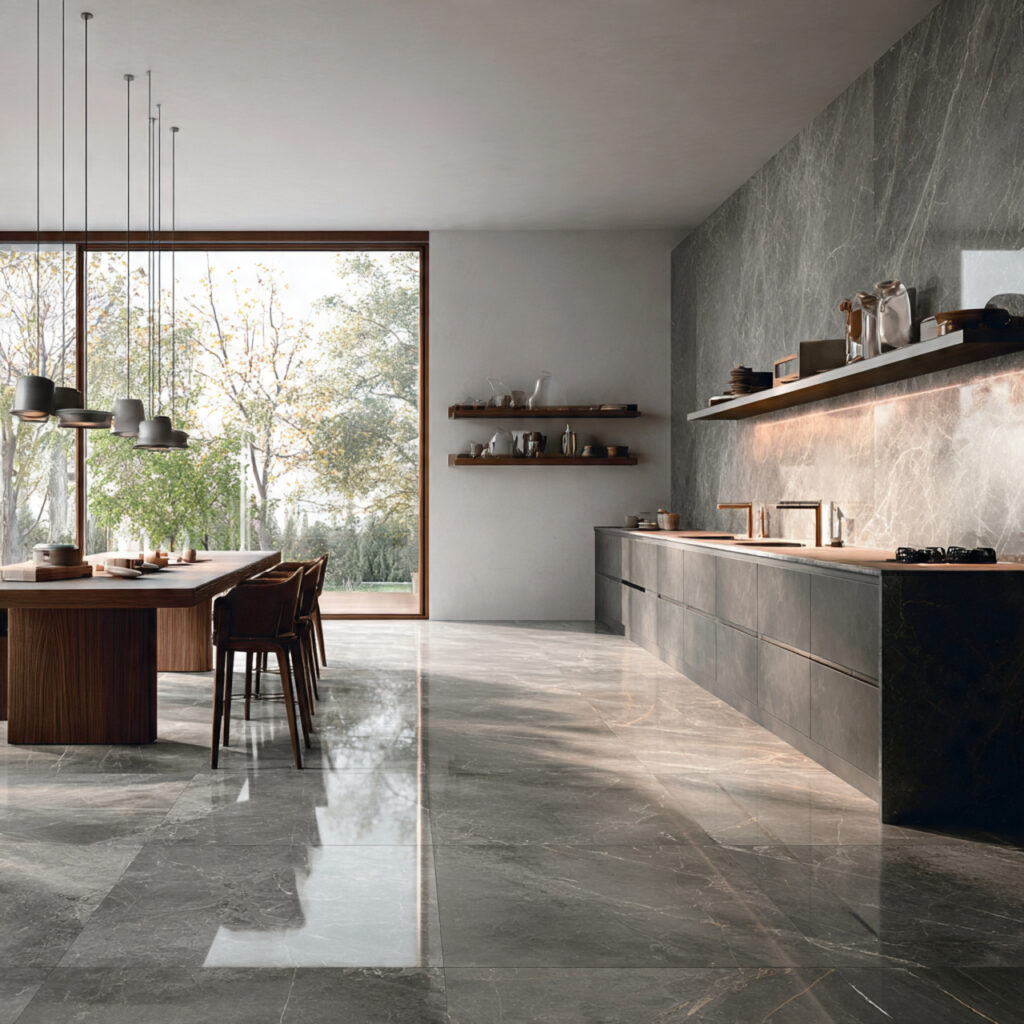
High-quality kitchen floor tiles are typically made of porcelain because it is denser and less absorbent than standard ceramic, making it ideal for high-spill areas. These tiles come in various sizes, with larger formats becoming increasingly popular for their ability to minimize the number of visible grout lines.
When browsing for kitchen floor tiles, always check the slip-resistance rating to ensure the surface provides adequate traction even when it is damp or oily. This safety feature is especially critical for families with young children or elderly members who need a stable surface underfoot.
kitchen floor
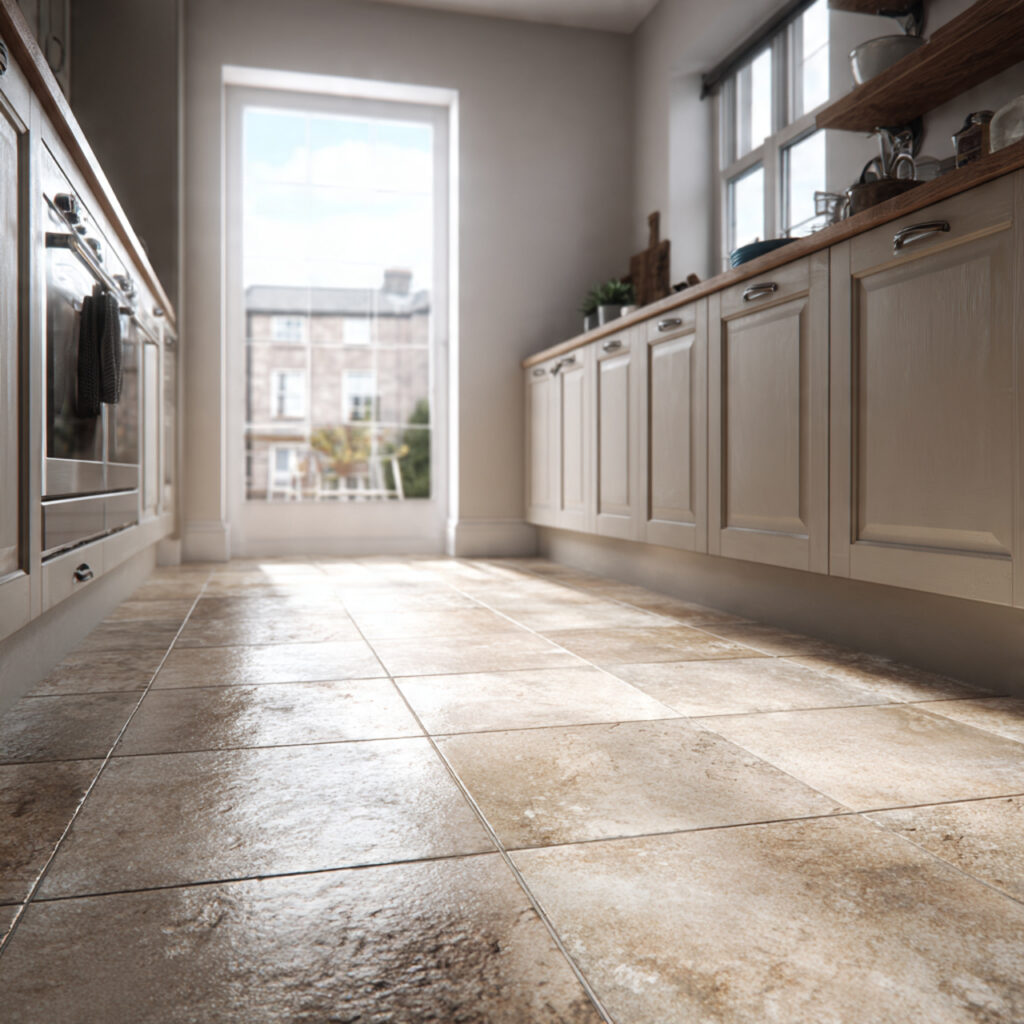
The kitchen floor is often the most abused surface in the house, facing dropped pots, spilled liquids, and heavy traffic from pets and family members. Choosing a hard-wearing surface ensures that the room remains hygienic, as tiles do not trap allergens or odors like carpet or wood might.
Updating your kitchen floor can significantly increase the resale value of your property by providing a modern and durable foundation that appeals to buyers. It is an investment that pays off both in daily utility and in the long-term financial health of your home renovation project.
kitchen flooring
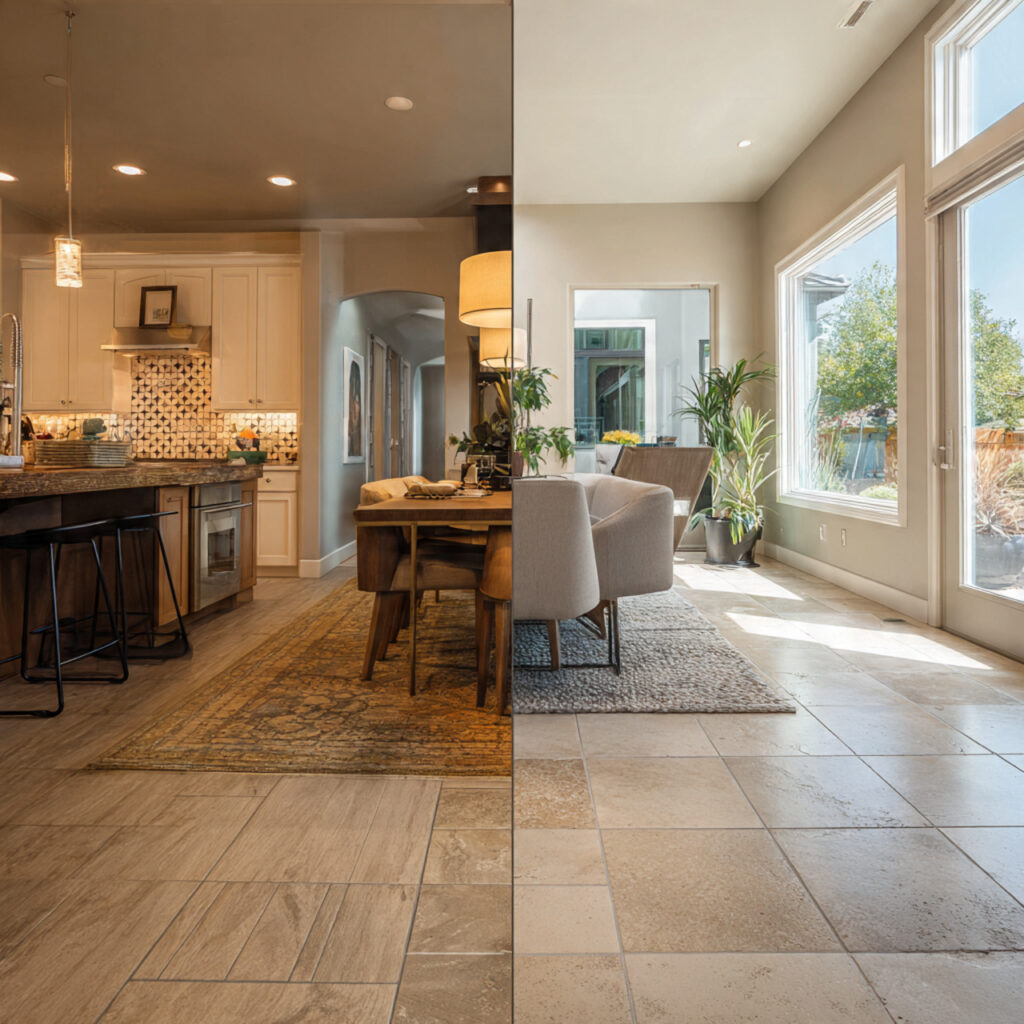
Selecting the right kitchen flooring involves weighing the pros and cons of different materials such as luxury vinyl, natural stone, or traditional fired clay. Each option offers a different level of comfort underfoot and varying requirements for long-term care and professional maintenance.
The best kitchen flooring solutions are those that integrate seamlessly with the rest of the home’s transition areas, such as the dining or living room. By choosing a consistent style, you can create an open-concept feel that makes the entire floor plan seem more unified and professionally designed.
Porcelain Surface Longevity
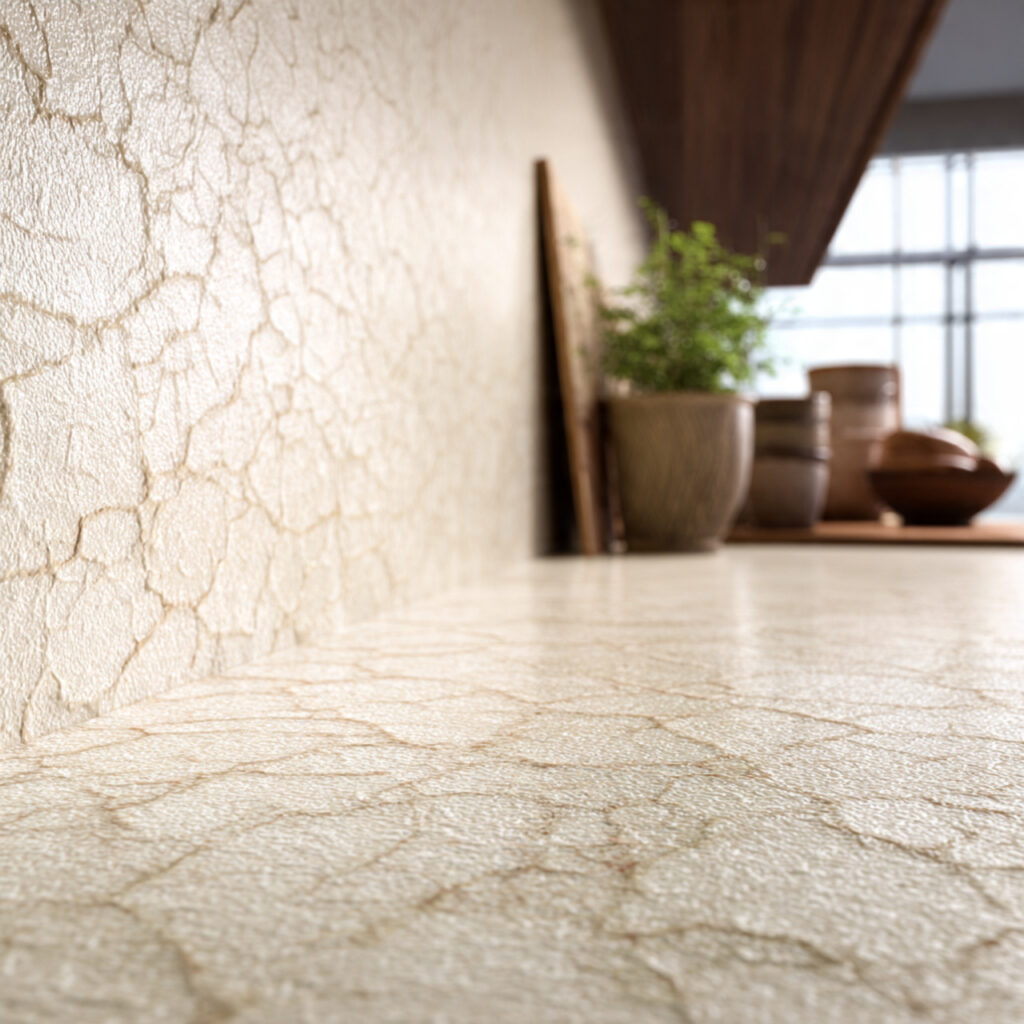
Porcelain is widely regarded as the gold standard for kitchen tiles because of its exceptional hardness and resistance to chipping or cracking under pressure. Because the color often goes all the way through the tile, minor scratches are almost invisible compared to glazed ceramic options.
This material is fired at extremely high temperatures, which creates a vitrified surface that is almost entirely waterproof without the need for additional coatings. This makes it the perfect choice for busy households that want a “set it and forget it” solution for their renovation needs.
Ceramic Backsplash Versatility
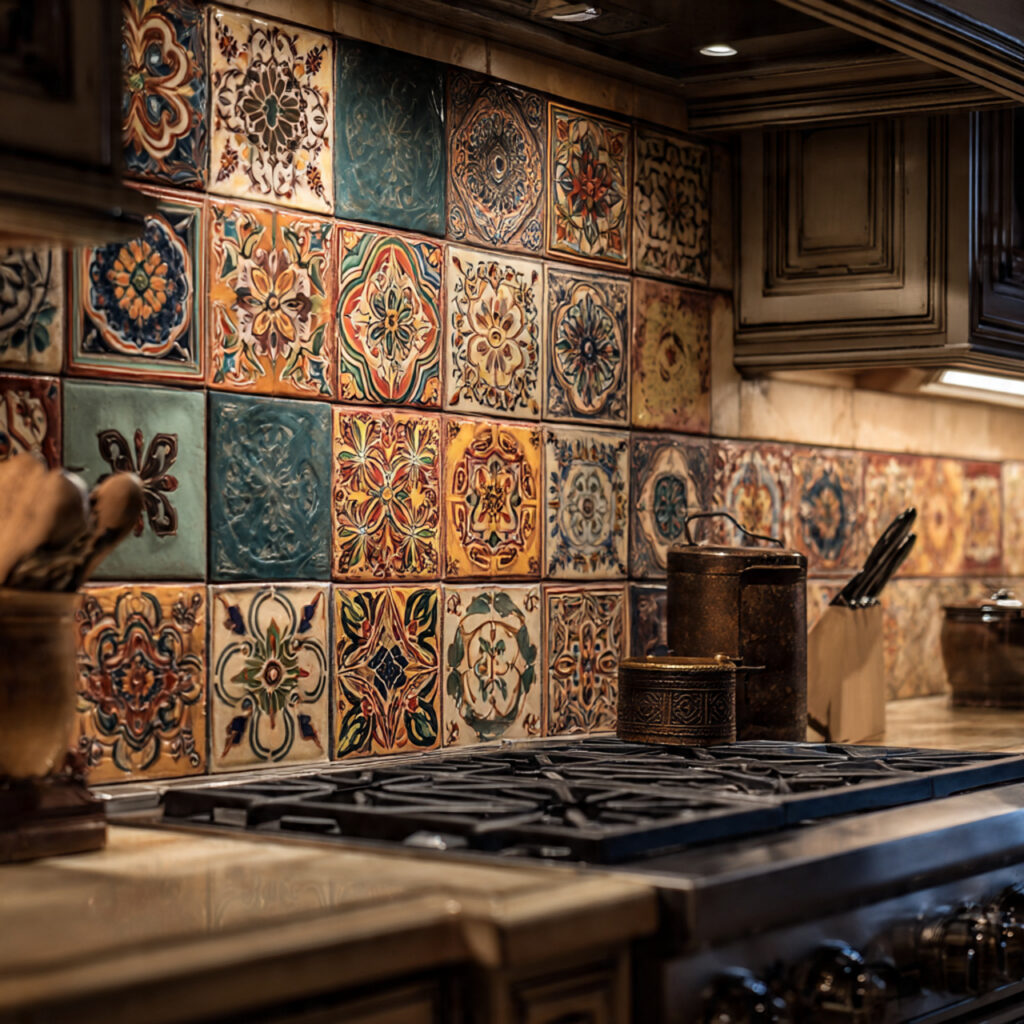
Ceramic is a fantastic material for backsplashes because it is easy to cut and comes in an infinite variety of colors and hand-painted artistic patterns. It allows for a high degree of customization at a lower price point than most other decorative wall covering materials.
Using ceramic kitchen tiles for your backsplash ensures that your walls are protected from high heat and splashes from boiling water or sauces. It is a classic choice that remains relevant regardless of changing interior design trends due to its timeless appeal and functional nature.
Modern Subway Styles
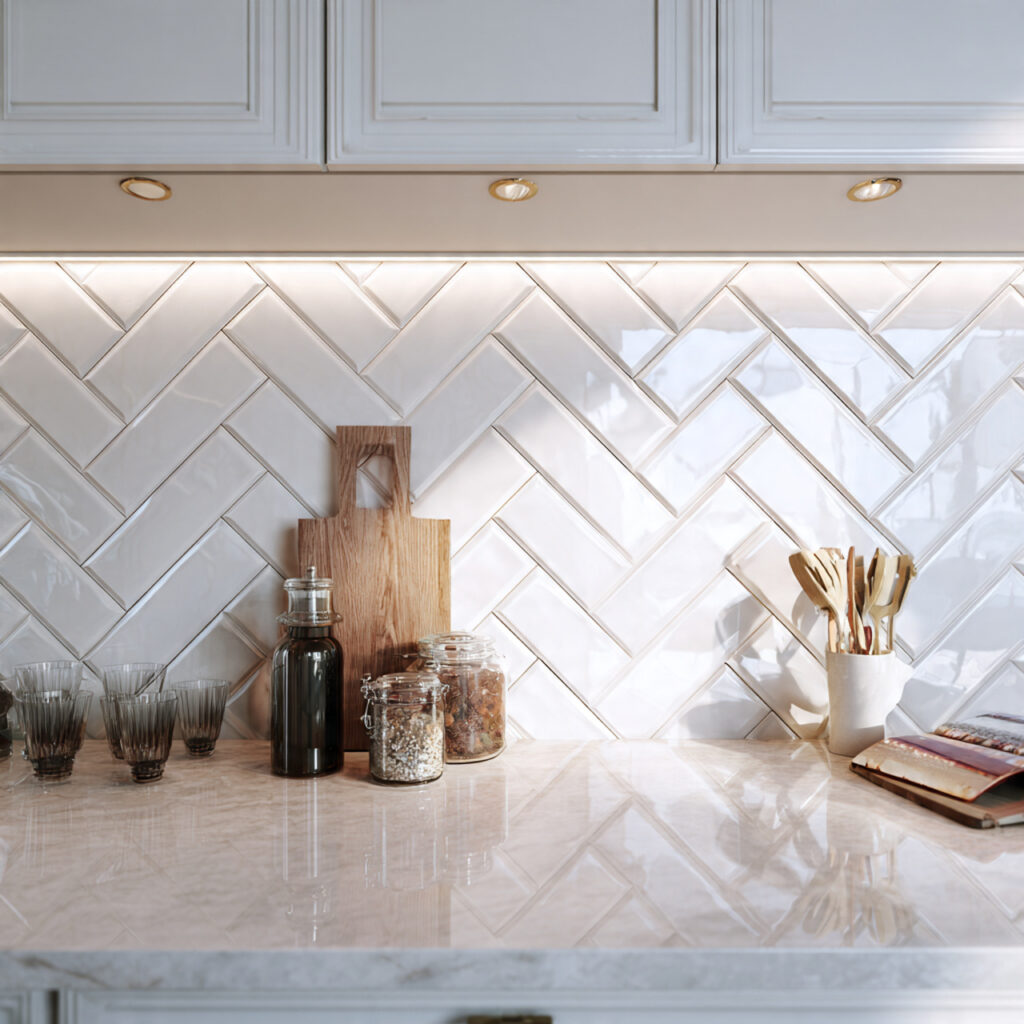
Subway tiles have evolved far beyond the basic white rectangle, now featuring bevelled edges, crackle glazes, and elongated dimensions for a modern twist. They provide a clean and organized look that complements both farmhouse and ultra-modern kitchen aesthetics with ease.
Installing these tiles in a vertical stack or a herringbone pattern can completely change the vibe of the room without increasing the material cost. Their versatility makes them a favorite among designers who want a reliable look that still offers room for creative expression.
Natural Stone Elegance
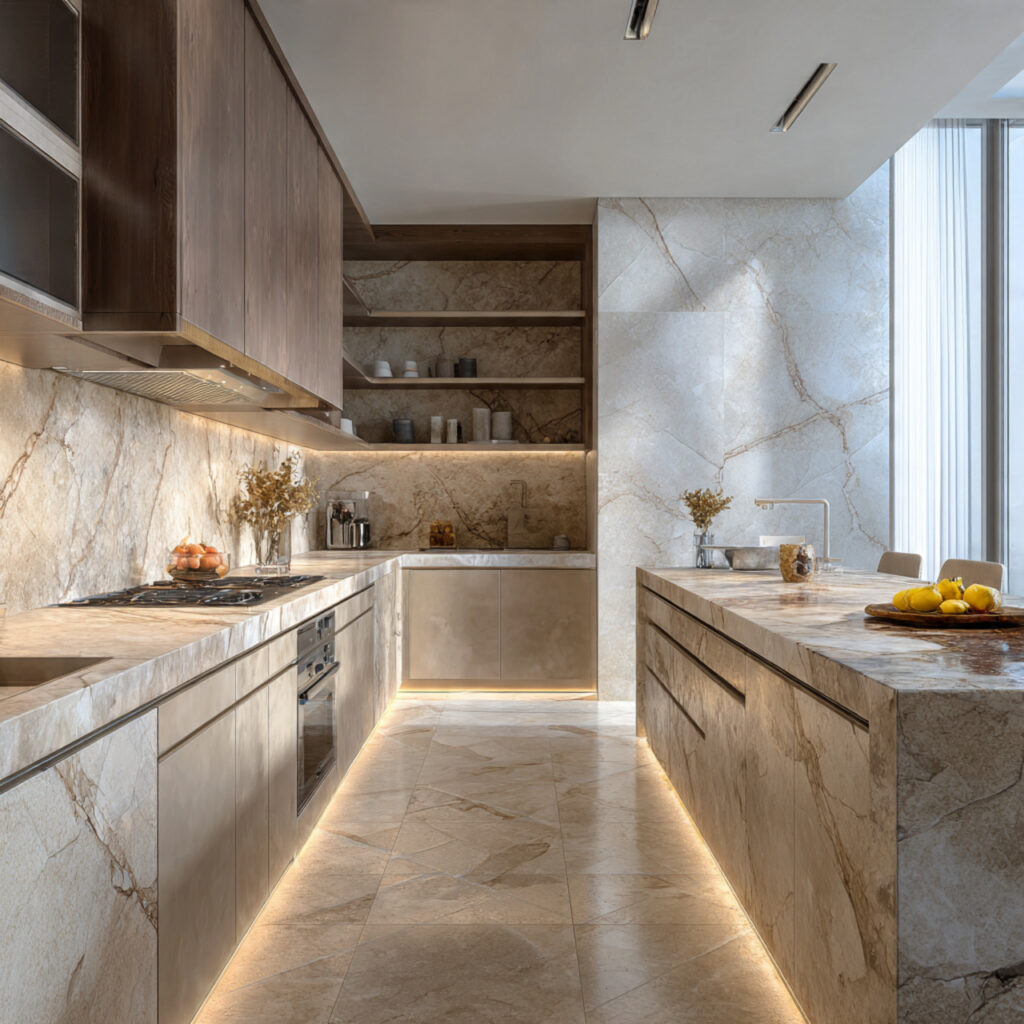
Natural stone like travertine, slate, or marble brings a unique, organic beauty to the kitchen that cannot be perfectly replicated by man-made materials. Every piece is different, ensuring that your installation is a one-of-a-kind work of art that adds character to the space.
However, natural stone requires a bit more care, including regular sealing to prevent oils and acidic liquids from staining the surface. For many, the minor extra maintenance is a small price to pay for the incredible texture and high-end feel that stone provides.
Glass Mosaic Accents
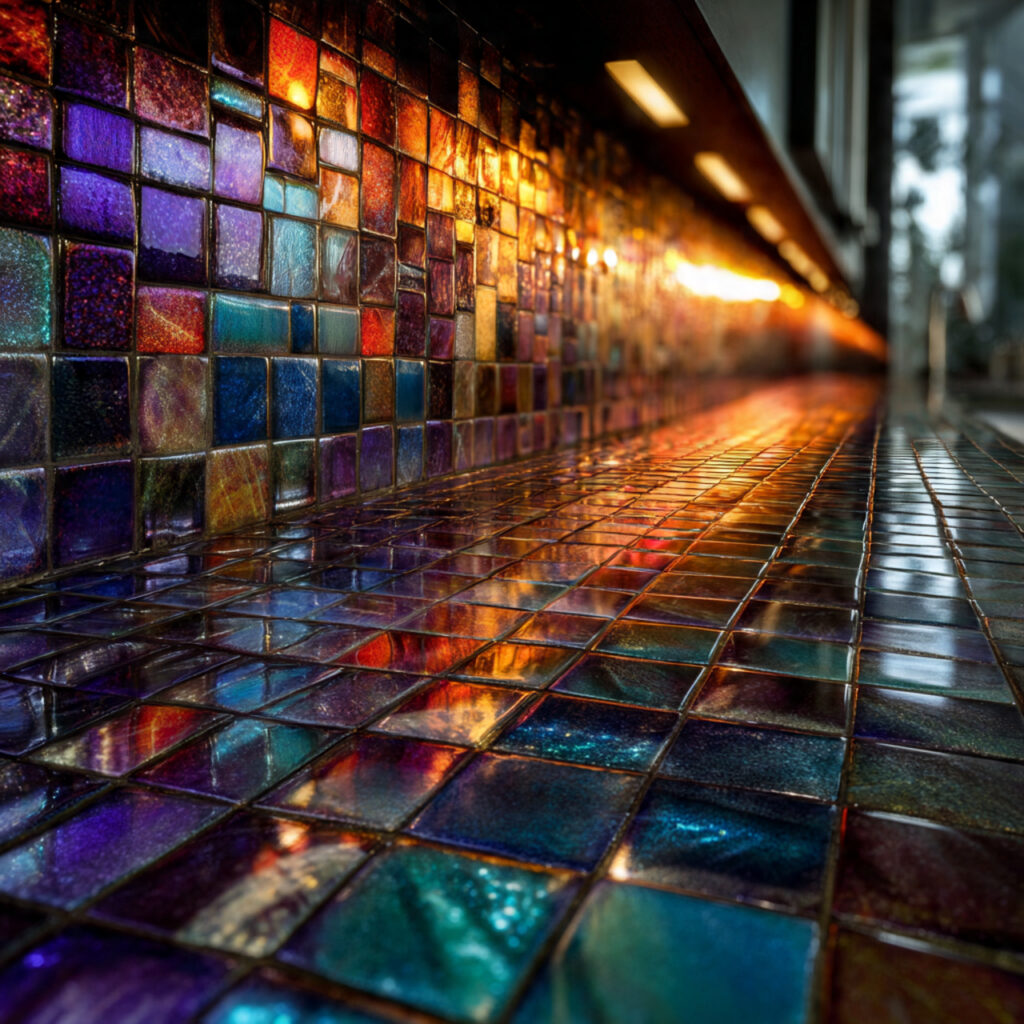
Glass tiles are a brilliant way to introduce color and light reflection into a dark kitchen, as they naturally brighten up the space by bouncing light around. They are non-porous and highly resistant to mold and mildew, making them a very hygienic choice for wet areas.
Mosaics are often sold on mesh sheets, which simplifies the installation process for intricate patterns and ensures consistent spacing between the small pieces. They work beautifully as an accent strip or a full-wall feature to create a stunning visual impact behind the range.
Large Format Slab Benefits
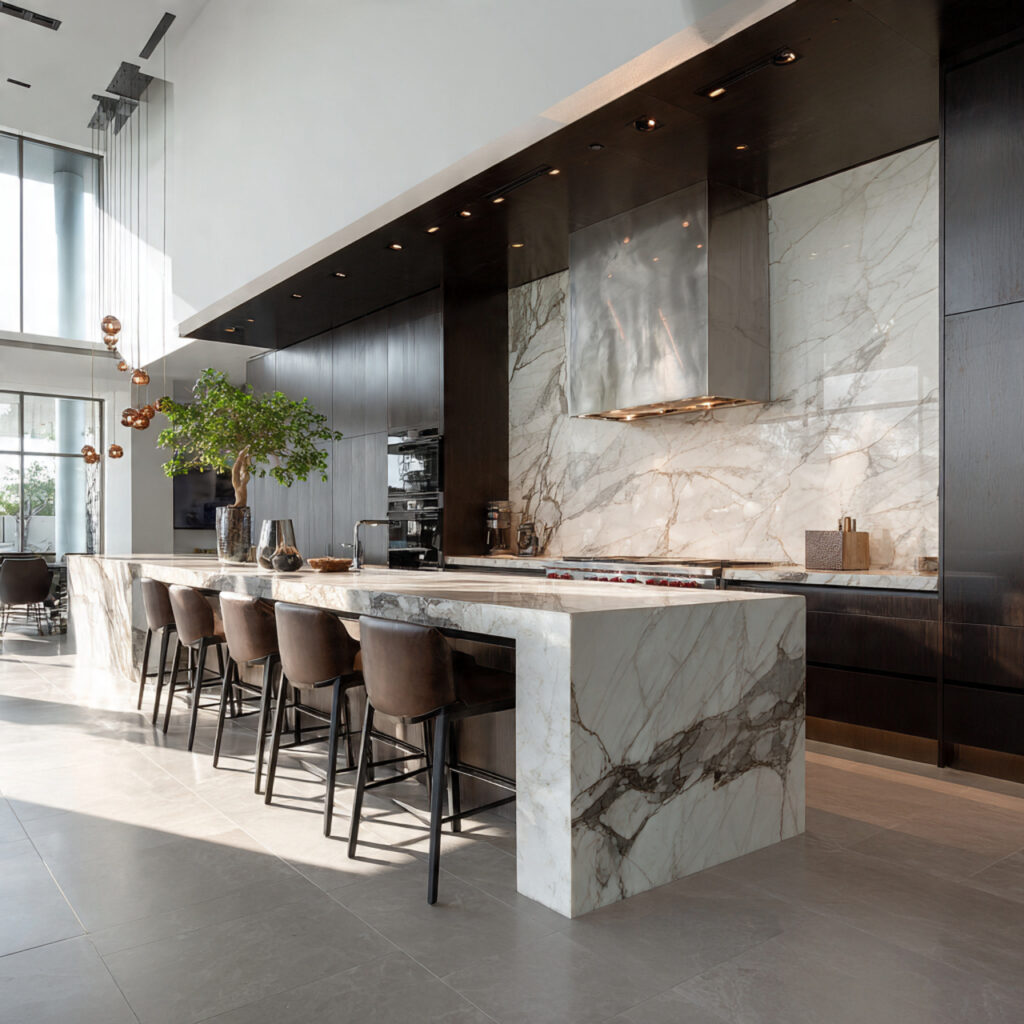
Large format tiles are becoming a staple in modern design because they create a sleek, expansive look with very few grout lines to clean. This creates a more “monolithic” appearance that can make a standard kitchen feel like a high-end professional chef’s space.
The reduced number of joints means there is less area for dirt to accumulate, making the overall maintenance of the room much faster. These slabs are excellent for floors and can even be used on walls to create a dramatic and continuous stone-look surface.
Patterned Cement Aesthetics
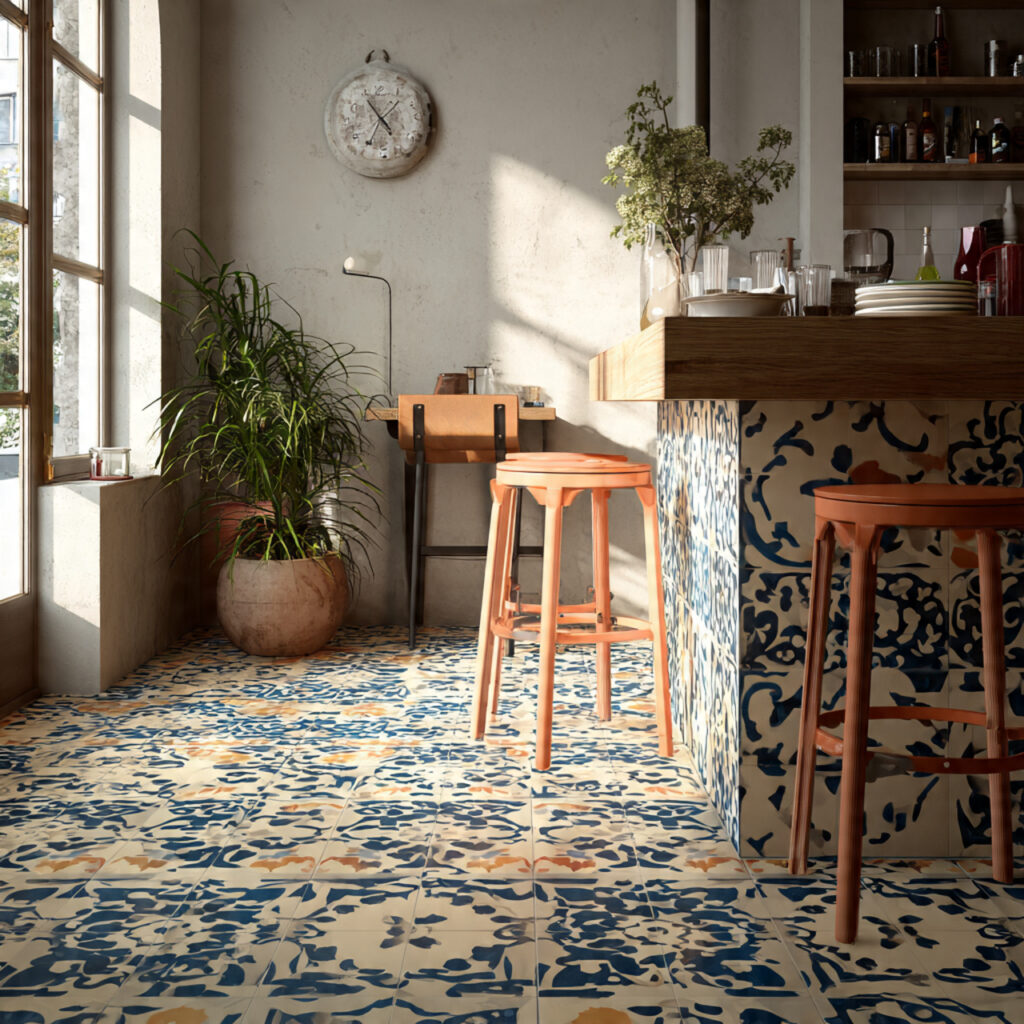
Cement tiles are known for their matte finish and incredibly vibrant, encaustic patterns that bring a Mediterranean or Bohemian flair to the home. They are thick and durable, providing a substantial feel underfoot that is different from thinner ceramic options.
While they are beautiful, cement surfaces are porous and need to be treated with a high-quality sealer to maintain their color and prevent staining. They are perfect for those who want to make a bold statement and don’t mind the natural patina that develops over time.
Marble Look Finishes
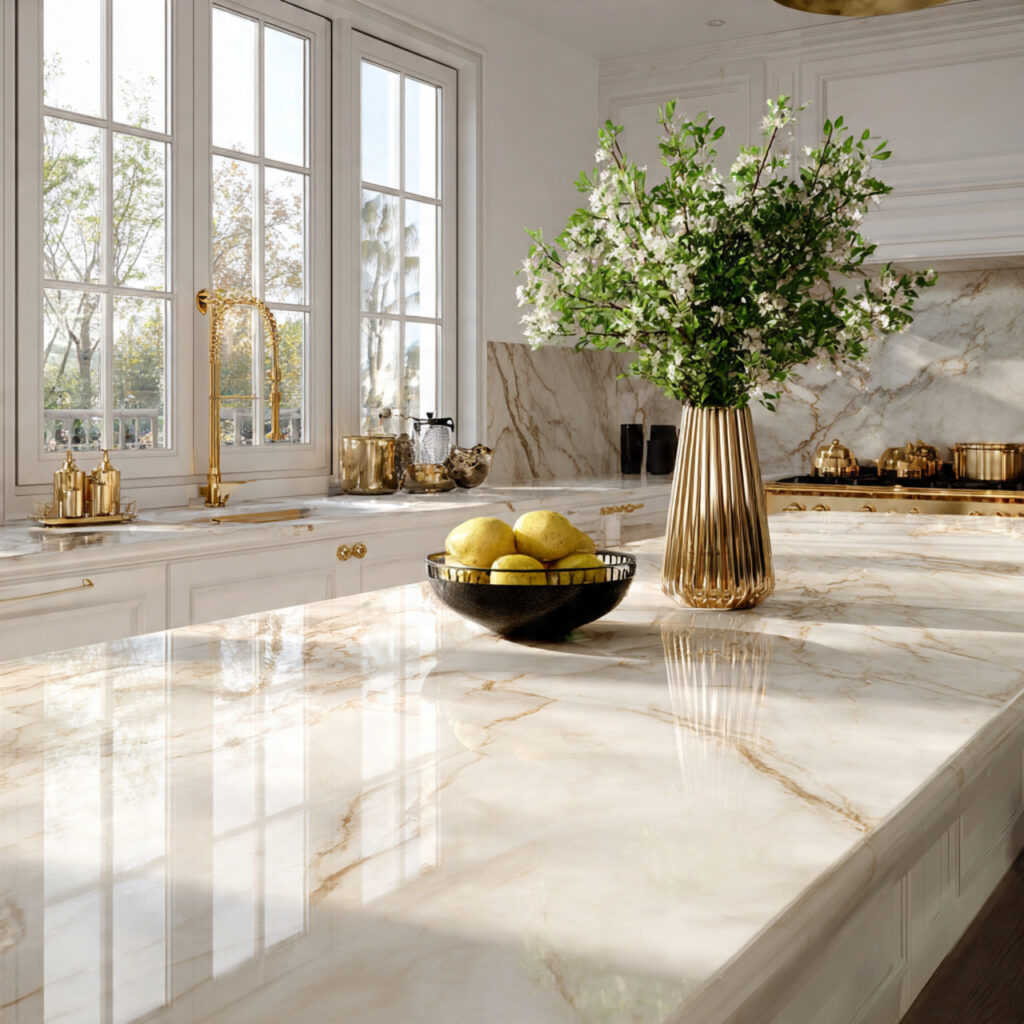
Marble-look porcelain allows you to enjoy the sophisticated veining of Italian marble without the high cost or the extreme sensitivity to acids like lemon juice. It offers a classic luxury aesthetic that never goes out of style and pairs perfectly with gold or black fixtures.
These kitchen tiles are available in both polished and matte finishes, allowing you to choose between a high-shine glamor or a more understated contemporary look. They provide the perfect backdrop for white cabinetry, creating a clean and airy atmosphere in the cooking area.
Slip Resistance Importance
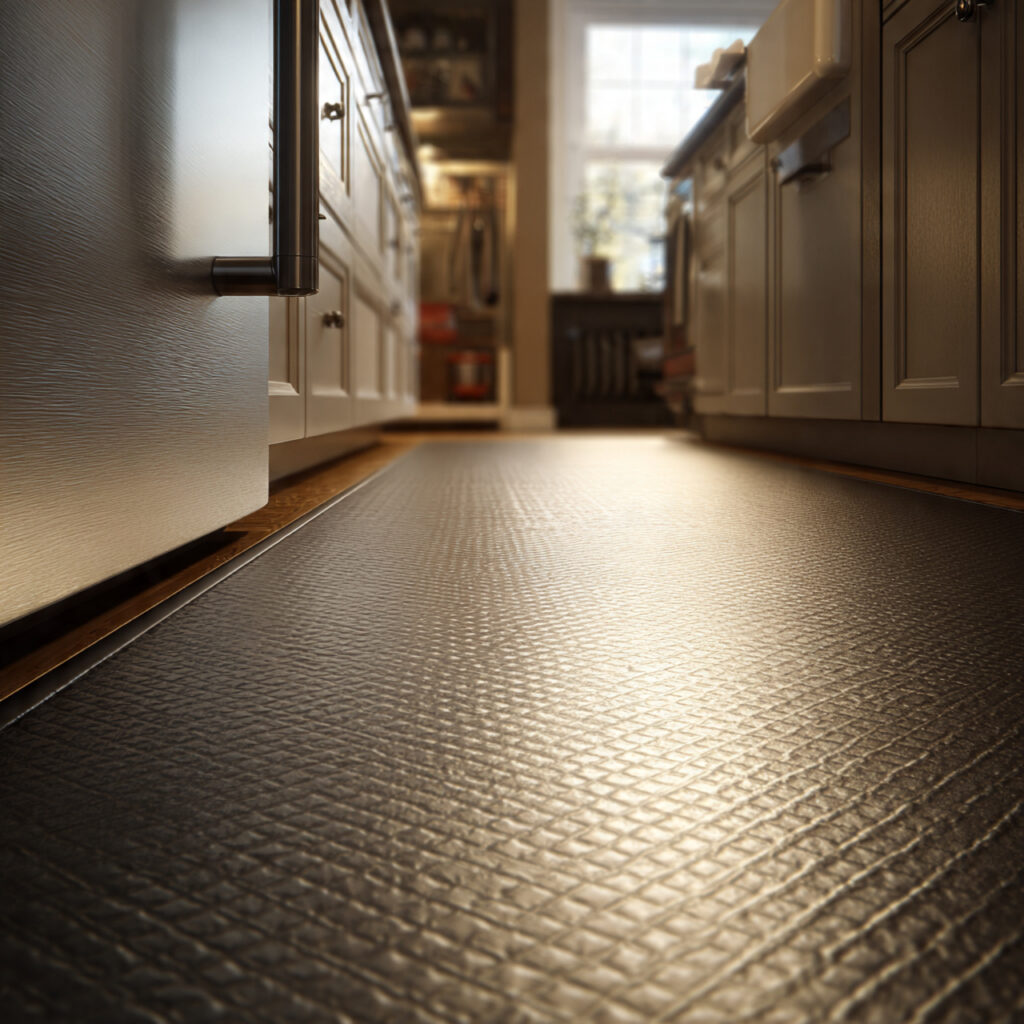
Safety should always be a priority when choosing floor coverings, and the Dynamic Coefficient of Friction (DCOF) rating is the standard to look for. A rating of 0.42 or higher is generally recommended for areas that are likely to get wet to ensure safe passage.
Textured finishes or “grip” glazes can provide the necessary traction without making the tile feel rough or difficult to clean. This is a crucial consideration for anyone who loves to cook and spends a lot of time moving quickly between the sink, stove, and fridge.
Grout Color Selection
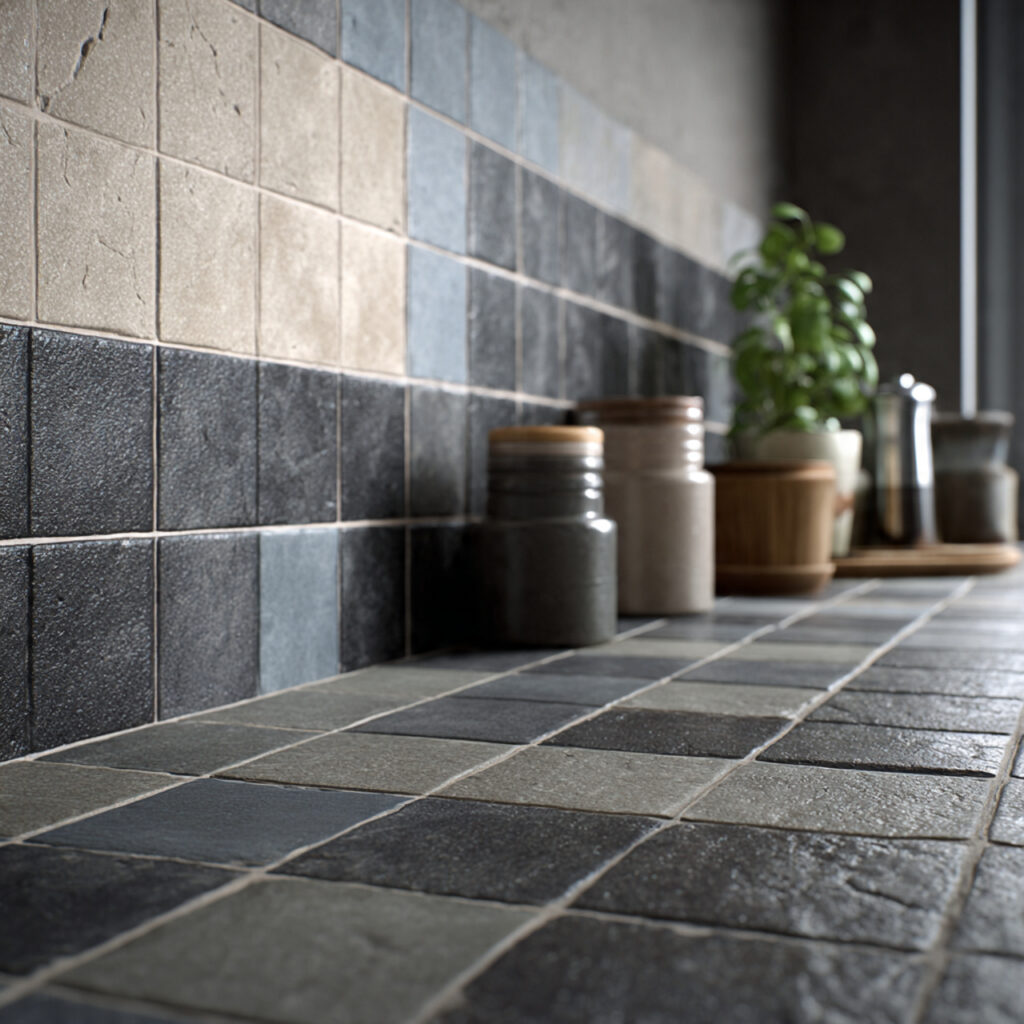
The color of your grout can either make your tiles blend together for a seamless look or stand out for a high-contrast, graphic effect. Darker grouts are excellent for hiding dirt in high-traffic areas, while lighter grouts can make a space feel more open and pristine.
Using a high-quality epoxy grout can also improve the longevity of your kitchen tiles by providing a stain-proof and waterproof seal between the units. This prevents moisture from seeping behind the tiles and causing structural issues or mold growth within the walls.
Cleaning and Maintenance
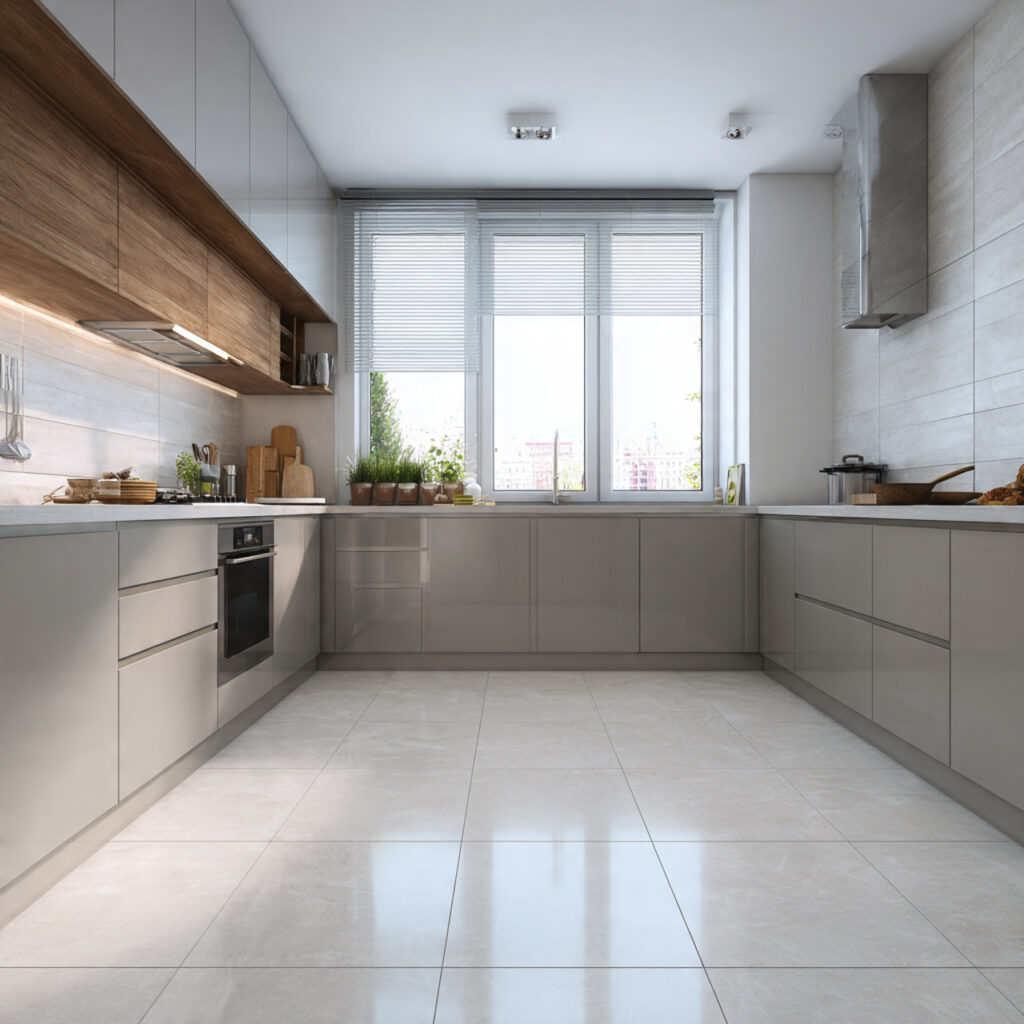
Maintaining kitchen tiles is a straightforward process that usually only requires warm water and a mild detergent to remove surface grime. Avoiding abrasive scrubbers is important to prevent scratching the glaze, which can dull the appearance of the surface over several years.
For deep cleaning, a mixture of baking soda and water can help lift stubborn stains from grout lines without damaging the surrounding material. Regular care ensures that the hygienic properties of the tile are maintained, keeping your food preparation area safe for your family.
Heat Resistant Materials
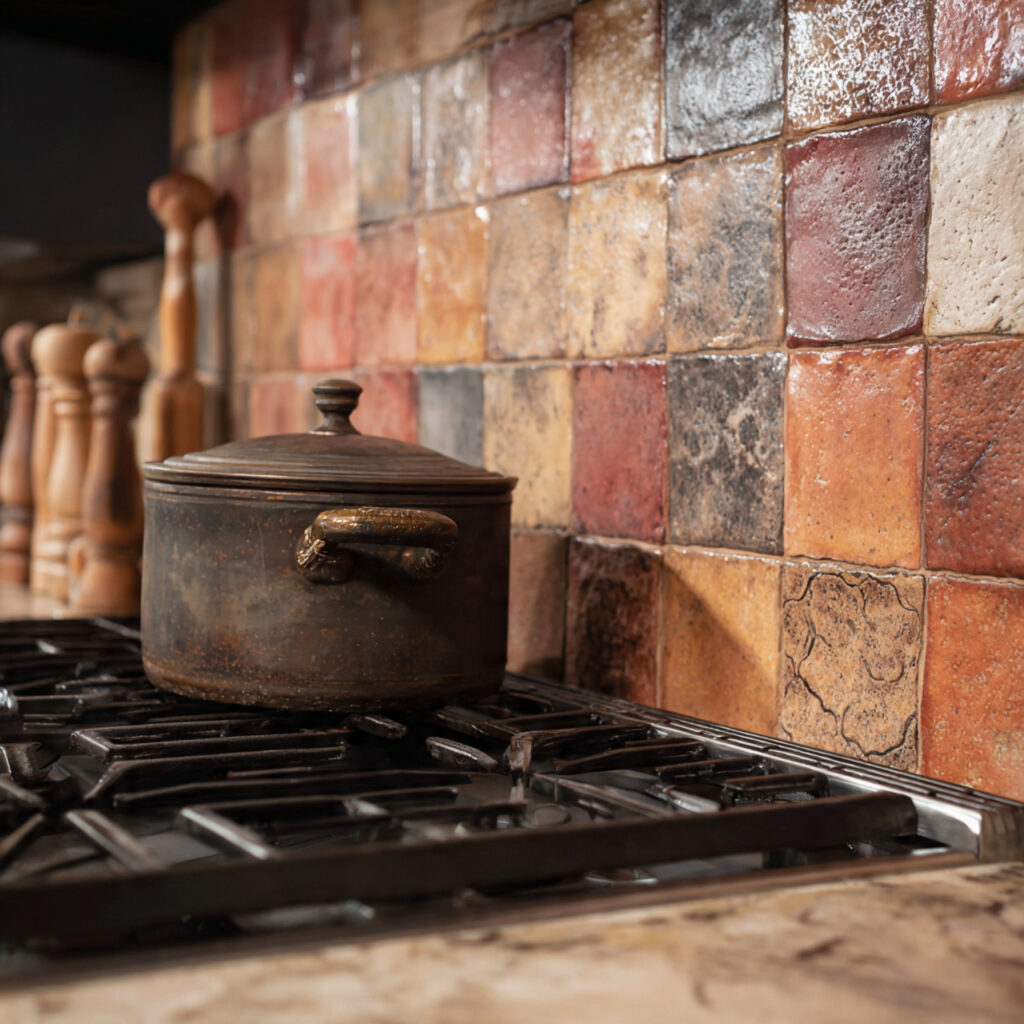
The area behind the stove is subject to extreme temperature fluctuations, making heat resistance a vital quality for any backsplash material. Fired clay tiles are naturally fireproof and will not warp, melt, or release toxic fumes when exposed to high heat from cooking.
This thermal stability ensures that your wall remains protected and that the adhesive bond does not weaken over time due to expansion and contraction. It is one of the many reasons why tiles remain the preferred choice for commercial and residential kitchens alike.
Eco Friendly Tiling
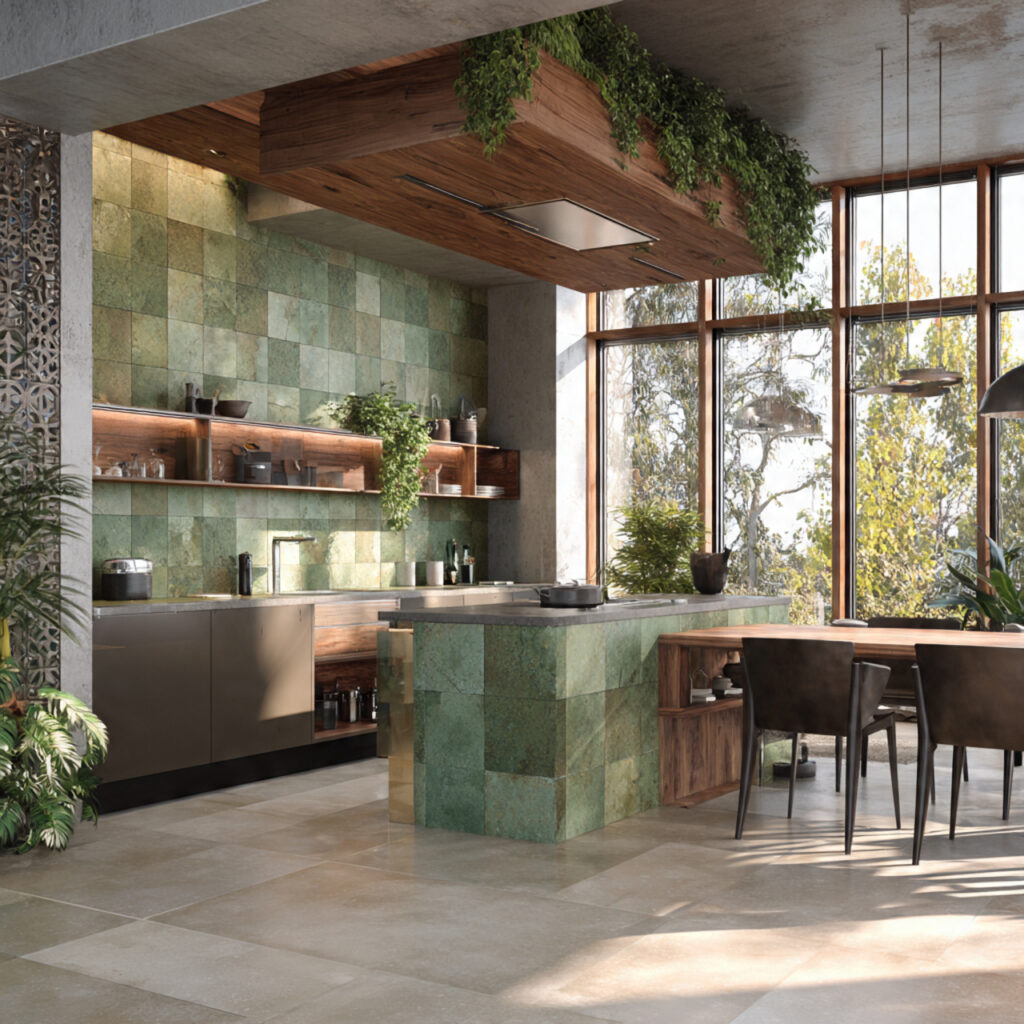
Many modern manufacturers are now producing tiles made from recycled content, reducing the environmental impact of your home renovation project. These sustainable options offer the same level of durability and style as traditional products while helping to conserve natural resources.
Additionally, because kitchen tiles last so long, they are inherently more sustainable than materials that need to be replaced every few years. Their long lifespan reduces waste in landfills and provides a better return on investment for the environmentally conscious homeowner.
Underfloor Heating Integration
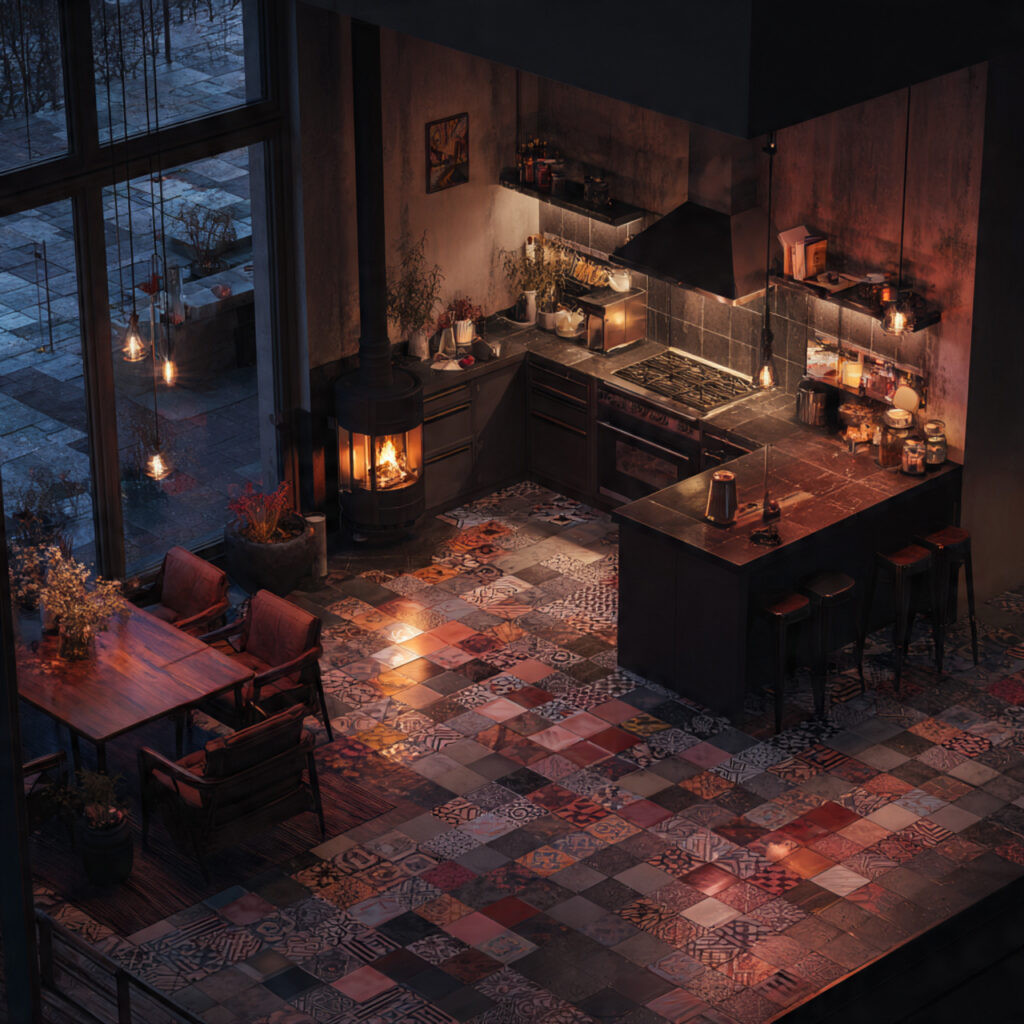
Tile is an excellent conductor of heat, making it the perfect partner for electric or hydronic underfloor heating systems. This eliminates the “cold floor” problem often associated with stone or ceramic, providing a cozy and luxurious feel during the winter months.
The ability to hold and slowly radiate heat can also improve the energy efficiency of your home by providing a steady ambient temperature. It transforms the kitchen into a warm and welcoming gathering place for family and friends throughout the year.
Herringbone Layout Patterns
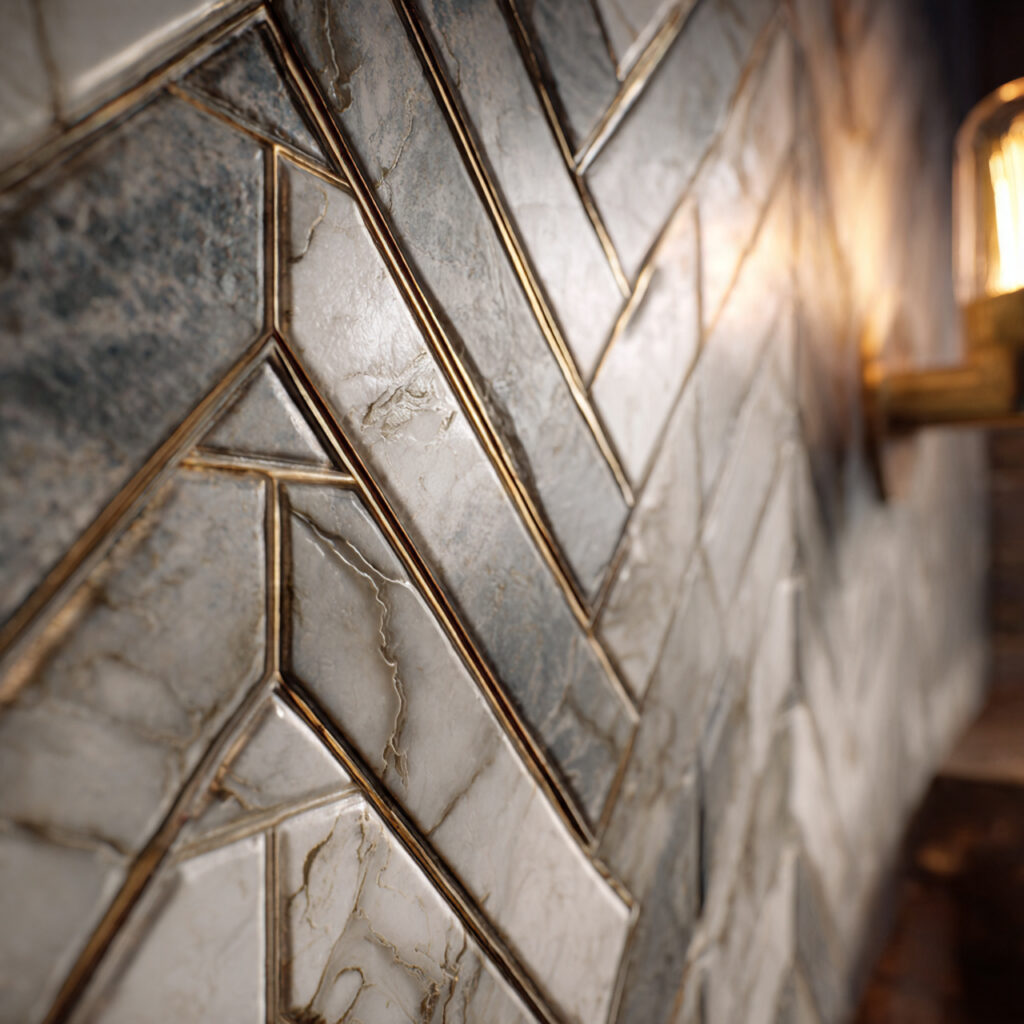
A herringbone layout involves placing rectangular tiles at 45-degree angles to create a “V” shape that adds a sense of luxury and traditional craftsmanship. It is a sophisticated way to use affordable subway tiles to create a high-end architectural feature in your home.
This pattern is effective at drawing the eye across the room, which can help to make a narrow kitchen feel wider and more balanced. While it requires more careful cutting and planning, the visual payoff is well worth the extra effort during the installation phase.
Terracotta Rustic Charm
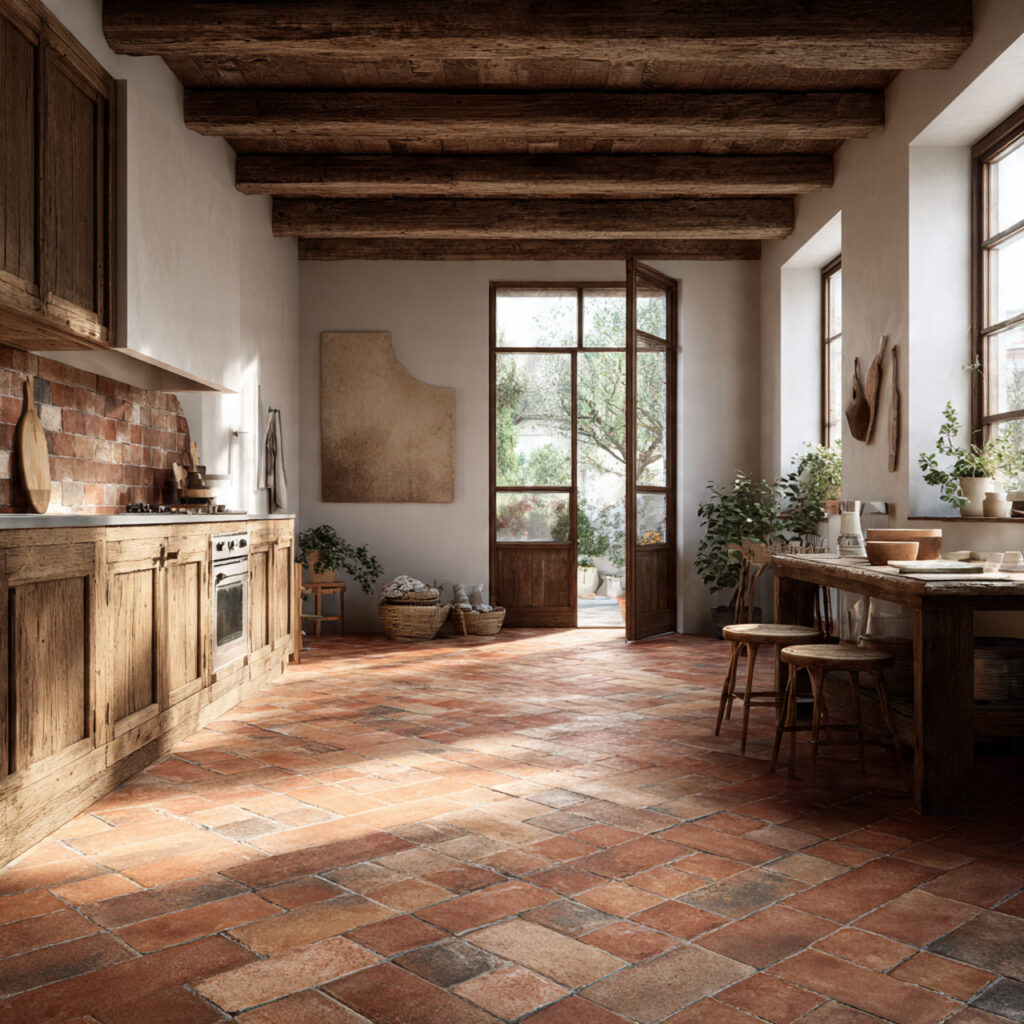
Terracotta tiles offer a warm, earthy palette of reds, oranges, and browns that instantly make a kitchen feel more rustic and inviting. They are a staple of Mediterranean and Southwestern design, providing a natural texture that feels great underfoot.
Because terracotta is quite porous, it must be properly sealed to protect it from the moisture and stains common in a cooking environment. When cared for correctly, these tiles develop a beautiful aged look that adds history and soul to the home.
Waterproof Surface Advantages
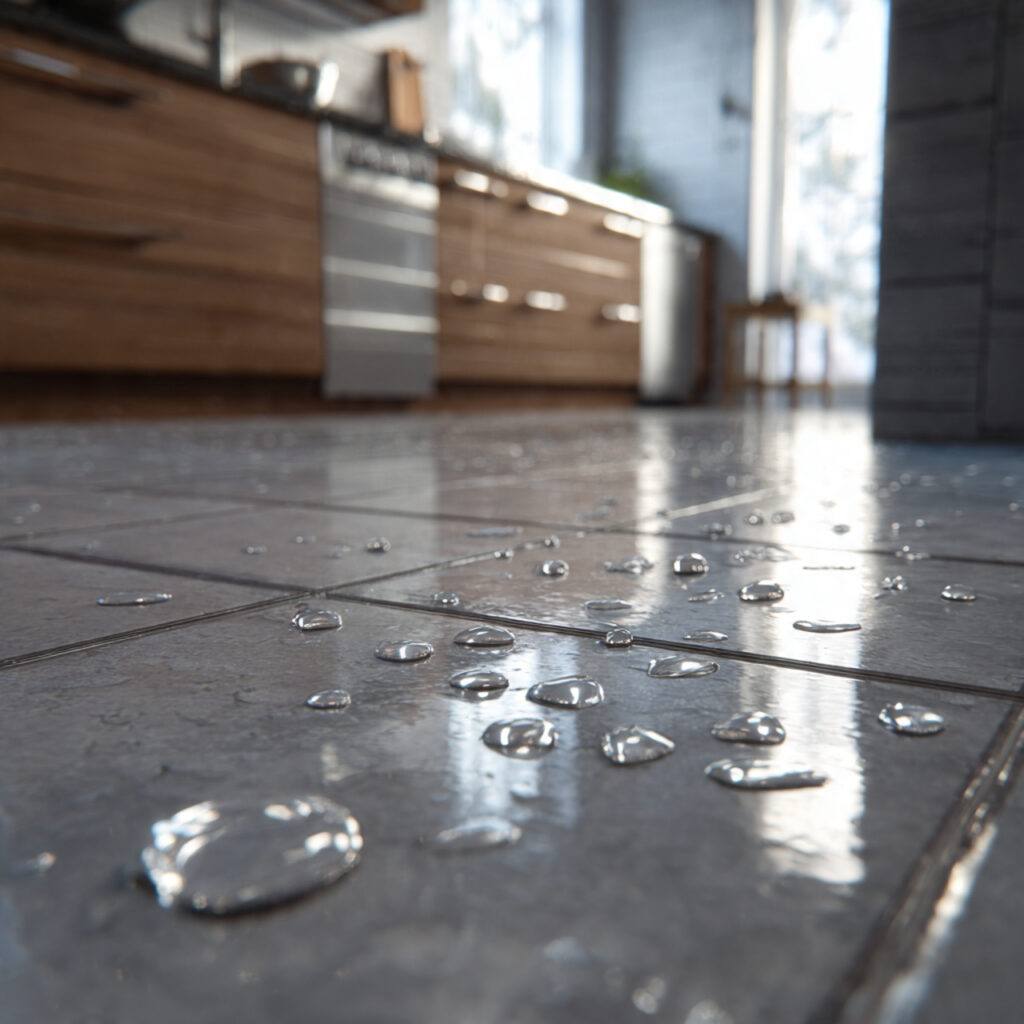
The primary benefit of using tiles in the kitchen is their ability to act as a completely waterproof barrier when installed with the correct membranes. This protects your subfloor and wall studs from rot and water damage that can be caused by hidden leaks or major spills.
Unlike wood or laminate, which can swell and ruin when exposed to standing water, tiles remain stable and unaffected by moisture. This peace of mind is invaluable in a room where water usage is constant and plumbing accidents are always a possibility.
Grout Sealing Essentials
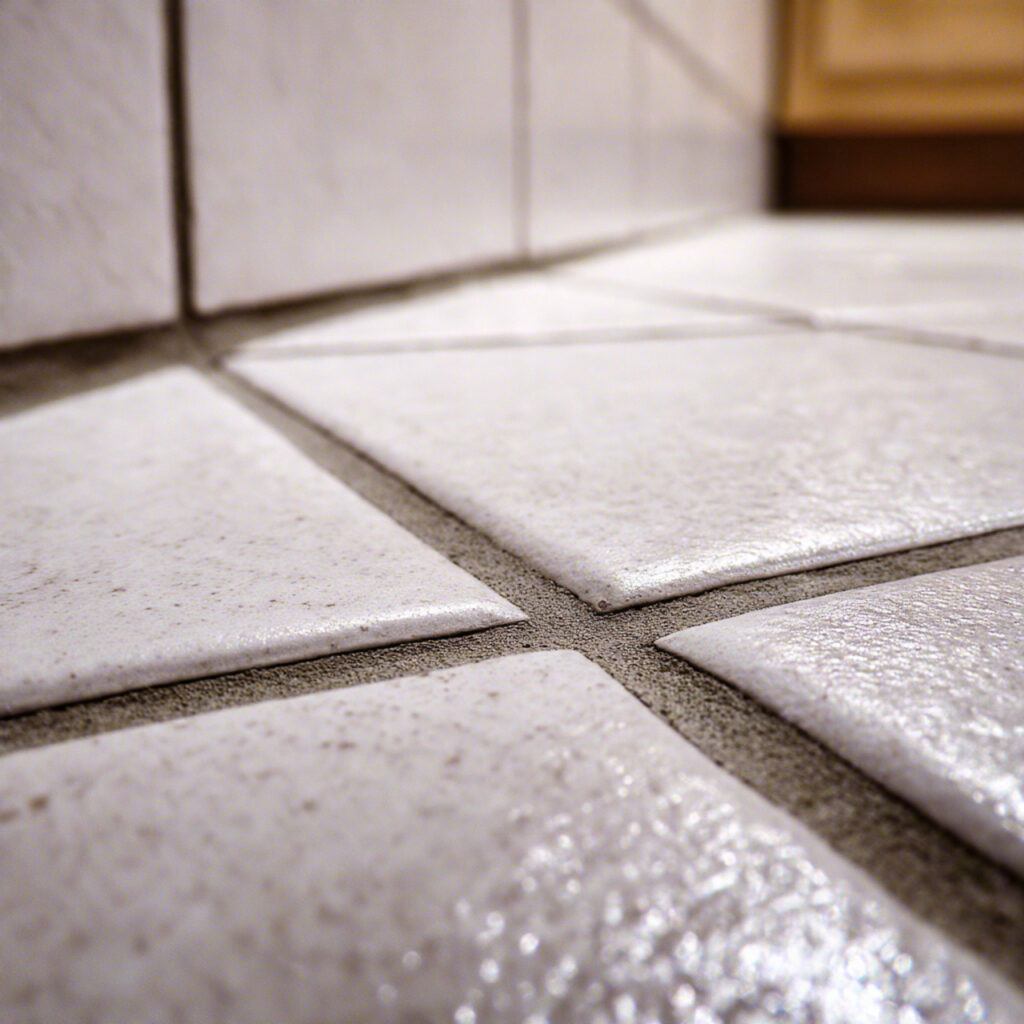
Even the best kitchen tiles can be undermined by stained or dirty grout, which is why sealing the grout lines is a critical final step in any installation. A good penetrative sealer will soak into the grout and create a barrier that repels oils, water, and pigmented liquids.
Resealing the grout every year or two is a simple DIY task that can dramatically extend the life of your floor and keep it looking professional. It ensures that the most vulnerable part of your tile assembly remains as durable as the tiles themselves.
High Traffic Area Solutions
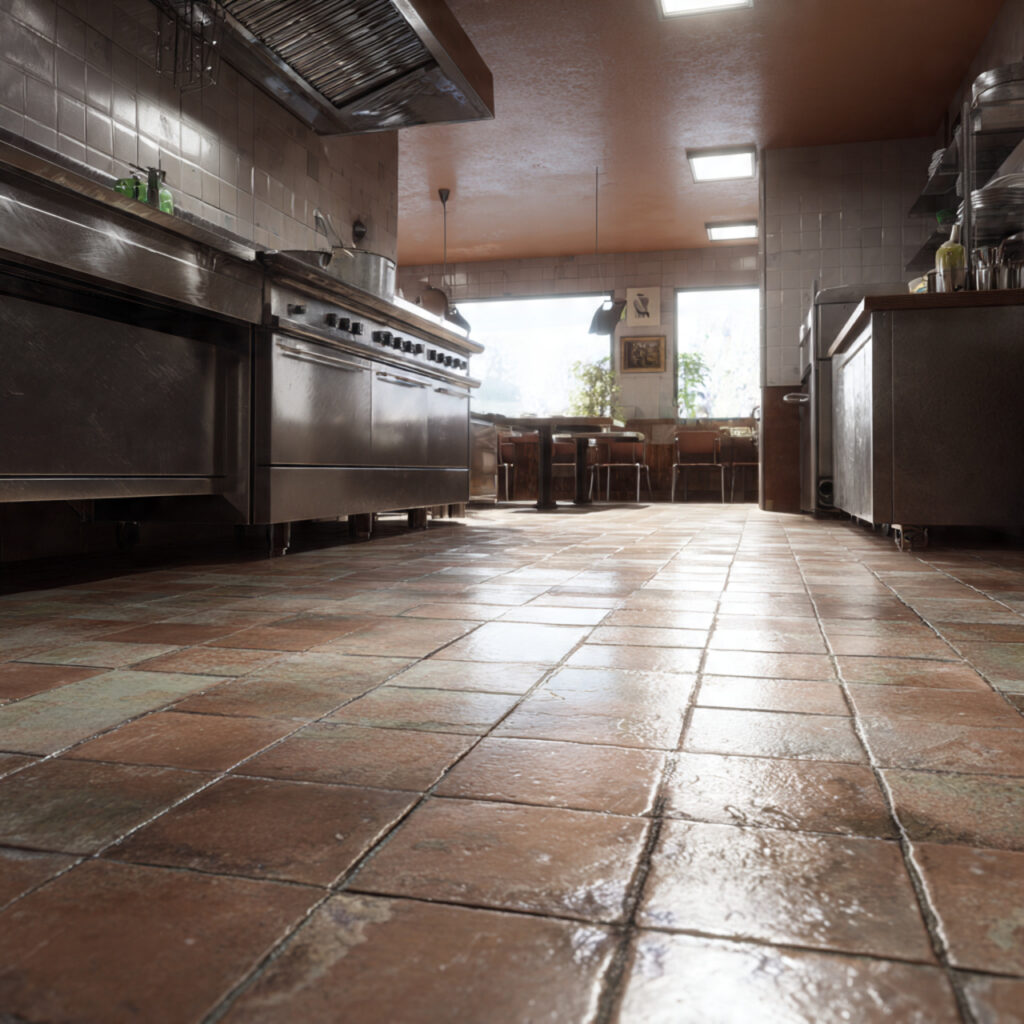
In households with heavy activity, choosing a tile with a high breaking strength is essential to prevent cracking from the impact of heavy items. Selecting through-body porcelain ensures that even if a chip does occur, the color underneath is the same as the surface, making the damage less noticeable.
By focusing on high-performance kitchen tiles for these busy zones, you reduce the likelihood of needing expensive repairs in the future. A well-chosen floor will handle the daily chaos of a busy home while maintaining its beauty and structural integrity for a lifetime.
FAQs About Kitchen Tiles
What are the most durable types of kitchen tiles for busy households?
Porcelain is generally considered the most durable option because it is fired at higher temperatures and is denser than standard ceramic. It is highly resistant to scratches, moisture, and heavy impacts, making it ideal for families with pets or high foot traffic. These kitchen tiles provide a long-lasting surface that maintains its appearance even under significant daily stress.
How do I choose the right color for my kitchen tiles?
When selecting a color, consider the size of your room and the amount of natural light available, as lighter colors can help a small space feel much larger. Neutral tones like grey, beige, or white offer the most versatility for future decor changes and have a high appeal for resale. Ultimately, your kitchen tiles should complement your cabinetry and countertops to create a balanced and harmonious environment.
Are kitchen tiles difficult to maintain over time?
Most tiles are incredibly low-maintenance and only require regular sweeping and mopping with a gentle, non-abrasive cleaner to stay in top condition. If you choose natural stone, you will need to apply a sealer periodically, but glazed ceramic and porcelain are essentially stain-proof. Keeping your kitchen tiles clean is the best way to ensure they remain a hygienic and beautiful part of your home for decades.
Can I use wall tiles for my kitchen flooring?
Generally, you should not use tiles specifically labeled for walls on the floor because they are often thinner and not designed to support heavy weight or provide slip resistance. Using the wrong type of kitchen tiles on the floor can lead to cracking and dangerous slips when the surface becomes wet. Always check the manufacturer’s rating to ensure the product is suitable for the specific application you have in mind.
What is the average cost of high-quality kitchen tiles?
The cost can vary significantly based on the material, with basic ceramic being very affordable and natural stone or designer mosaics sitting at the higher end of the spectrum. While the initial investment for premium kitchen tiles might be higher, the longevity and lack of replacement costs make them a very economical choice over time. Investing in quality materials ensures that you won’t have to deal with chips or fading just a few years after installation.
Conclusion
In summary, choosing the right kitchen tiles is a multifaceted decision that impacts the beauty, safety, and hygiene of your home’s most active room. By selecting materials that match your lifestyle—whether that means high-gloss ceramic for a bright backsplash or rugged porcelain for a durable floor—you create a space that is both practical and inspiring.
Investing in high-quality kitchen tiles is one of the most effective ways to add value to your property while simplifying your daily cleaning routine. With the vast array of designs and materials available today, there is a perfect tiling solution for every taste and budget, ensuring that your kitchen remains the heart of your home for many years to come.