Complete Blog Post Draft: Cozy Moody Bedroom Design
Cozy Moody Bedroom designs are becoming incredibly popular for those seeking a tranquil and deeply relaxing sanctuary away from the hustle of modern life. This design aesthetic moves beyond simple minimalist trends, embracing deep colors, rich textures, and carefully curated lighting to create a space that feels inherently intimate and secure.
This guide is designed to provide you with a full spectrum of ideas, from foundational structural changes like paint and paneling to the finishing touches that incorporate scent, texture, and personalized décor. By implementing these strategies, you can transform your sleeping space into the ultimate atmospheric retreat.
Designing the Ultimate Cozy Moody Bedroom
A moody bedroom successfully leverages contrast, saturation, and texture to establish its signature atmosphere. The goal isn’t just to make things dark, but to use deep, rich colors to visually recede the walls and make the space feel like a comfortable, protective cocoon.
The key to preventing moodiness from becoming gloominess lies in the intentional layering of light sources and tactile materials. By balancing saturated hues with soft lighting and luxurious fabrics, you achieve an environment that is both visually dramatic and irresistibly inviting.
Deep Paint Colors for Intimacy
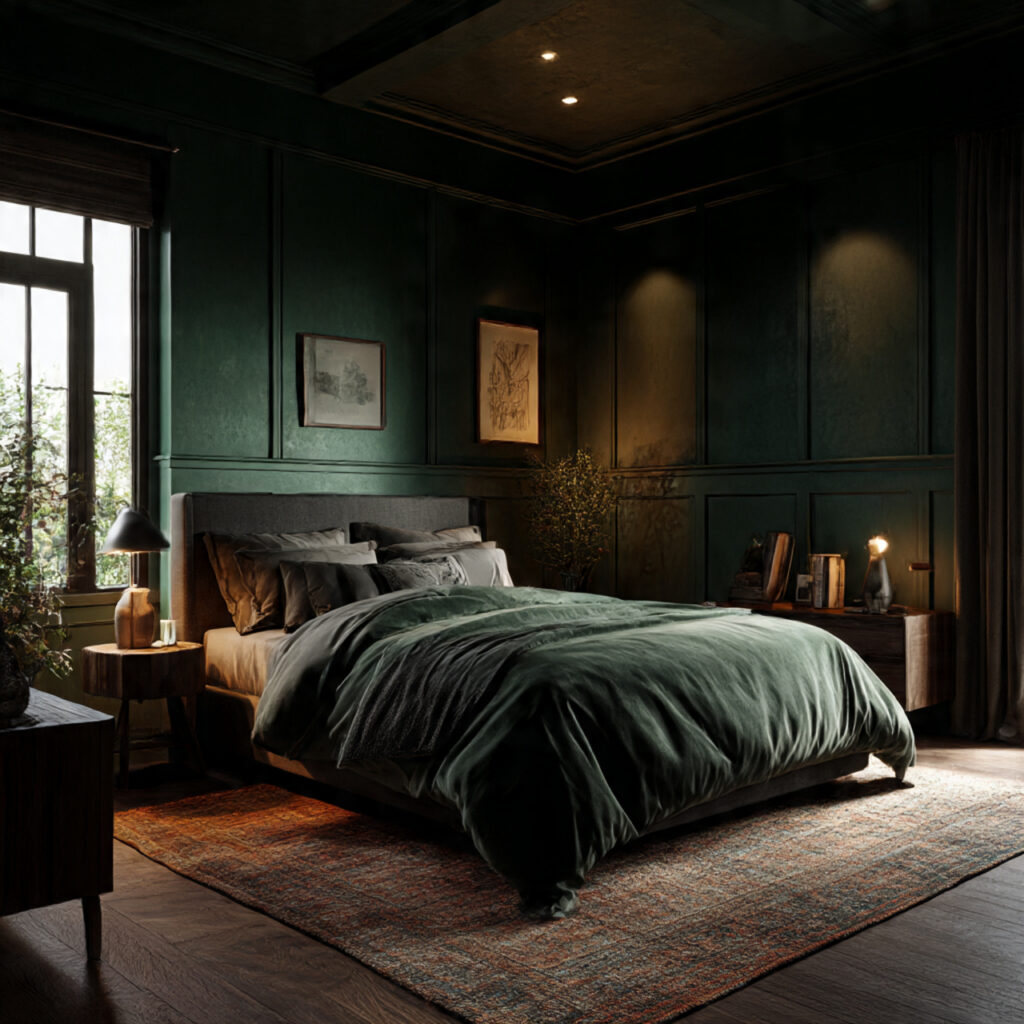
Opt for highly saturated, muted colors like forest green, navy blue, or charcoal grey to instantly create a sense of depth and enclosure. These deep tones are instrumental in making the room feel smaller, which paradoxically enhances the feeling of cozy intimacy.
When selecting paint, consider a matte or eggshell finish, as highly glossy paints can reflect too much light and disrupt the soft, absorptive quality central to the moody aesthetic. Try painting a small test patch first to observe how the color shifts in both daylight and artificial light.
Layered Textures for Comfort
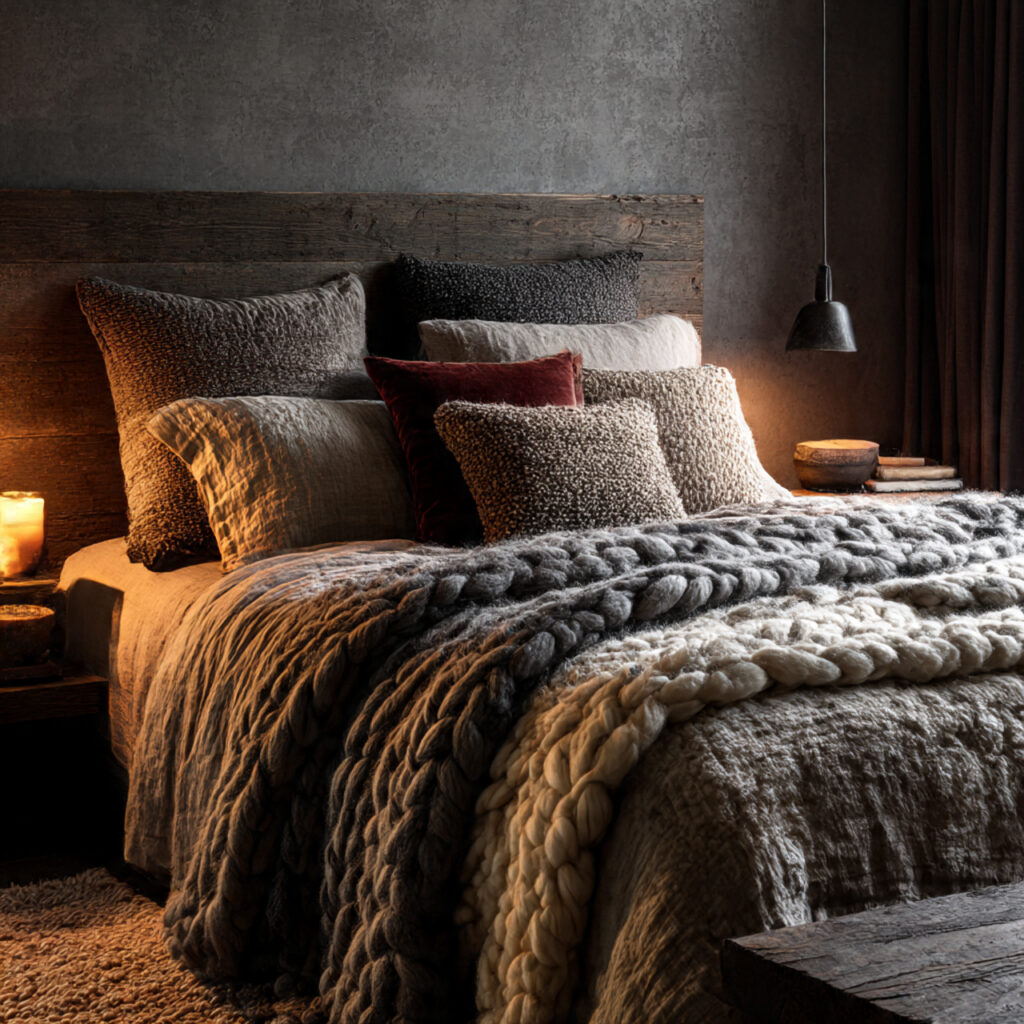
Texture is the secret weapon in a moody design, adding visual warmth that dark colors alone cannot provide. Focus on materials like thick wool knits, cable-knit throws, chunky cotton bedding, and raw linen duvet covers to engage the sense of touch.
Mixing these materials—for instance, draping a faux fur blanket over a velvet ottoman—adds complexity and richness. This deliberate layering prevents the dark color palette from falling flat and ensures the space feels luxurious and enveloping.
Ambient Lighting Design
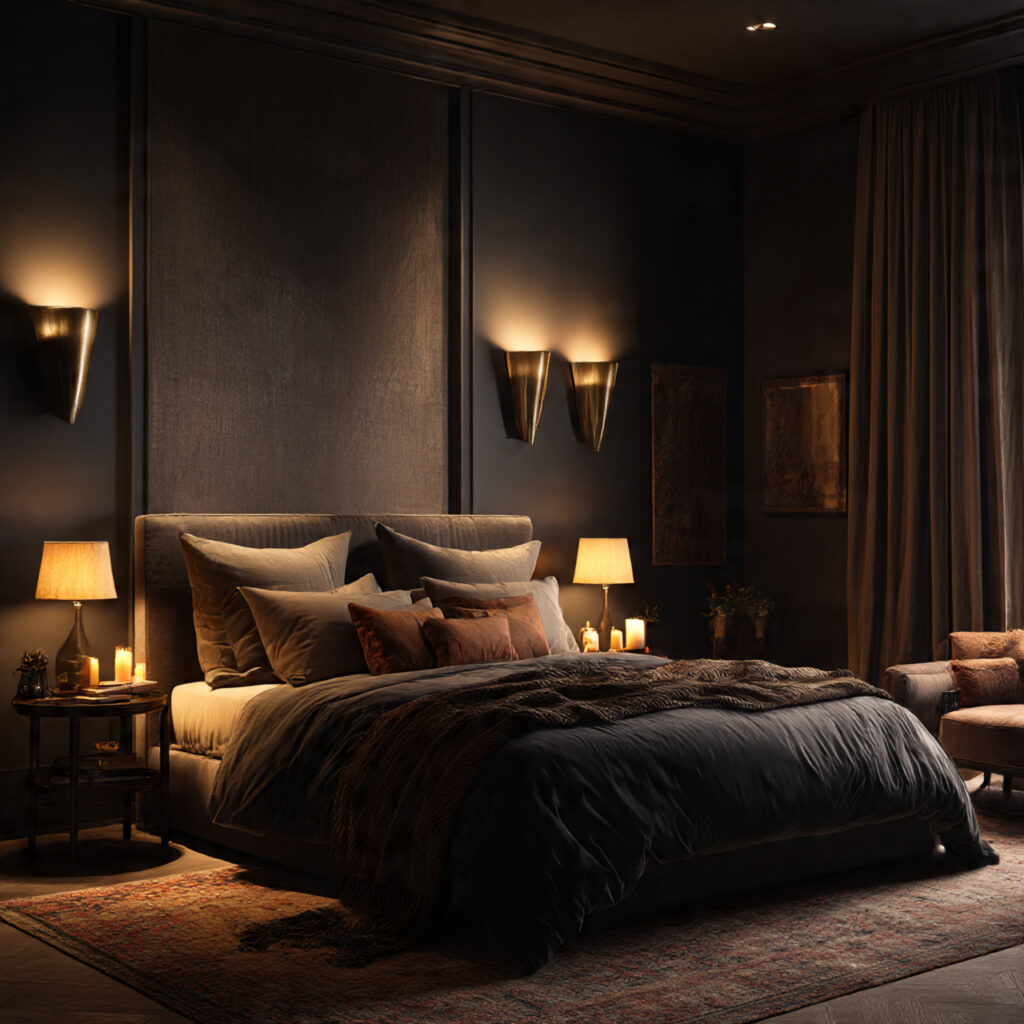
The moody aesthetic requires a layered lighting strategy, moving away from harsh overhead fixtures. Rely instead on soft, warm-toned bulbs (around 2200K) placed at different heights to cast gentle shadows and highlights around the room.
Use dimmers on all light sources, including sconces, lamps, and ceiling lights, to allow complete control over the atmosphere. This ability to dial the brightness up or down is crucial for shifting the room’s mood from reading-bright to relaxation-ready.
Incorporating Natural Wood Tones
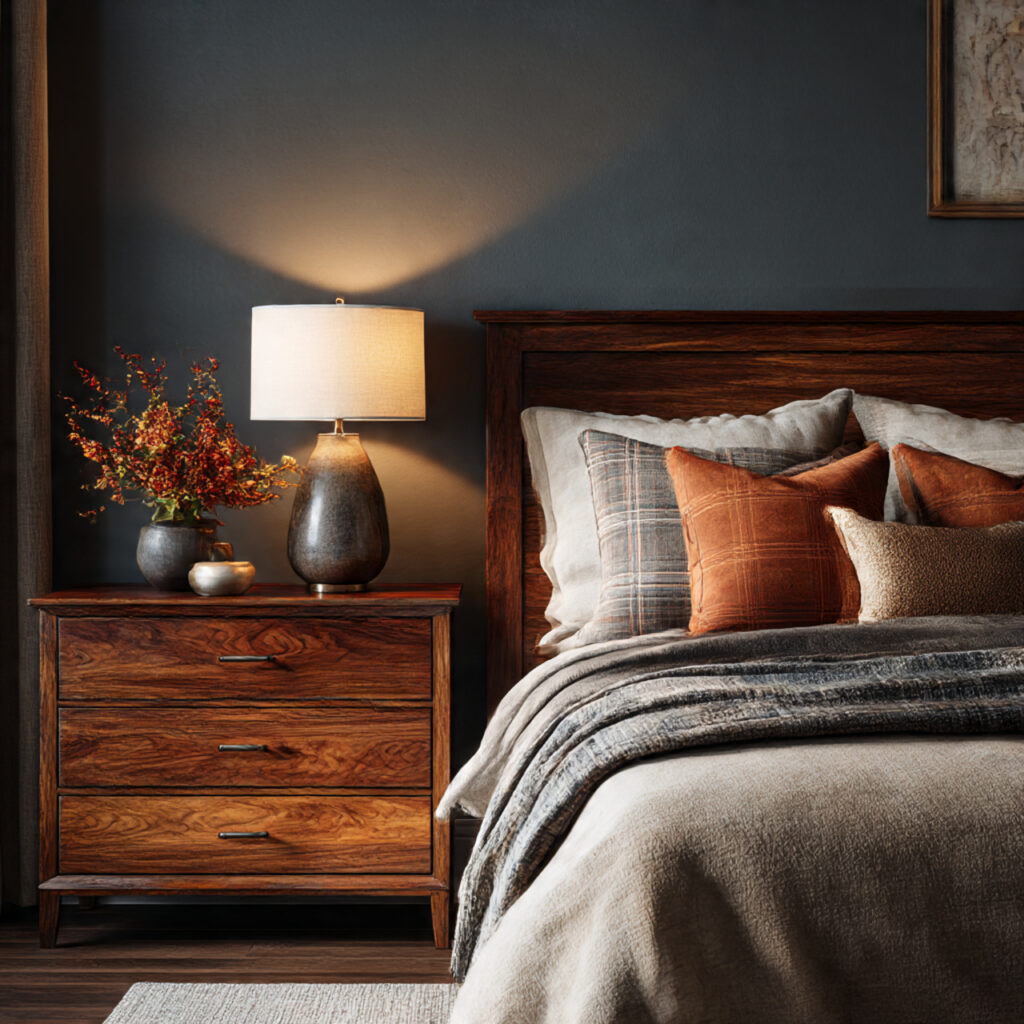
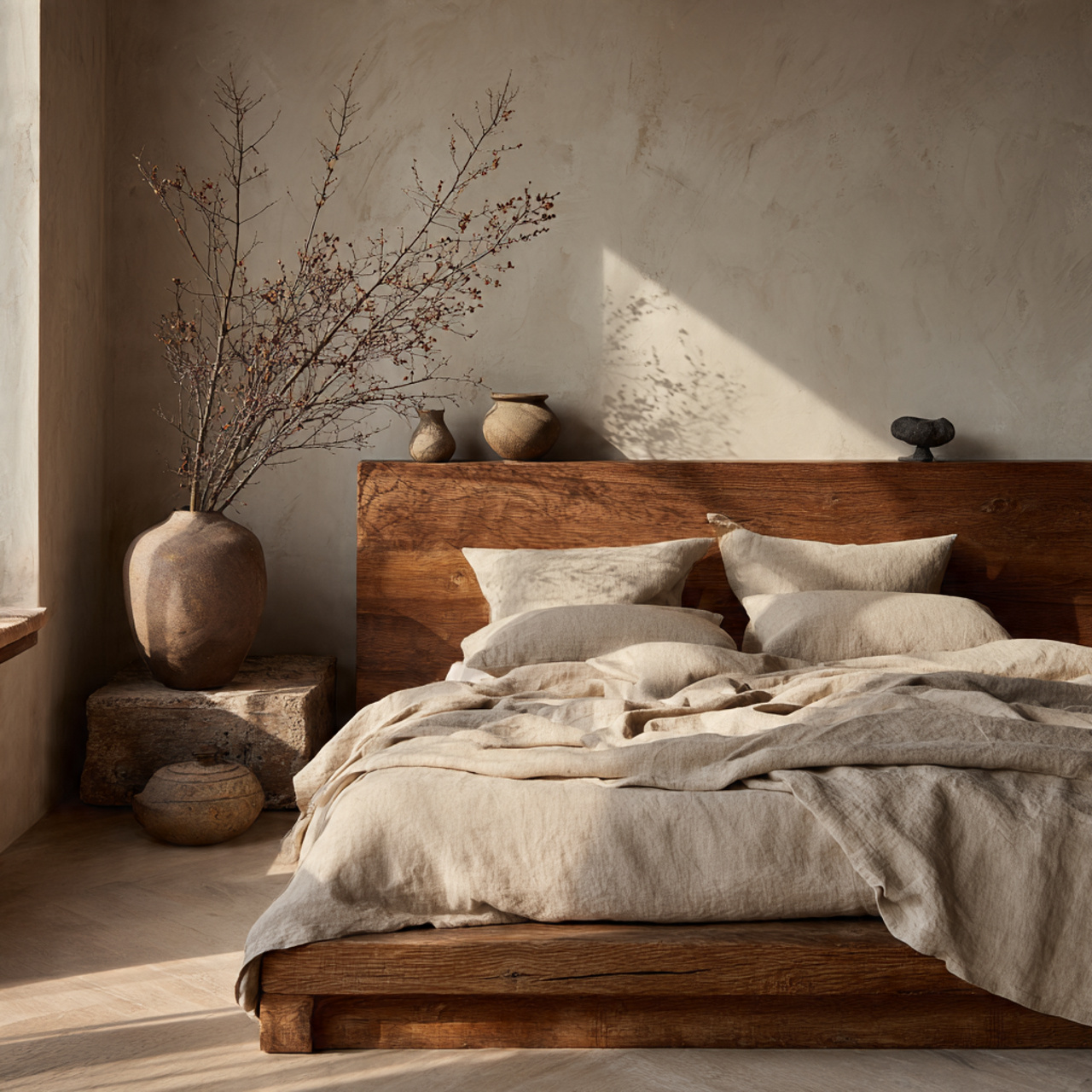
Dark, natural wood elements are essential for grounding the space and adding an organic, timeless quality. Look for furniture in rich walnut, dark cherry, or reclaimed espresso finishes that contrast gently with the deep wall colors.
These wood tones provide a necessary visual break from heavy fabrics and paint, introducing a sturdy, classic element. A solid wood headboard or a dark-stained dresser can anchor the room and enhance the design’s perceived quality.
Velvet and Chenille Accents
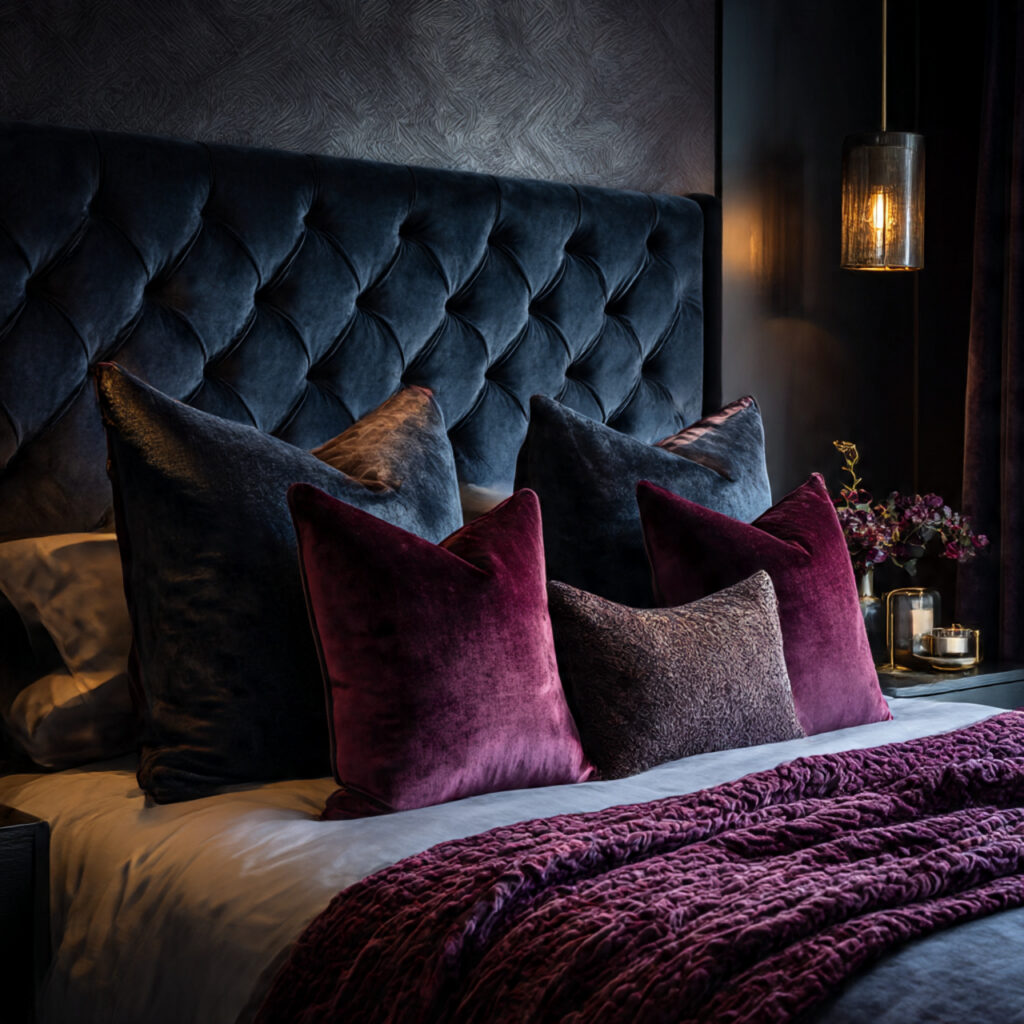
Few fabrics convey luxury and depth quite like velvet and chenille, making them perfect for a cozy moody bedroom. Their inherent sheen catches the light subtly, adding a dimension of elegance to the dark palette.
Consider a plush velvet throw pillow, a chenille accent chair, or even a tufted velvet headboard to introduce these textures. These small, concentrated additions of high-end fabric instantly elevate the room’s tactile appeal and comfort level.
The Art of Blackout Curtains
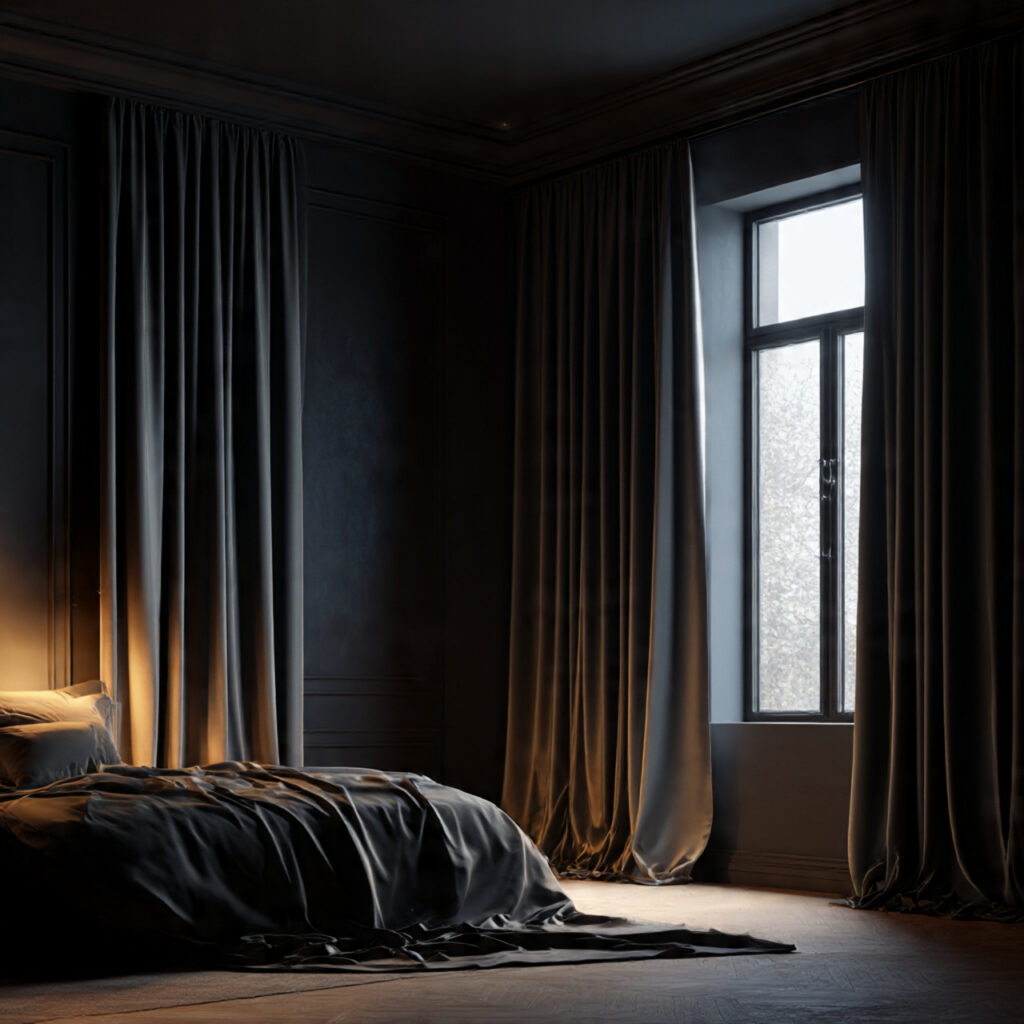
Blackout curtains are not merely functional for blocking light; they are a key textural and stylistic component of the moody design. Choosing thick, heavy fabrics that pool slightly on the floor adds drama and acoustic dampening.
Select curtains in a color that either matches the walls for a seamless, cocooning effect or a slightly lighter, complementary shade to provide subtle contrast. The goal is to make the windows feel substantial and well-dressed, enhancing the room’s intimate feel.
Scented Candles and Diffusers
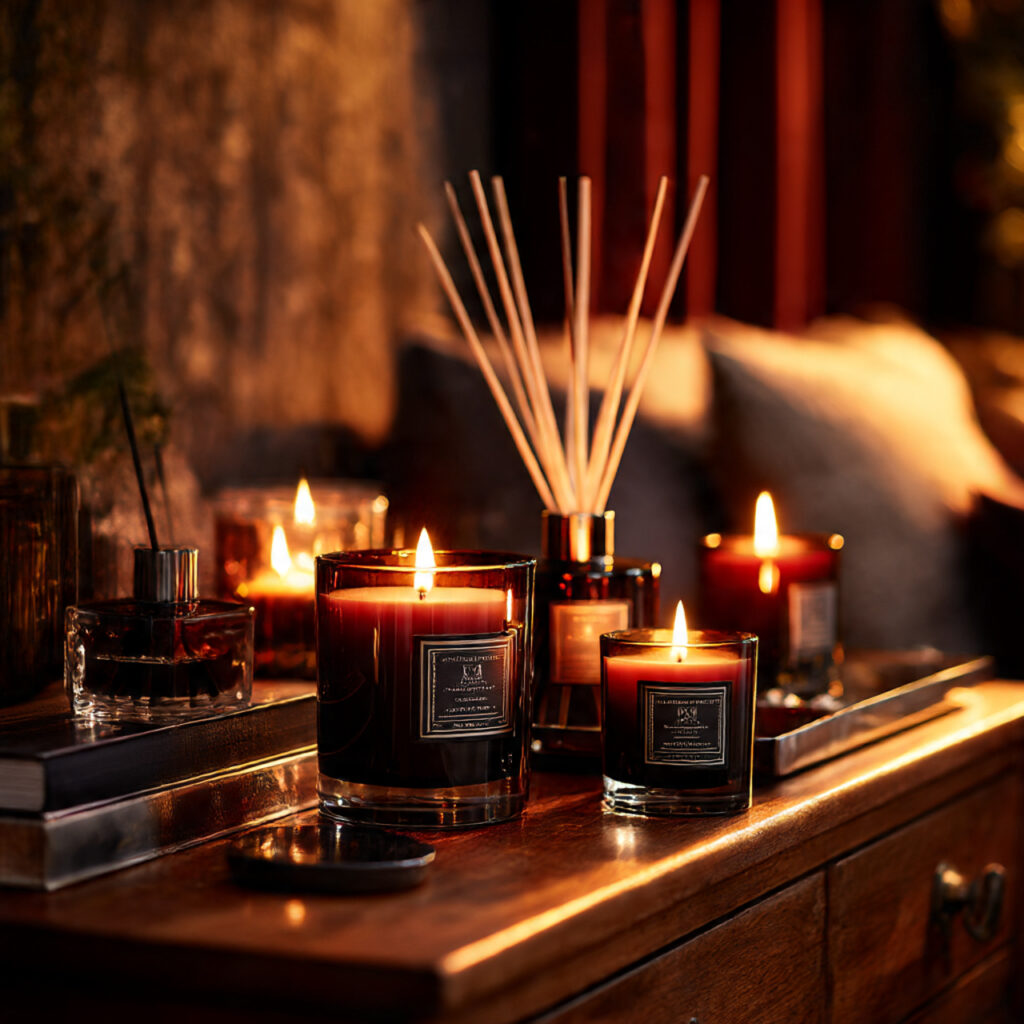
A truly cozy space engages all the senses, and scent plays a vital role in establishing mood. Choose warm, complex fragrances like sandalwood, smoked vanilla, patchouli, or aged leather to enhance the feeling of sophisticated calm.
Place diffusers and candles on separate surfaces, such as a nightstand and a dresser, to distribute the scent evenly and maximize the olfactory experience. Always choose high-quality candles with dark glass vessels that double as aesthetic décor.
Dark Wall Paneling Ideas
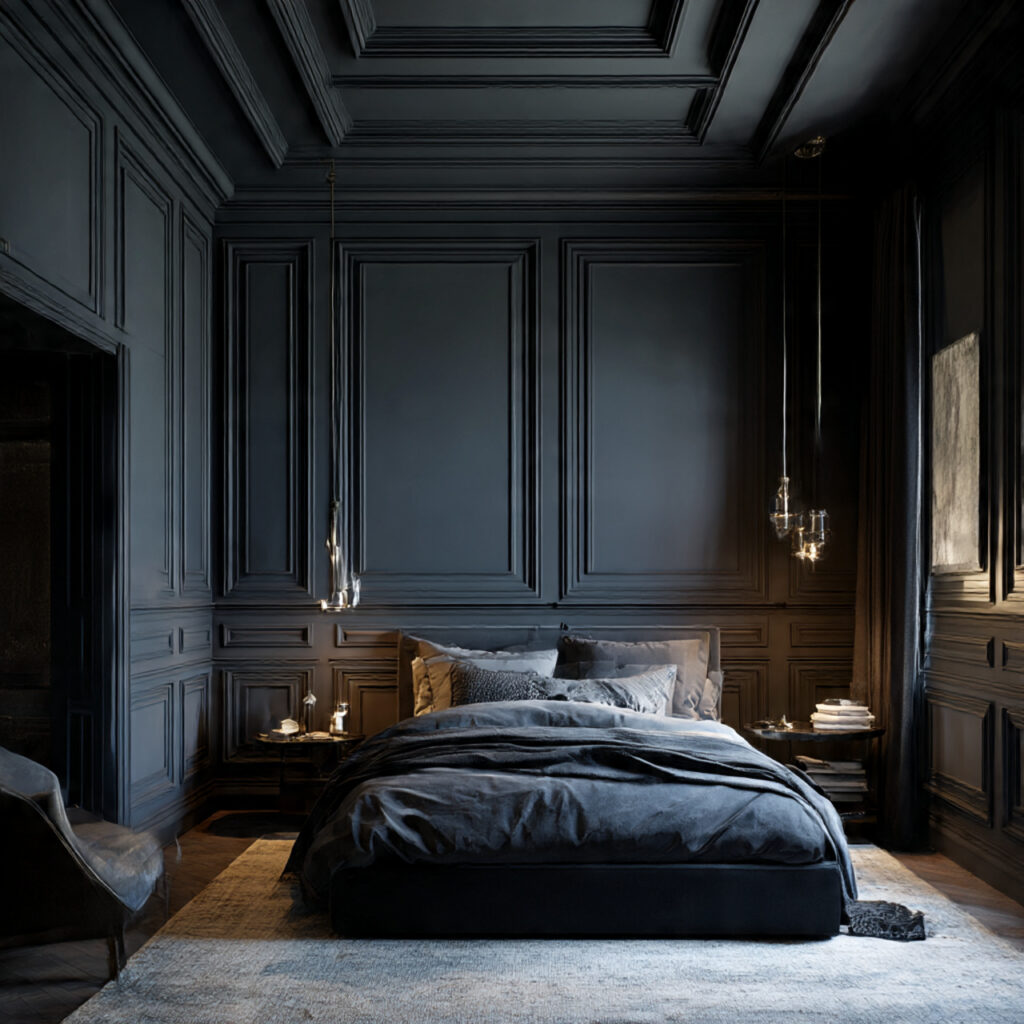
Wall paneling, such as shiplap, wainscoting, or applied molding painted in a dark tone, adds architectural dimension to a flat wall. This detail creates shadows and depth, making the walls feel richer and more custom than a simple painted surface.
For a modern moody twist, consider painting the paneling the exact same color as the surrounding walls to create a monochromatic look where texture, rather than color, becomes the dominant feature. This technique is highly effective in luxurious designs.
Oversized Area Rugs
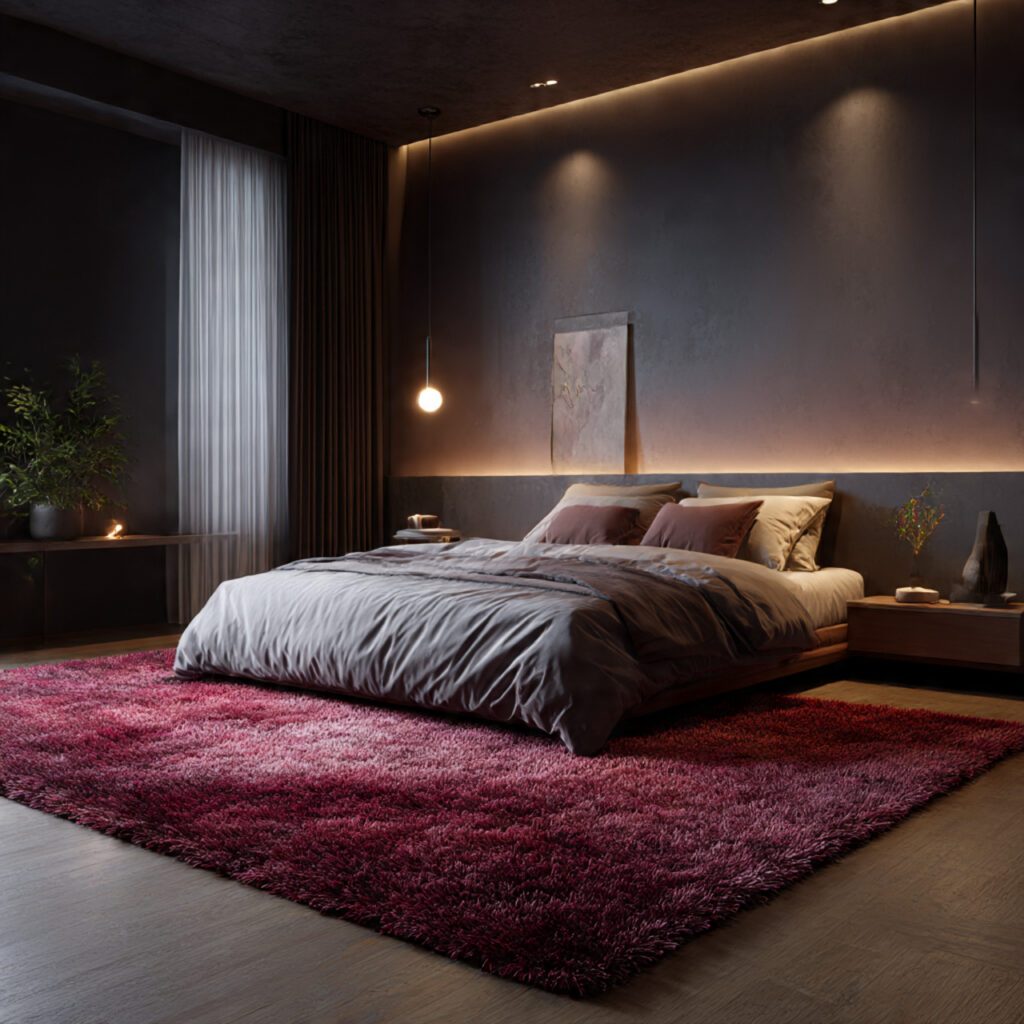
An oversized area rug is non-negotiable for coziness, as it softens hard flooring and provides a warm, plush surface for bare feet. The rug should be large enough to extend well past the sides of the bed, anchoring the entire sleeping area.
For color, select a rug with deep, saturated tones or a subtle, distressed pattern in colors like deep cranberry or sapphire blue. The thickness and pile height are key: the shaggier the rug, the higher the coziness factor.
Creating a Reading Nook
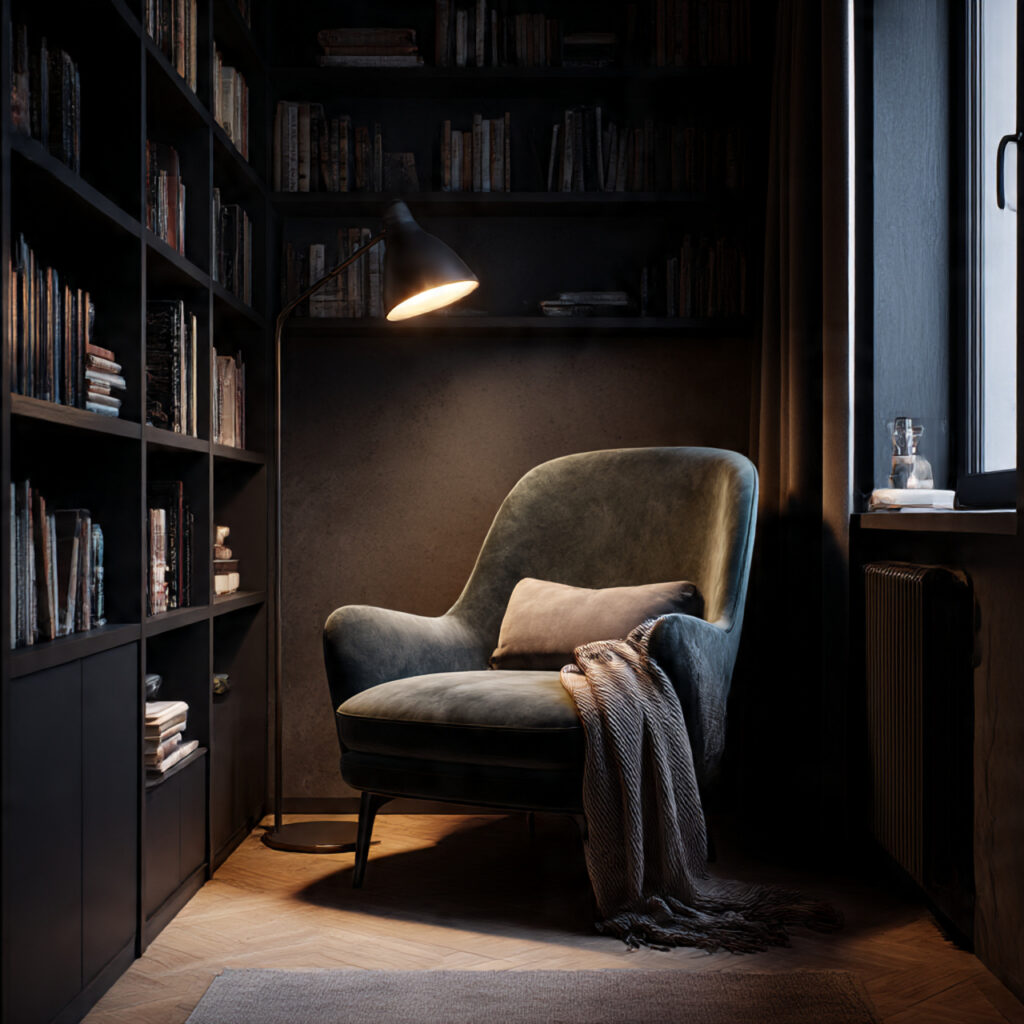
Dedicate a small corner of the room to a comfortable reading nook, further emphasizing the room’s purpose as a retreat. This could be a small armchair with an ottoman, strategically placed under a focused floor lamp.
This specific, intentional zone reinforces the “cozy” aspect of the design by providing a functional space for relaxation beyond the bed. Use a small, deep-toned bookshelf to add a scholarly, contemplative touch.
Maximalist Decor Style
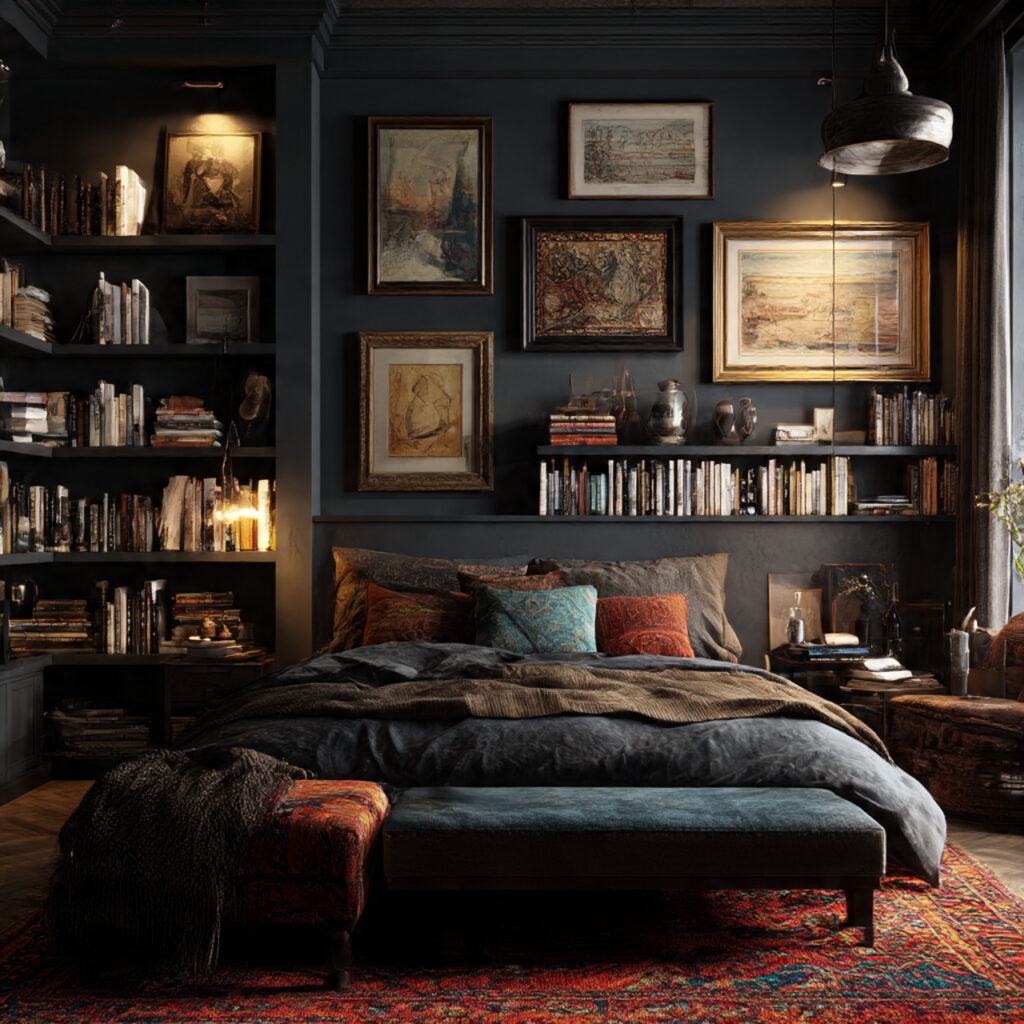
While minimalism focuses on reduction, the moody aesthetic thrives on thoughtful maximalism—the art of collecting and displaying pieces that tell a story. This abundance of objects contributes to the layered, lived-in comfort of the space.
Don’t be afraid to group collections of objects, framed photos, and books, making sure to stick to a cohesive color palette to prevent visual chaos. The collected feel is inherently cozy, suggesting history and personality.
Low-Maintenance Indoor Plants
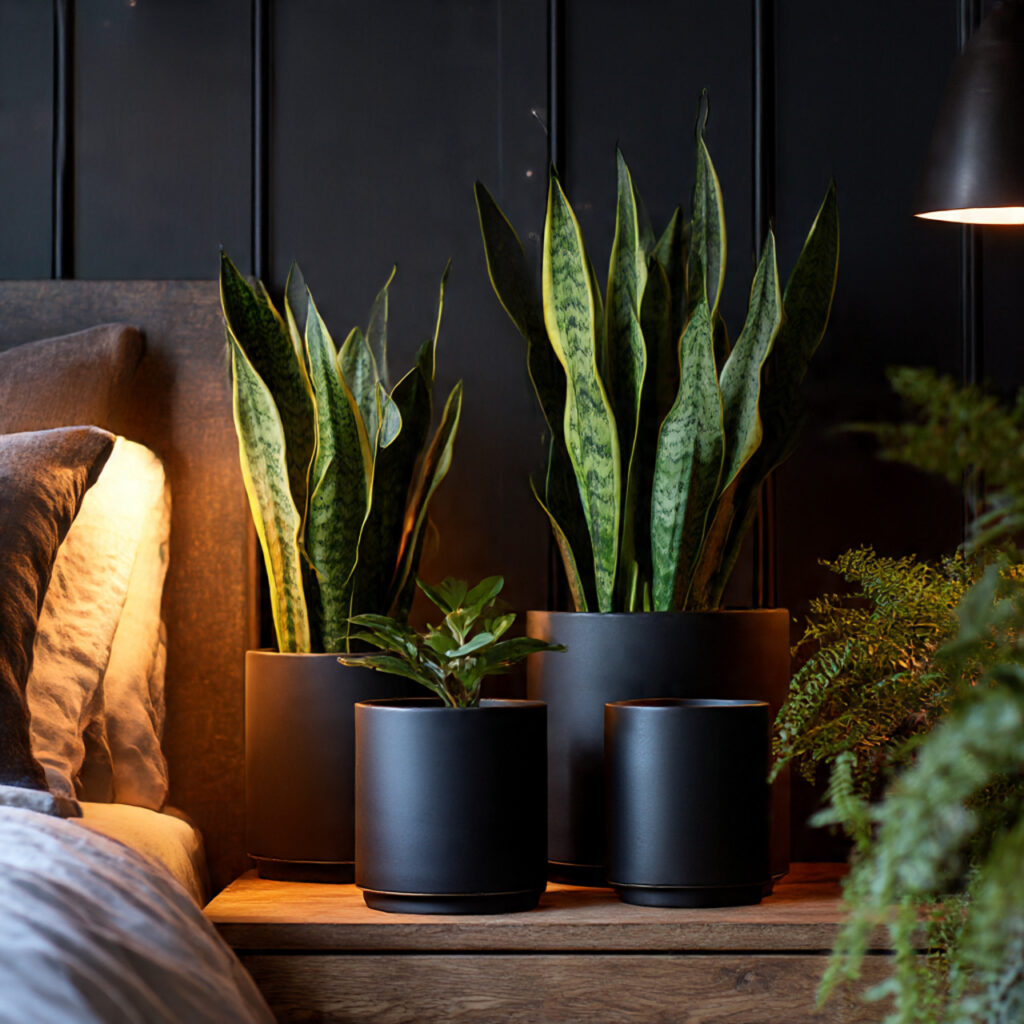
Even a dark room benefits from the grounding presence of green life, which prevents the moodiness from feeling sterile. Choose plants that thrive in low-light conditions, such as snake plants, ZZ plants, or Pothos.
Use dark, textured terracotta or matte ceramic planters to ensure the container complements the deep color scheme rather than providing a jarring contrast. Plants add necessary oxygen and a soft, organic texture to the composition.
Personalized Artwork Selection
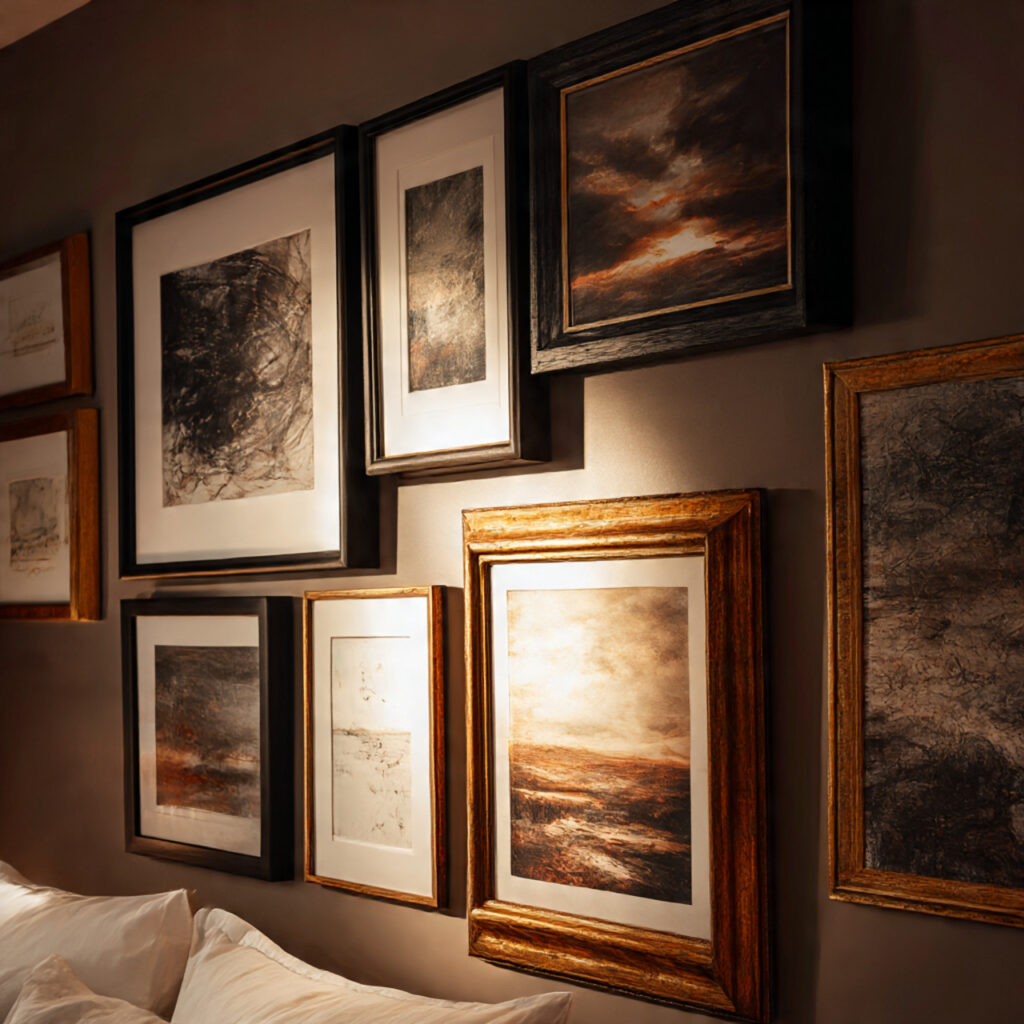
Artwork should align with the atmosphere, leaning towards rich landscapes, abstract pieces with saturated colors, or moody black-and-white photography. The subject matter should evoke contemplation, calm, or a sense of mystery.
For framing, skip bright silver or white and choose dark wood, antique gold, or black frames with wide matting to give the art a weighty, gallery-like presence. Placement over the headboard or a dresser can draw the eye and anchor the wall.
Moody Gallery Wall Layouts
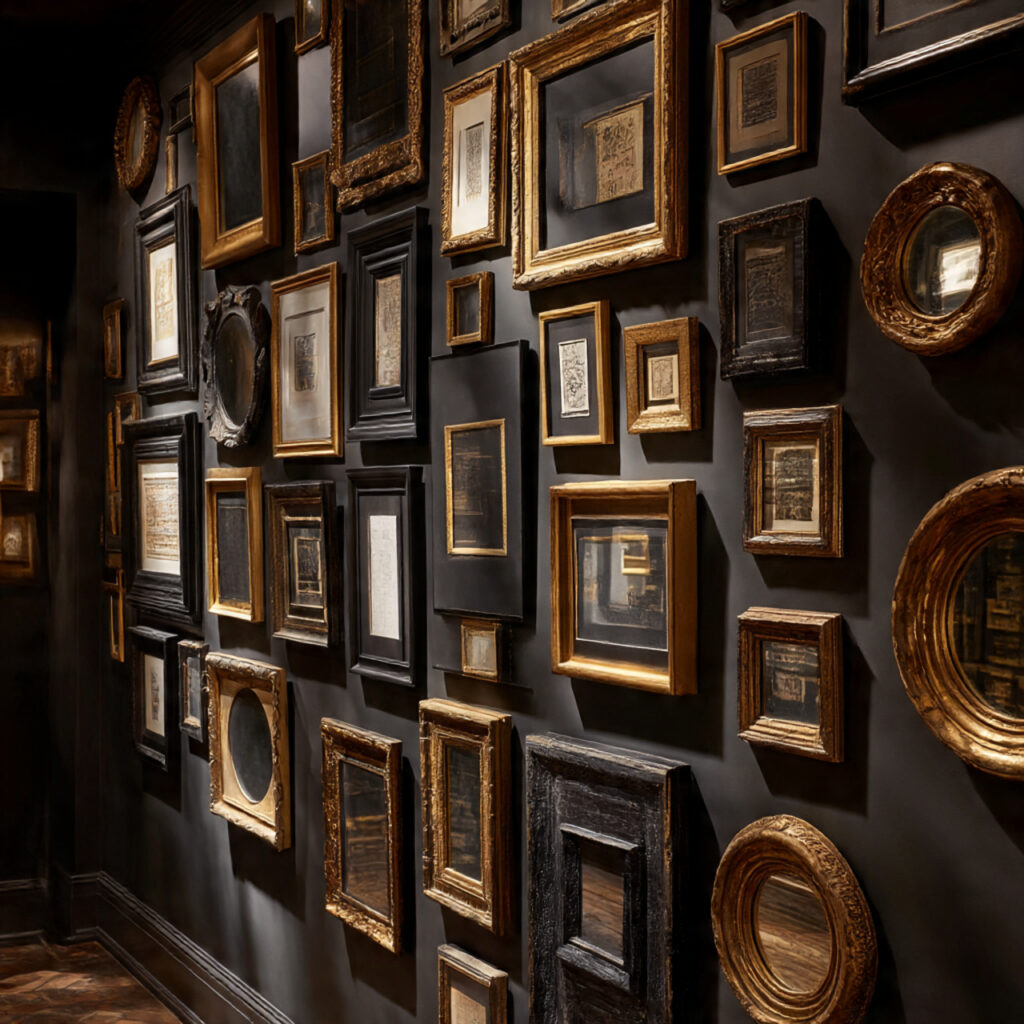
A gallery wall is an ideal way to incorporate several pieces of art and personal items while embracing the maximalist approach. The key is using frames of varying sizes but a consistent color scheme (e.g., all black and gold).
Arrange the frames close together to create one large, cohesive visual mass, which enhances the dense, layered feel. Include mirrors or small sculptural elements to break up the flat picture frames and introduce varied reflections.
Rich Jewel Tones Palette
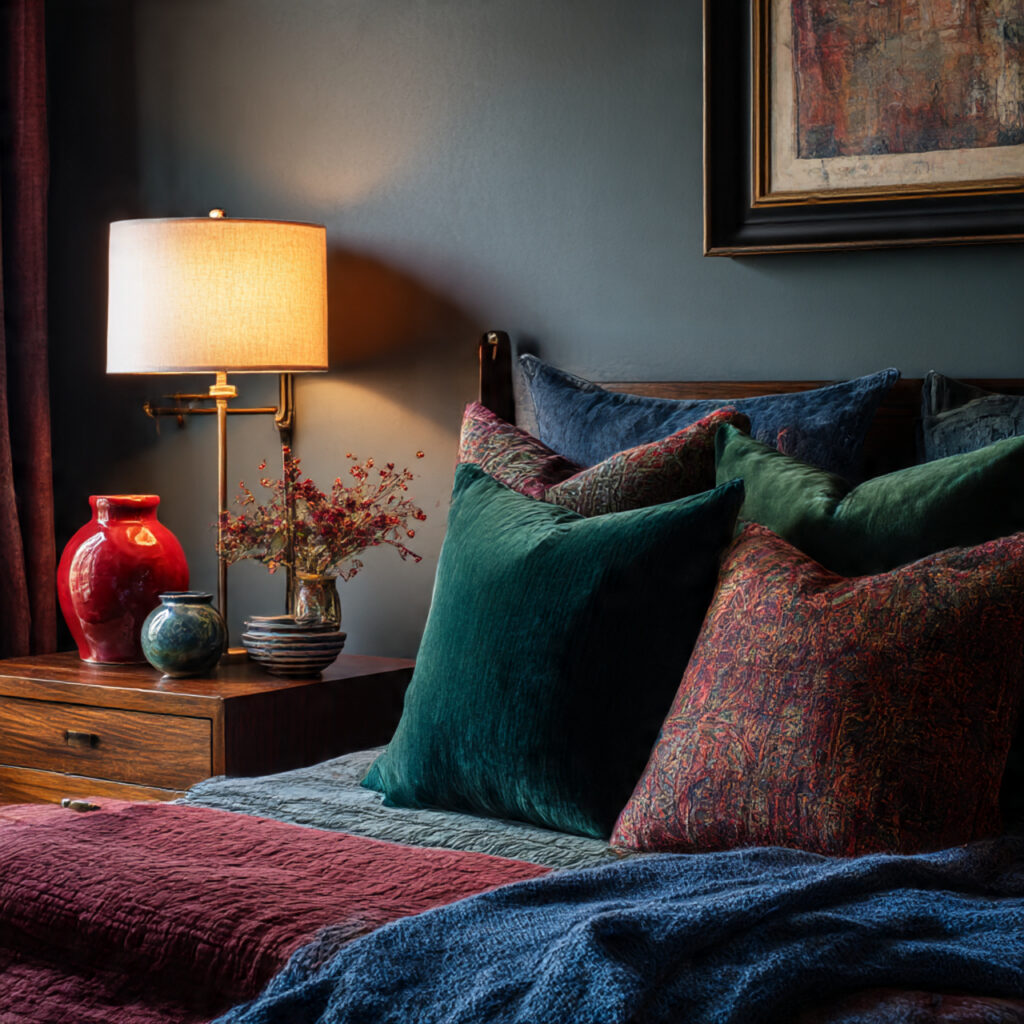
While the walls may be deep and muted, jewel tones act as vibrant accents that prevent the room from feeling washed out. Think emerald green, sapphire blue, amethyst purple, or ruby red introduced through textiles or ceramics.
Use these colors sparingly—perhaps in throw pillows, a glass vase, or a small piece of furniture—to provide depth and points of interest. These luxurious pops of color intensify the overall dramatic effect of the space.
The Importance of Symmetry
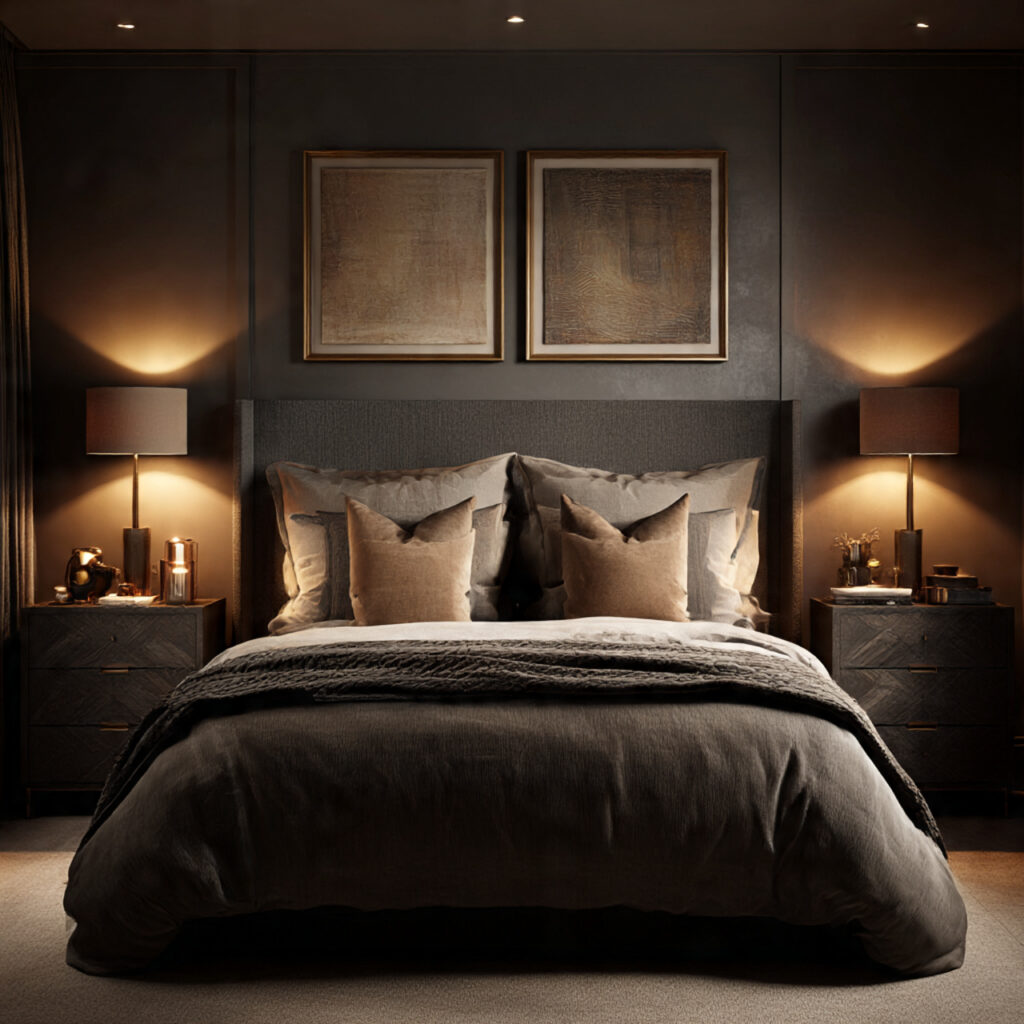
Symmetry provides a sense of visual calm and structure, which is vital when decorating with deep colors and many textures. A balanced layout helps the room feel composed, secure, and restful.
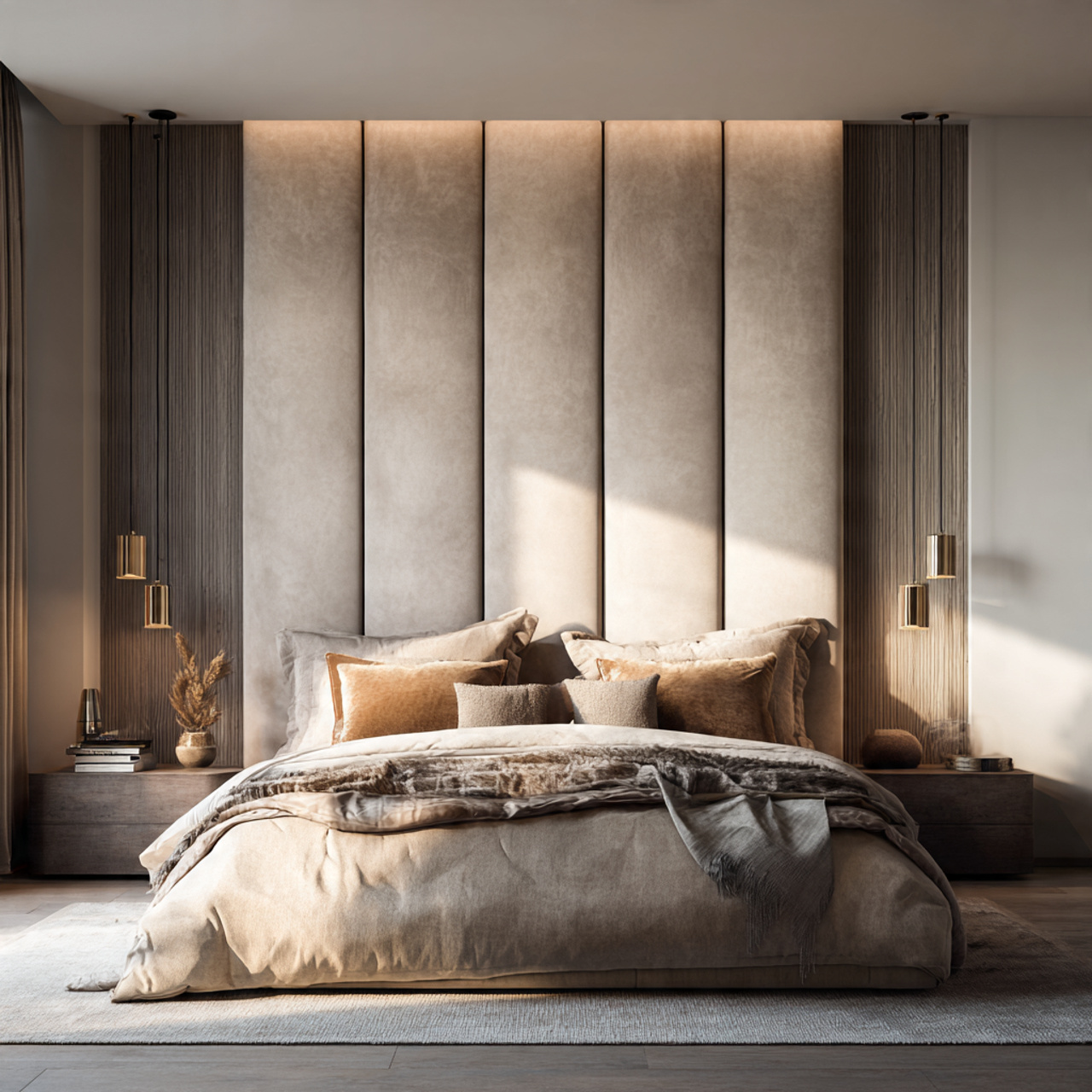
Achieve symmetry by using identical bedside tables, matching lamps on each side of the bed, and centering the bed on the largest wall. This deliberate balance contributes to the relaxing, ordered feel necessary for a sleep sanctuary.
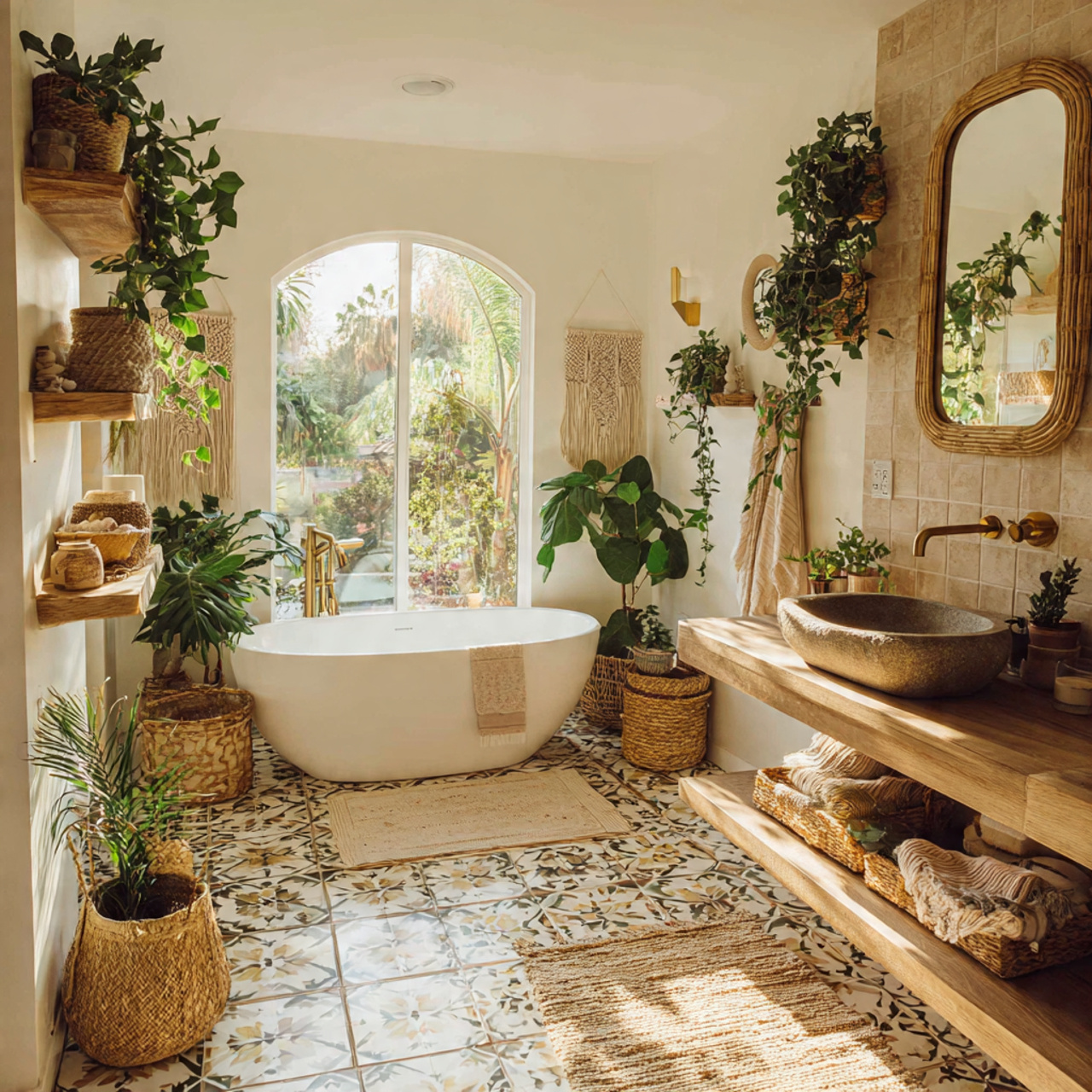
Visit Also : Boho Style Bathroom
Woven Basket Storage Solutions
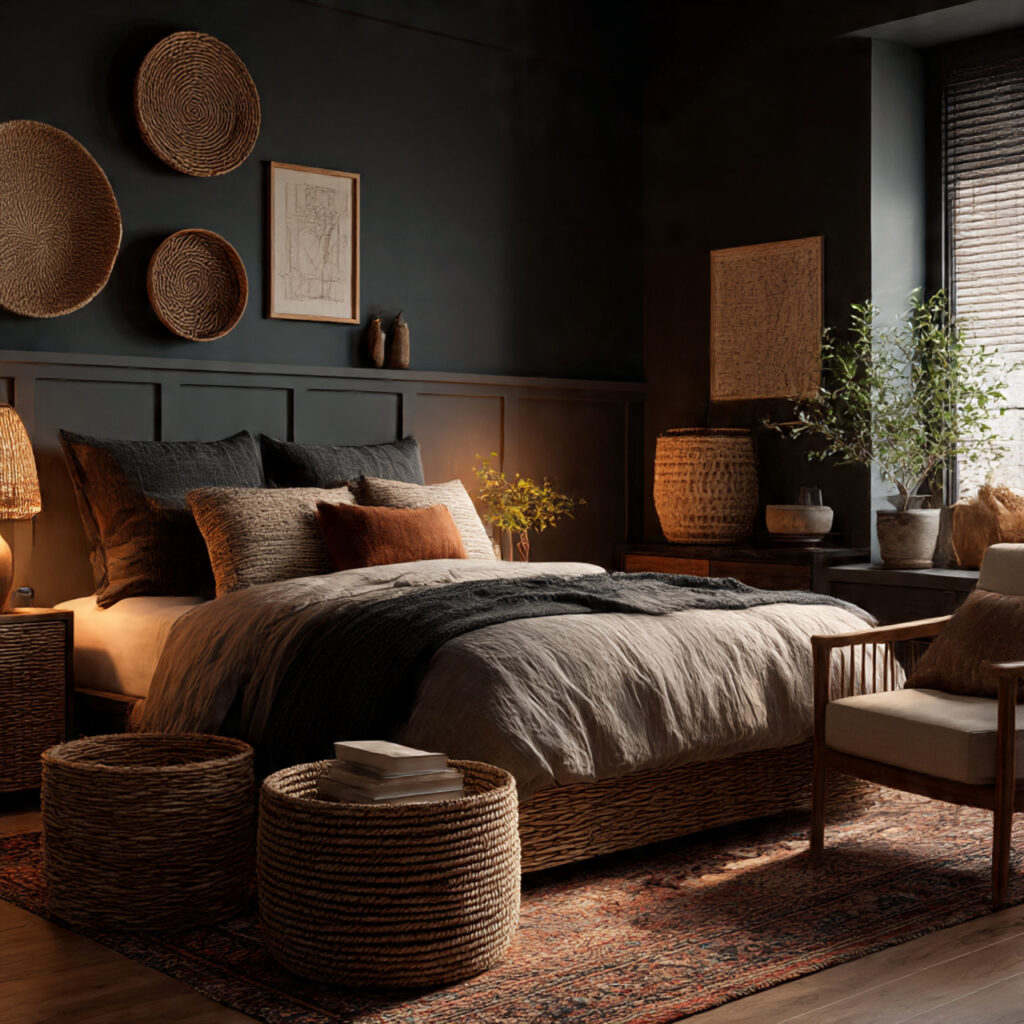
Clutter quickly disrupts the tranquility of a moody bedroom, making stylish storage essential. Large, woven baskets made of natural materials like rattan or seagrass add necessary texture while keeping items organized.
Place these baskets strategically to hold extra blankets, reading material, or laundry. The dark natural color of many woven materials seamlessly integrates with the moody palette, enhancing the organic feel.
Vintage Furniture Pieces
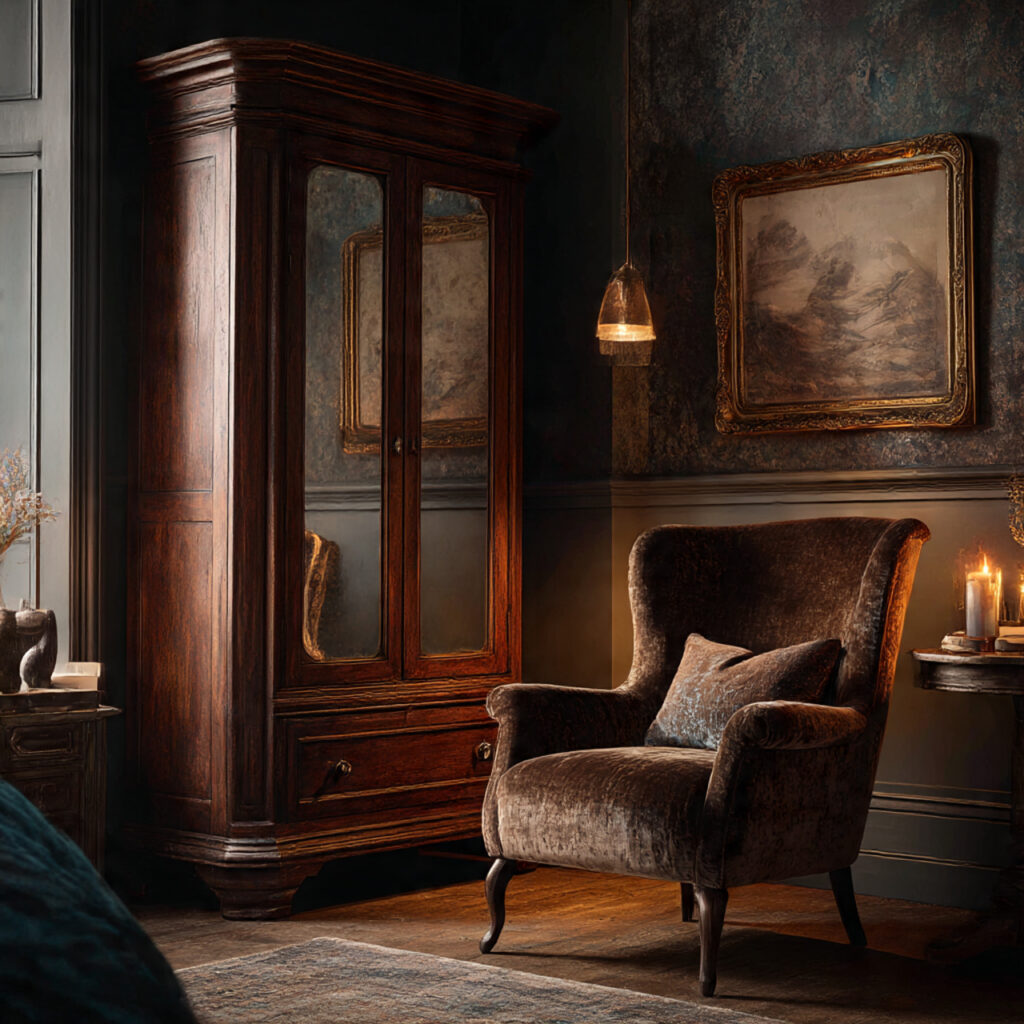
Vintage or antique furniture adds character, history, and a touch of drama that modern pieces often lack. Look for items with intricate carvings, dark patina, or interesting shapes that contrast with simpler modern textiles.
A dark wood antique wardrobe, a distressed mirror, or a vintage velvet armchair can serve as powerful statement pieces. These items deepen the room’s story, contributing to the rich, layered atmosphere.
Adding a Fireplace Glow
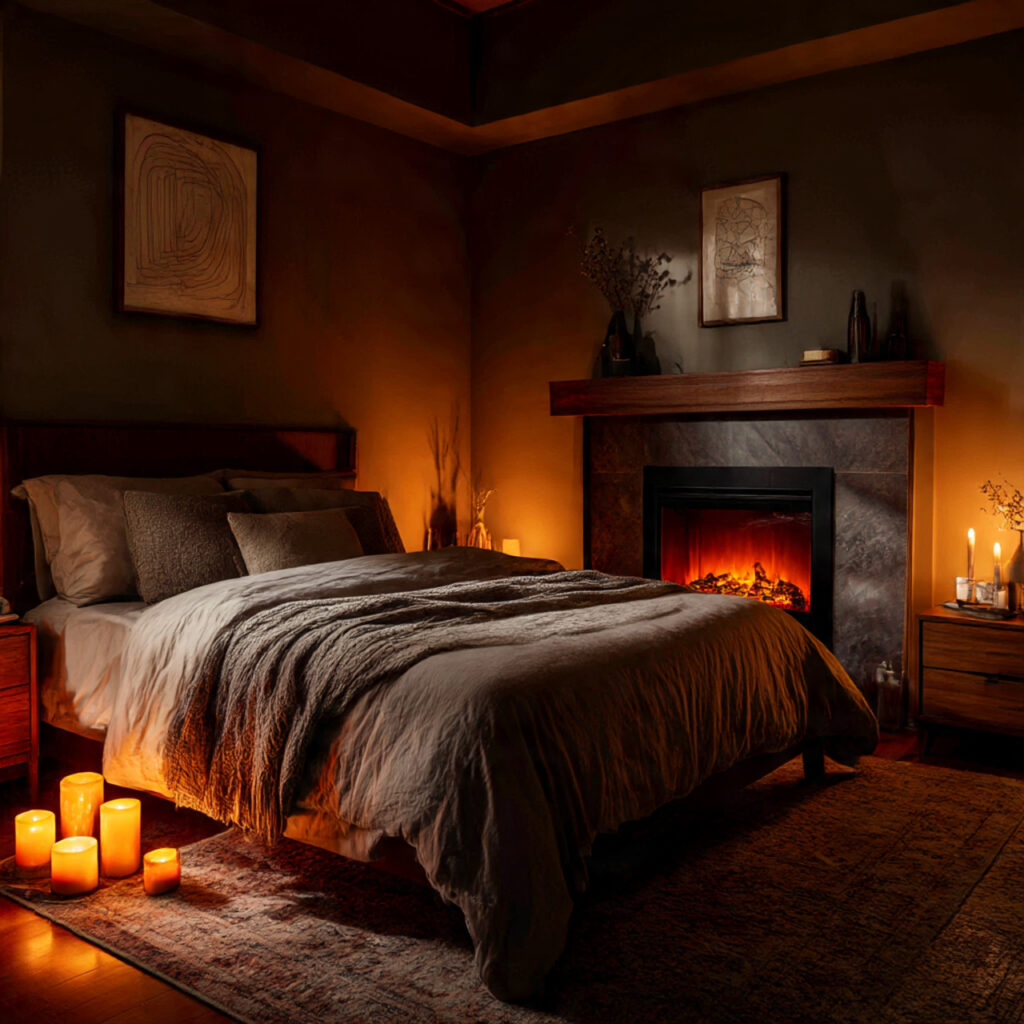
While a real fireplace is a luxury, incorporating a small electric fireplace or a highly realistic faux candle arrangement can replicate its warm, flickering glow. This light source is unparalleled for creating a sense of deep comfort.
Place this element where it can be enjoyed from the bed, reinforcing the idea of the bedroom as a safe, sheltered retreat from the cold world outside. The subtle light enhances the room’s dramatic shadows.
Acoustic Wall Treatments
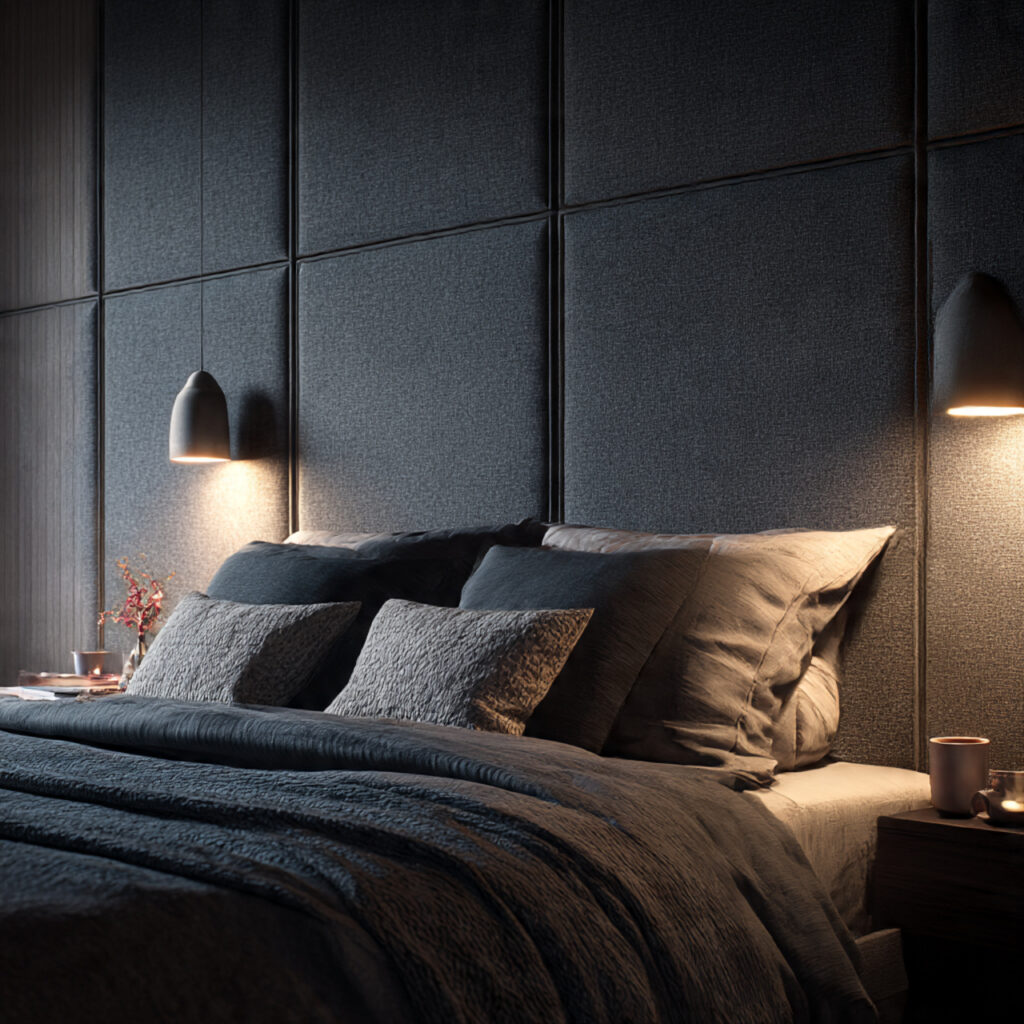
Sound absorption is a hidden component of a truly restful, cozy space. Use textiles like upholstered headboards, velvet curtains, and plush rugs to naturally dampen sound and create a quieter environment.
For a more intentional treatment, consider using subtle decorative acoustic panels covered in a dark fabric. A room feels audibly quiet is inherently more peaceful and contributes significantly to the overall moody atmosphere.
The Power of Warm Tones
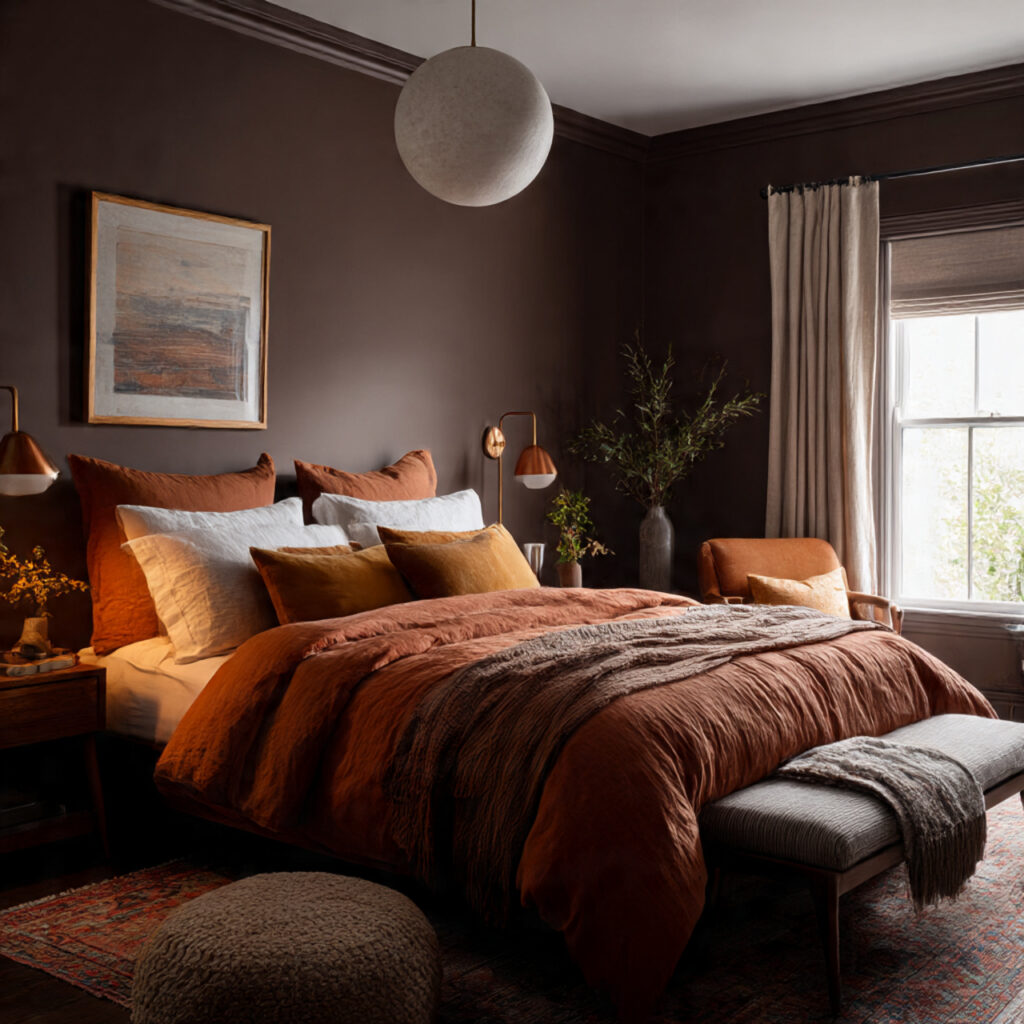
While the primary palette is dark, the warmth of the space comes from secondary colors and lighting. Focus on browns, terracottas, muted mustards, and coppers as accents, as they counteract the coolness of blues and greys.
Make sure your lighting choices lean towards warm white or amber tones (2200K–2700K) rather than cool, bright white (4000K+). This shift in color temperature is the single most effective way to enhance the sense of warmth and coziness.
Matte Finish Hardware
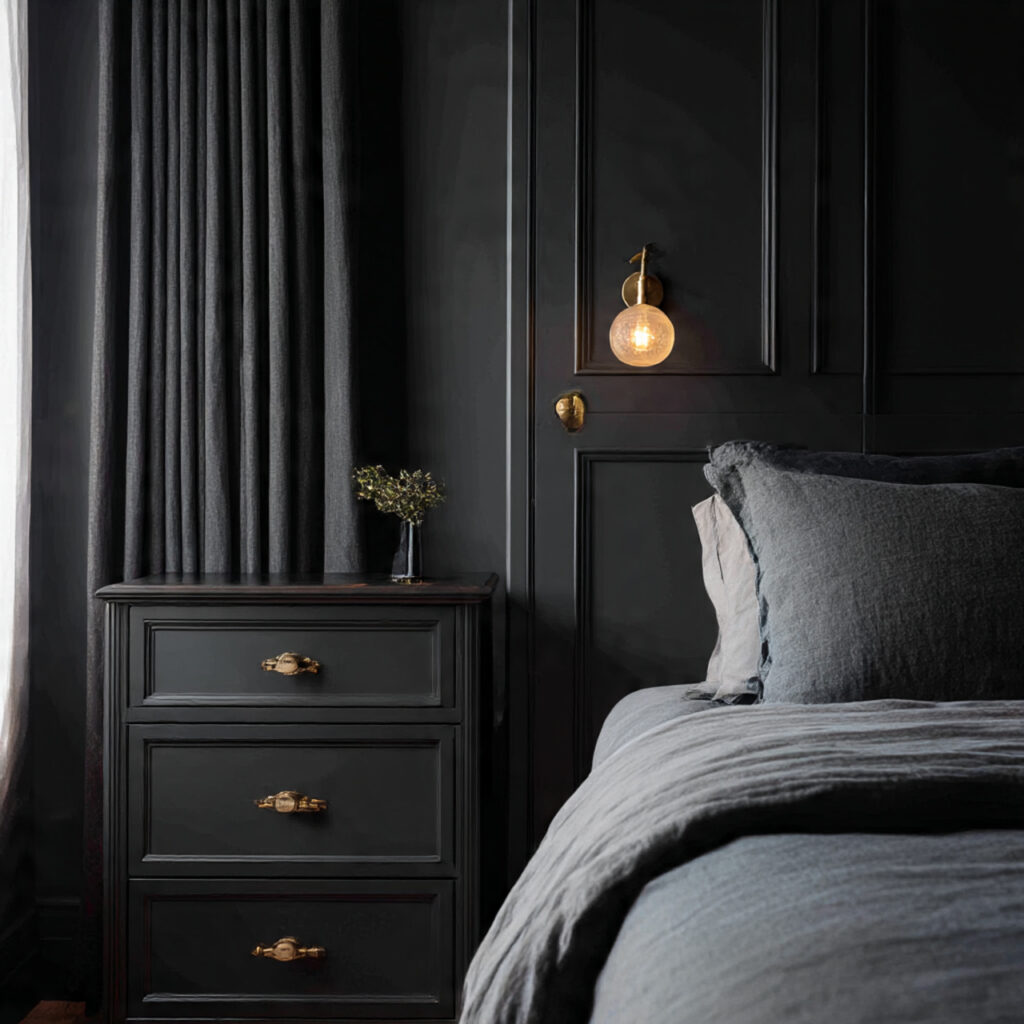
The hardware—such as drawer pulls, door handles, and curtain rods—should be chosen carefully to avoid high, distracting shine. Opt for matte black, brushed bronze, or dark antique brass finishes.
These understated, textural finishes absorb light rather than reflecting it, fitting perfectly into the moody aesthetic where high contrast and glitz are intentionally minimized. This small detail adds a lot of sophisticated polish.
Floor Lamps for Downlighting
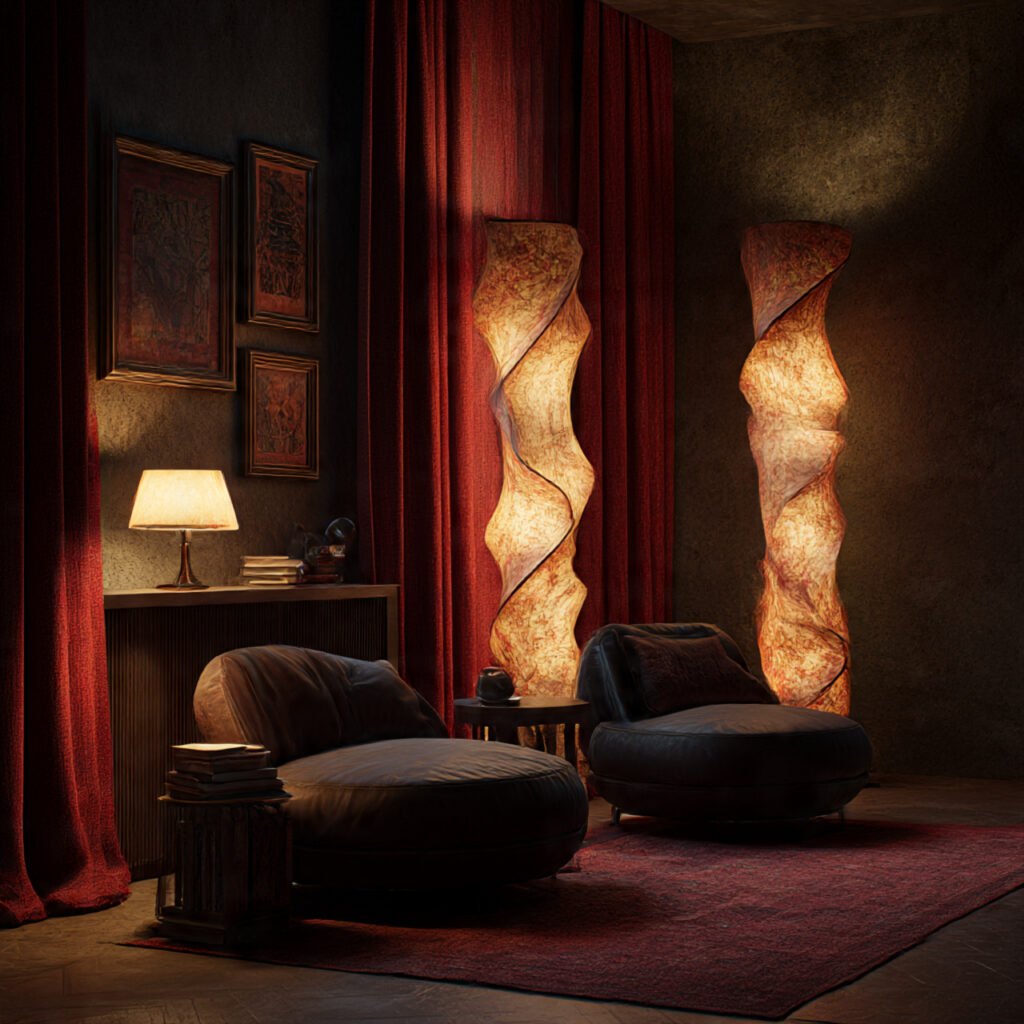
Floor lamps are critical for moody design because they deliver light from a mid-level height, preventing the light from feeling harsh or institutional. Choose lamps with opaque shades or those that direct light specifically downwards.
This style of lighting creates pools of soft illumination near seating areas or alongside the bed, contributing to the layered, intentional shadow play that defines the atmospheric look. Look for sculptural bases to add visual weight.
Darkened Ceiling Concepts
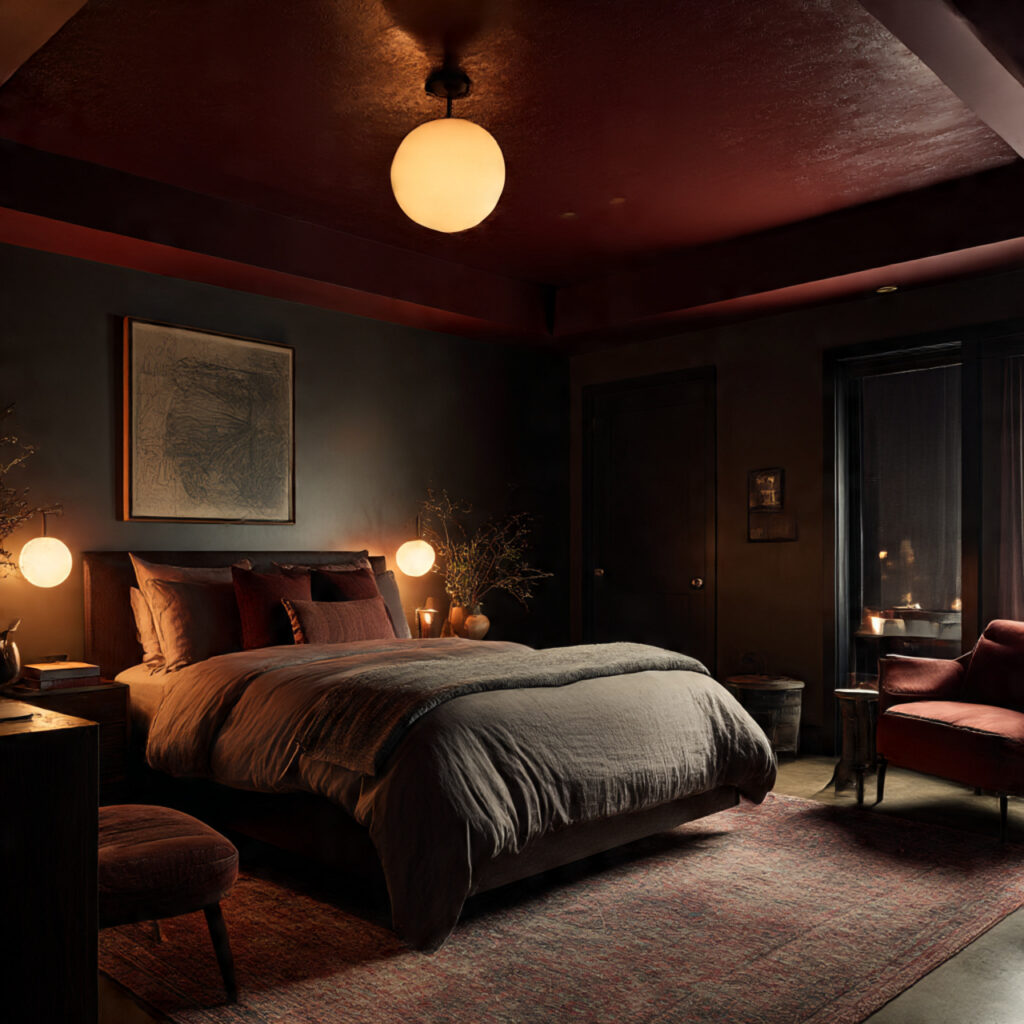
Don’t overlook the “fifth wall”—the ceiling. Painting the ceiling a deep color, either the same shade as the walls or a slightly lighter tone, dramatically enhances the cocooning effect of the room.
A dark ceiling visually lowers the space, making it feel more protected and intimate, especially effective in rooms with high ceilings. Ensure proper lighting is in place, as the dark color will absorb ambient light.
Incorporating Faux Fur Throws
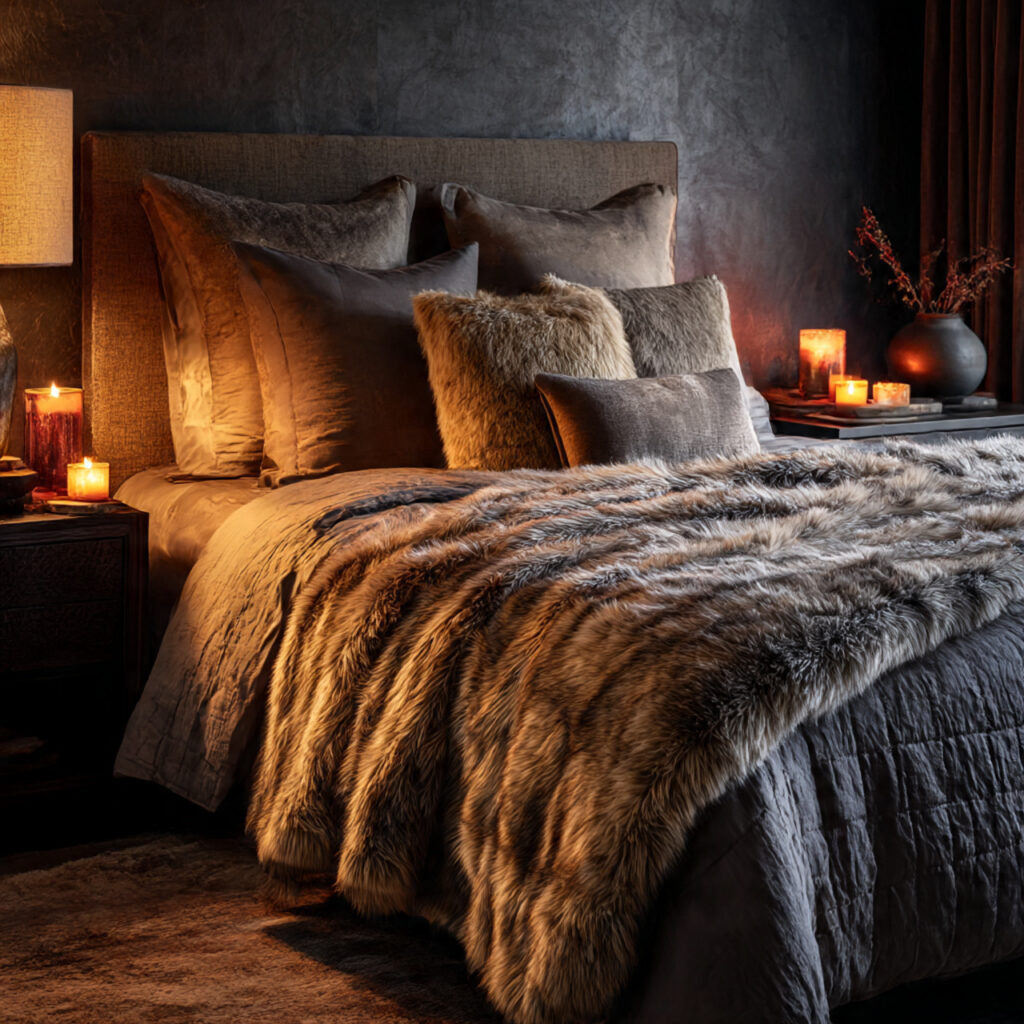
Faux fur instantly signals luxury and extreme comfort, making it a perfect addition to a cozy moody space. A substantial faux fur throw draped over the foot of the bed or an accent chair is an easy texture booster.
Choose fur colors that blend with the deeper palette, such as deep charcoal, ivory, or subtle brown tones. The density of the material creates a soft, tactile surface that is both inviting and visually rich.
Smart Home Integration for Ambiance
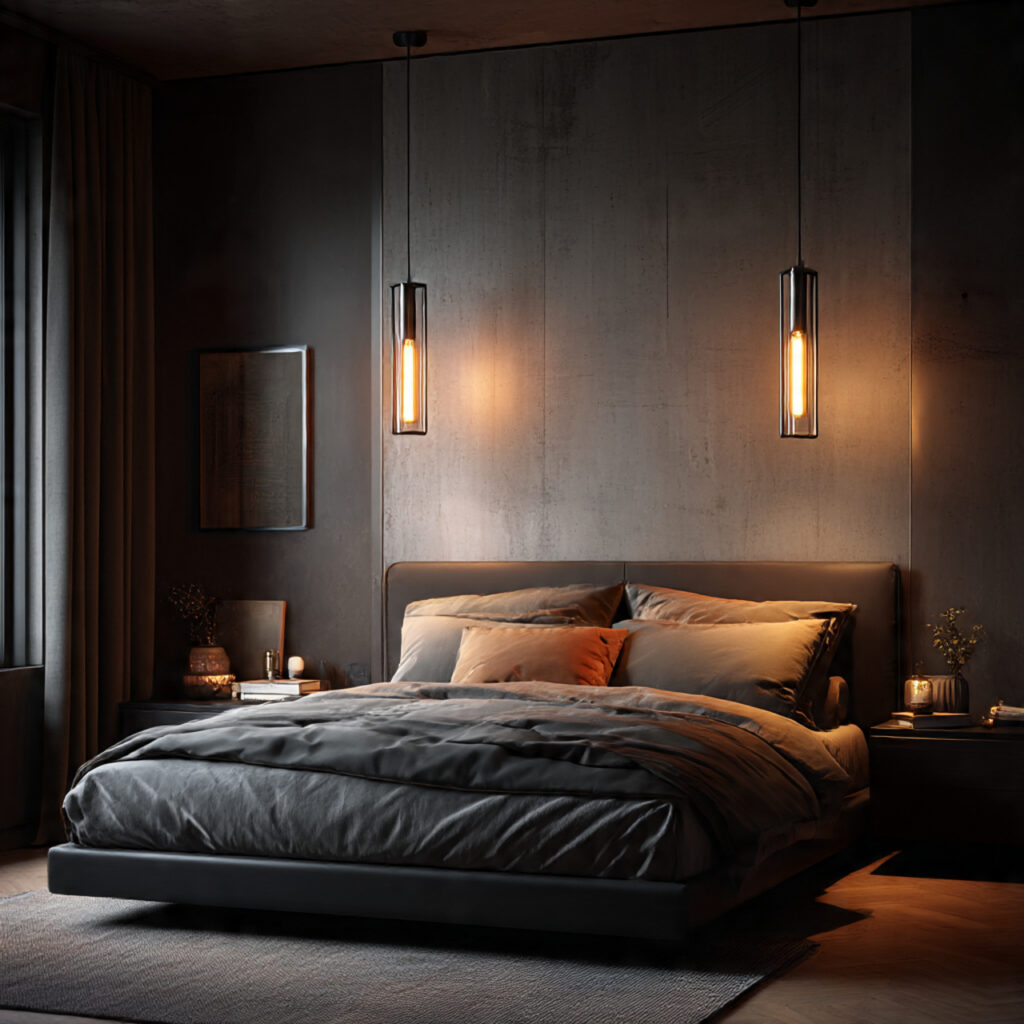
Modern moody design relies on smart technology to control the atmosphere effortlessly. Integrate smart bulbs that allow you to adjust the color temperature and brightness via voice command or an app.
Setting pre-programmed scenes, such as a “Relaxation Mode” that dims lights and shifts them to a warm amber, completes the sanctuary experience. This functionality allows you to precisely dial in the desired moody level instantly.
FAQs About Cozy Moody Bedroom
What is the difference between “cozy moody” and “gothic” interior design?
The primary difference lies in the emphasis on comfort. Cozy moody design focuses on deep, saturated colors (like jewel or earth tones), soft, layered lighting, and abundant, luxurious textures (velvet, fur, knits) to create warmth and intimacy. Gothic design, while dark, tends toward high drama, high contrast (stark black and white), ornate architectural details, and can often feel more formal or cool than cozy.
What are the best dark paint colors for a small bedroom to avoid it feeling too cramped?
For a small space, avoid solid black or true grey, which can make walls feel too flat. Instead, choose deep, muted colors with warm undertones, such as dark teal, warm midnight blue, or deep plum. These colors blur the edges of the room, paradoxically making the boundaries less defined and making the space feel more like a continuous, comfortable cocoon. Always use a matte finish.
How can I achieve a moody look without relying on black or grey walls?
Focus on deep, rich earth tones and saturated nature-inspired colors. Excellent alternatives include forest green, deep chocolate brown, burnt orange, or a muted mossy olive. The “mood” comes from the saturation of the color and the use of low, warm ambient lighting, which creates deep shadows, rather than simply using a dark neutral like black or grey.
Which types of lighting are essential for creating the perfect moody ambiance?
You need three layers of light: Ambient light (soft, indirect light from floor or table lamps with warm bulbs around 2200K) for the overall glow; Accent lighting (small sconces or picture lights) to highlight textures and artwork; and Task lighting (a focused reading lamp) for utility. Layering these avoids reliance on a single, harsh overhead fixture.
What are the most budget-friendly ways to add texture to a bedroom design?
The most cost-effective approach is through accessories and soft goods. Focus on purchasing affordable chunky knit throw blankets, velvet pillow covers, or faux sheepskin rugs (which are usually cheaper in smaller sizes) from discount home stores. You can also incorporate natural texture using woven straw or rattan baskets for storage or as plant pot covers.
Conclusion
Creating a Cozy Moody Bedroom is a design journey centered on transforming your space into a deeply personal sanctuary. The success of this style rests on the thoughtful trifecta of saturated color, luxurious texture, and perfectly calibrated ambient lighting, all working in harmony.
By implementing these 26 ideas—from anchoring the room with deep wall colors and rich wood tones to refining the atmosphere with layered scents and sophisticated smart lighting—you can create a haven that promotes true rest and deep relaxation. I hope these answers clear up some common design questions you might have! Let me know if you’d like to explore any of these topics further, like maybe specific paint color recommendations.