Modern Living Rooms: Stylish Minimalist Design Ideas
Modern Living Rooms represent the peak of residential interior design, offering a sanctuary of style that emphasizes simplicity, functionality, and aesthetic clarity. This approach moves beyond purely decorative elements, focusing instead on spatial harmony, clean sightlines, and the quality of essential furnishings. It’s a powerful design ethos that promises both tranquility and efficiency for the homeowner seeking a chic, uncluttered environment.
Embracing this style means prioritizing clean lines, open spaces, and materials that speak for themselves, such as raw wood, brushed metal, and expansive glass. Throughout this comprehensive guide, we will explore 27 actionable ideas to help you transform your current space into the elegant, streamlined Modern Living Rooms you have always desired.
The Philosophy Behind Modern Living Rooms
The enduring appeal of Modern Living Rooms stems from the early 20th-century movements that championed function over excessive ornamentation. This design philosophy is strictly rooted in the ‘less is more’ principle, demanding that every object and structural element serves a clear, practical, and visual purpose. It ultimately results in living spaces that feel highly intentional, spacious, and effortlessly sophisticated.
In practice, this aesthetic translates to uncluttered surfaces, an emphasis on architectural features, and a restrained color palette that often utilizes blacks, whites, and various shades of gray or earth tones. Achieving truly successful Modern Living Rooms is about balance—creating warmth and personality within the parameters of sleek, minimalist forms and geometric precision.
Minimalist Furniture Layouts
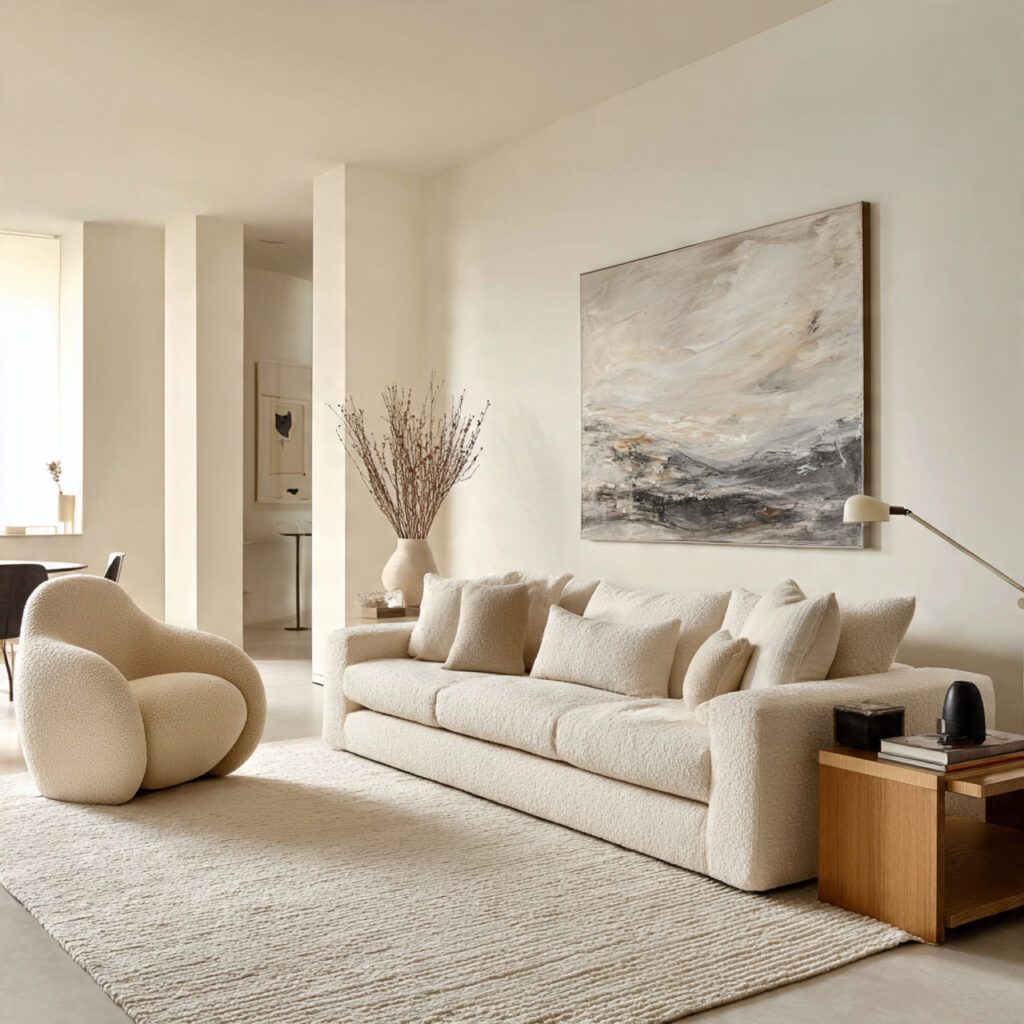
The goal here is deliberate under-furnishing, ensuring that key pieces have ample room to breathe and command attention. Avoid overcrowding by selecting only the items that are absolutely essential for comfort and function, such as a main sofa and a single side chair. This calculated approach immediately elevates the room’s perceived size and airiness.
Position large pieces, like the sofa, centrally and slightly away from the walls to establish defined conversation zones. The negative space around the furniture becomes just as important as the furniture itself, contributing significantly to the overall tranquil, modern feel.
Open-Concept Zoning Techniques
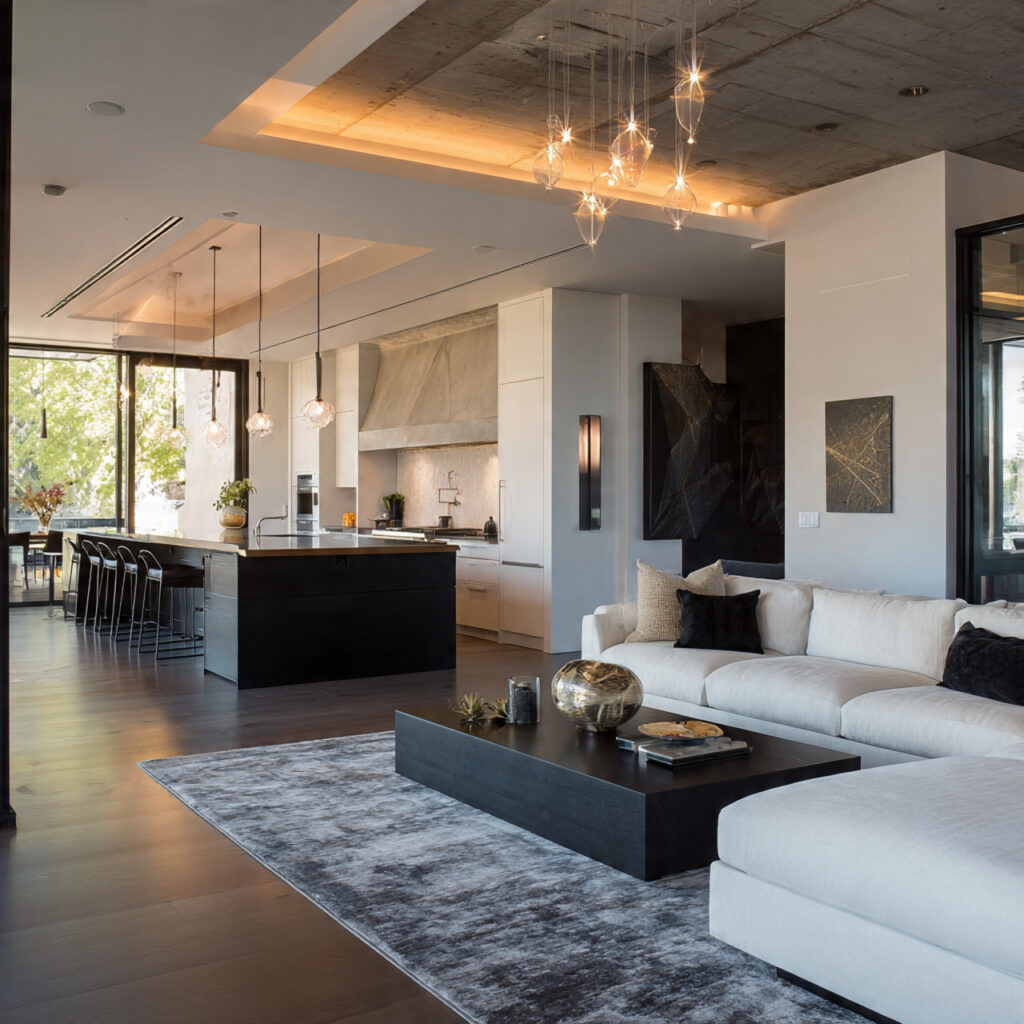
In fluid, open floor plans, use large area rugs, distinct ceiling light fixtures, or changes in flooring texture to subtly define the perimeter of the living area. These visual cues designate the boundaries of the Modern Living Rooms without relying on restrictive walls or partitions.
Consider using a sleek, low console table or a floating shelving unit placed behind the main seating area to create a soft divide between the living room and the kitchen or dining area. This separation maintains open flow while providing functional surface space and a visual break.
Neutral Color Palettes
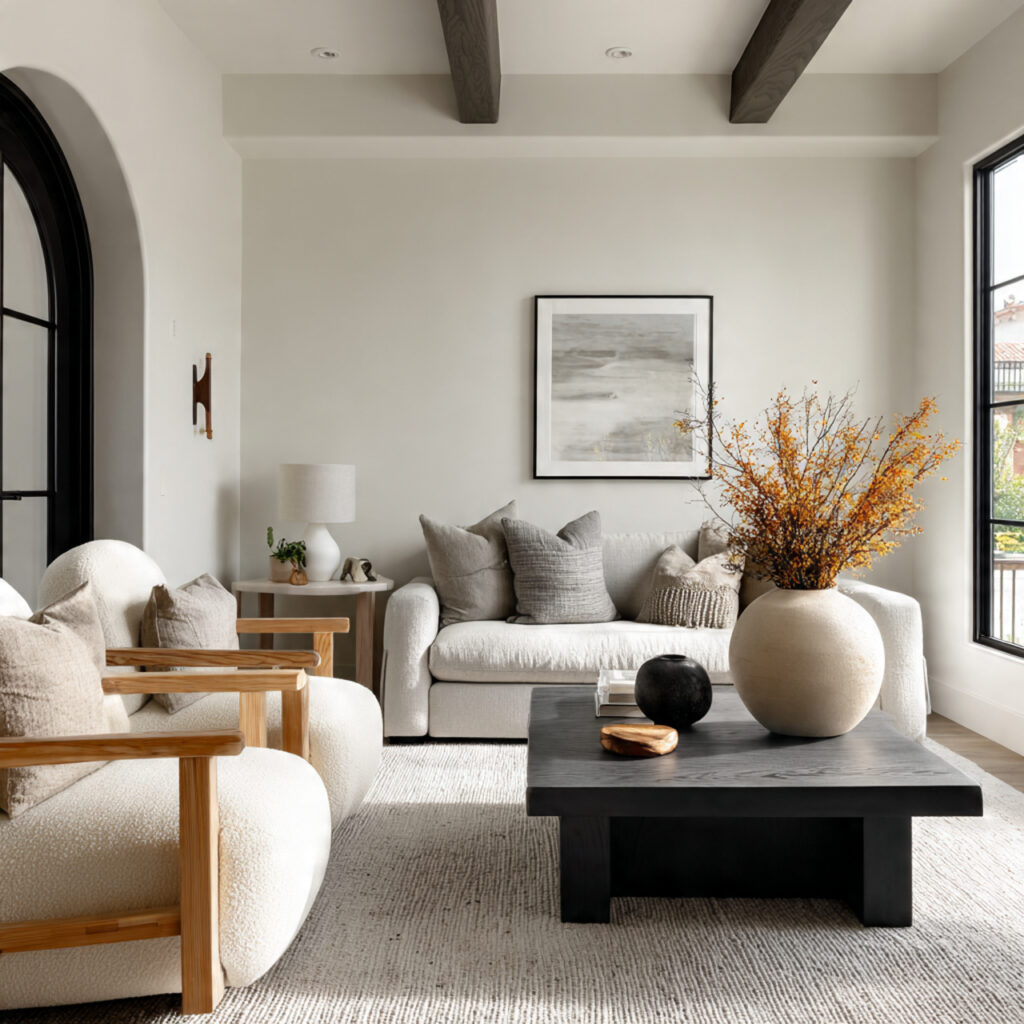
A foundation of crisp off-whites, cool grays, or deep charcoals provides the perfect backdrop for modern design elements. These subdued colors allow the unique textures and simple shapes of the furniture to become the undeniable focal point of the room.
Introduce color through restrained, targeted accents, such as a single vibrant piece of abstract art or a handful of muted, dark wood accessories. This technique keeps the overall look sophisticated and prevents the contemporary space from feeling visually overwhelming or busy.
Smart Home Integration
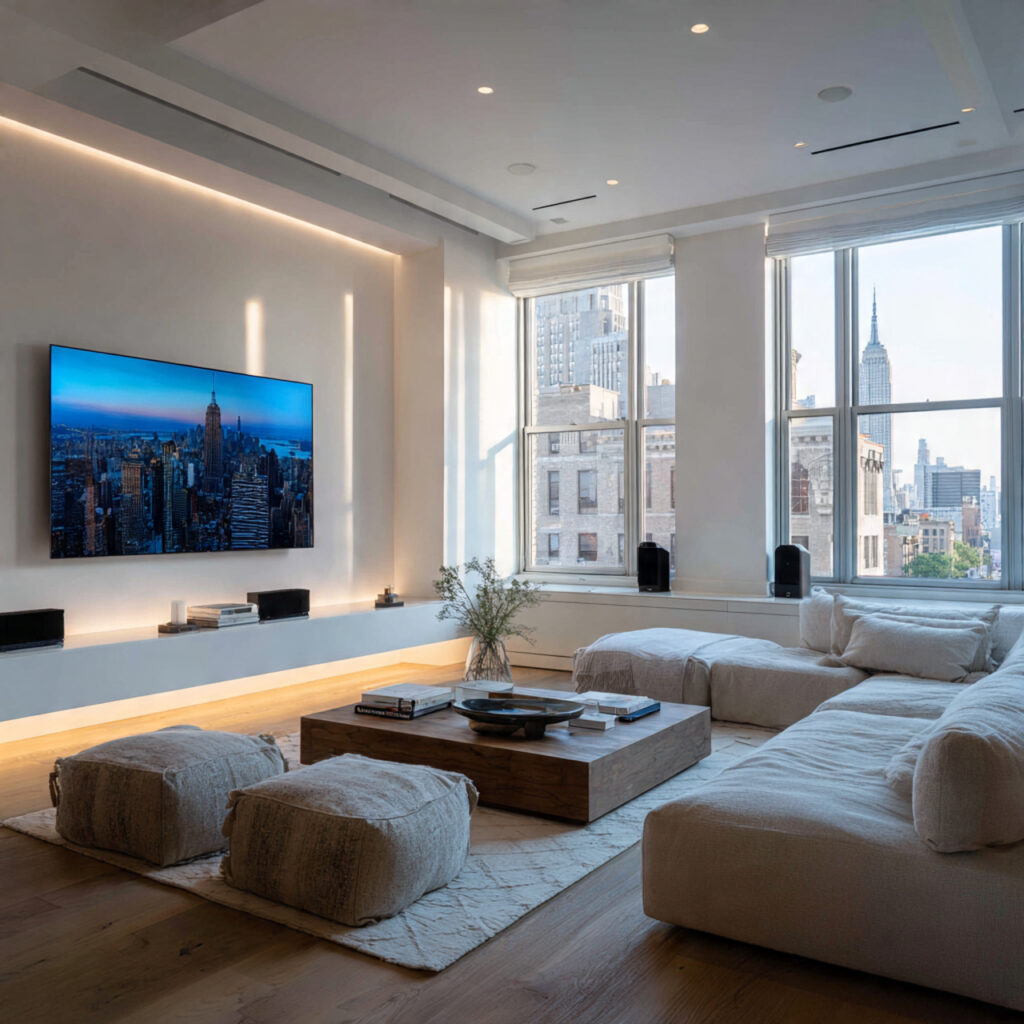
True Modern Living Rooms seamlessly incorporate technology, where devices are hidden until needed, contributing to the clean and uncluttered aesthetic. Invest in voice-controlled lighting systems, automated window shades, and hidden charging docks built directly into furniture.
Minimize visible wires and tech clutter by running cables through walls or using specialized media cabinets that ventilate and conceal all equipment. This dedication to invisible technology reinforces the smooth, uncomplicated nature of the architectural style.
Architectural Lighting Design
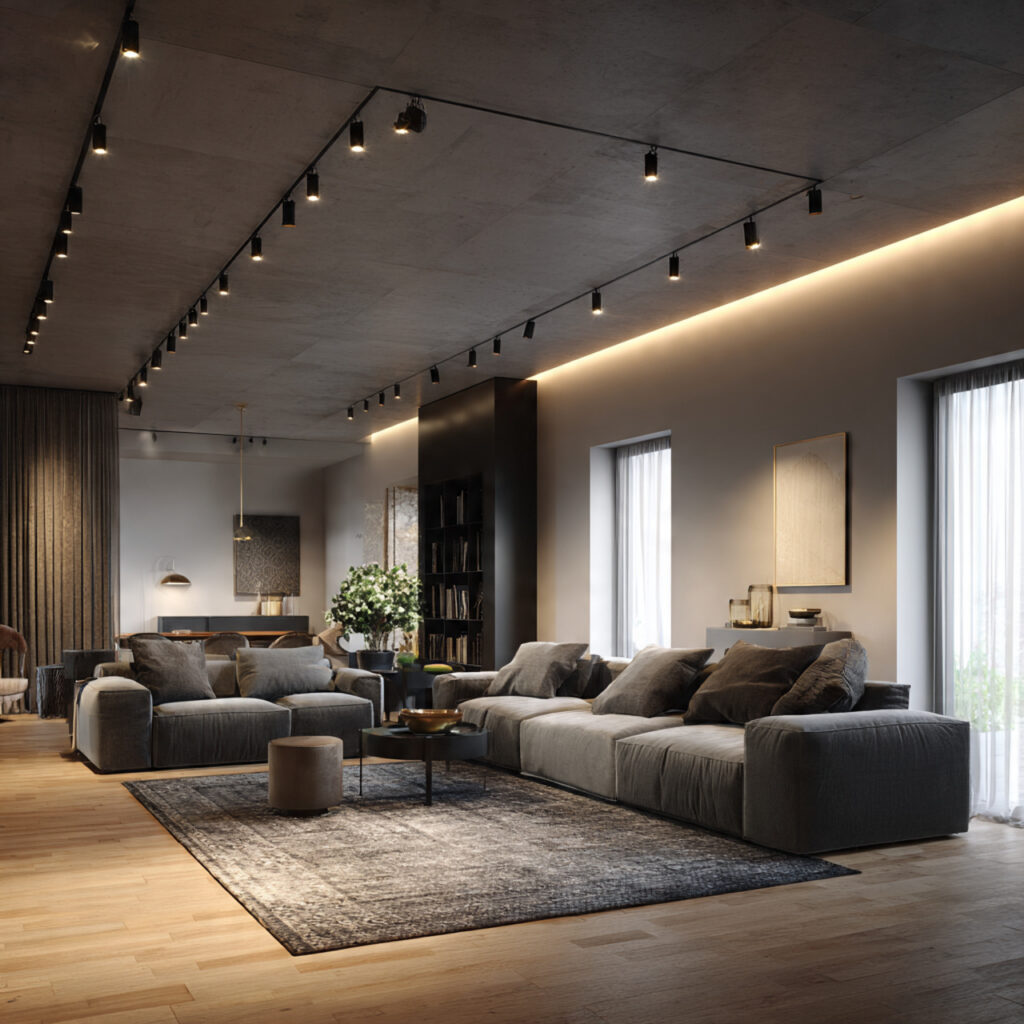
Avoid reliance on a single overhead fixture; instead, layer lighting using recessed cans, subtle floor lamps, and track lighting to highlight architectural features or artwork. The lighting fixtures themselves should be sleek, minimal, and generally inconspicuous.
Consider sculptural fixtures that double as art pieces, featuring geometric forms or unexpected materials like brushed steel or matte black finishes. Dimmers are an absolute requirement for controlling mood and flexibility in the contemporary setting.
Textural Contrast in Decor
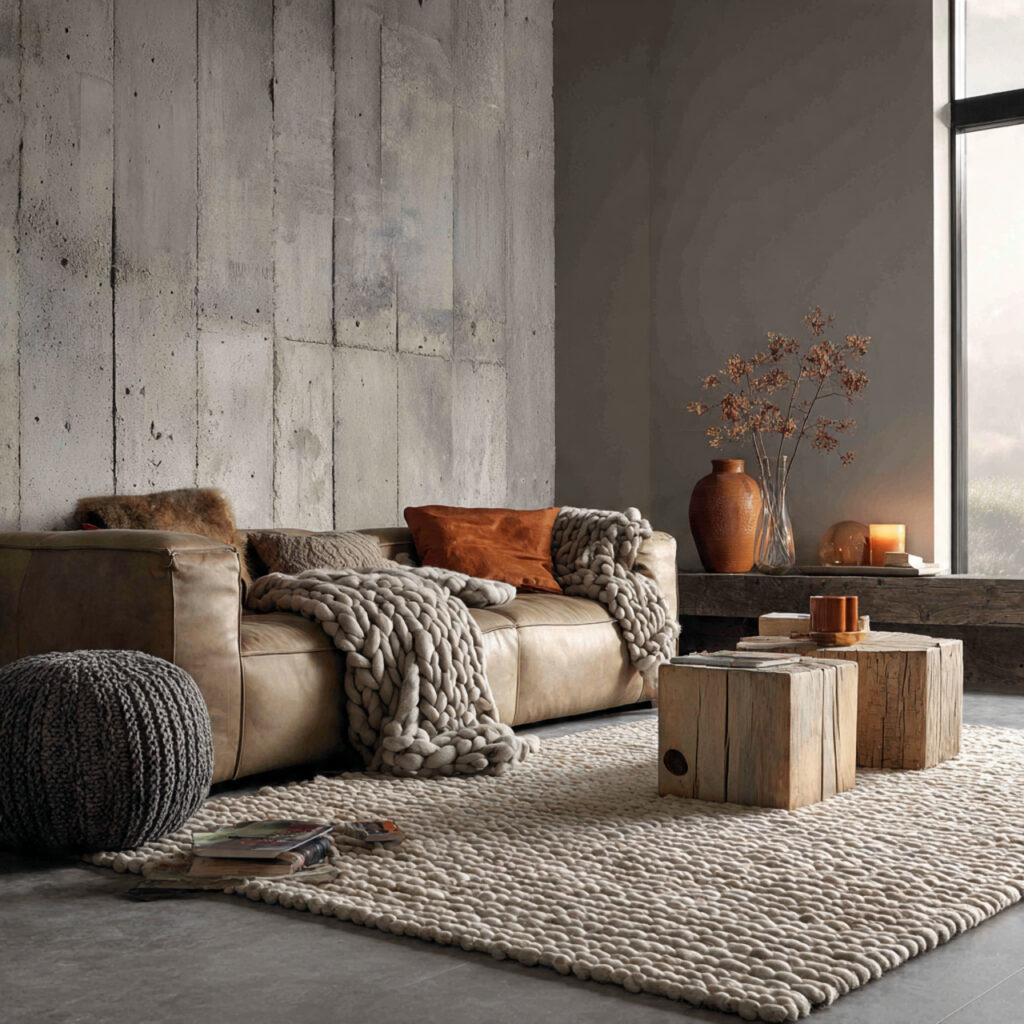
Because the color palette is often muted, texture becomes the primary source of visual interest, warmth, and depth. Combine soft wool rugs, smooth Italian leather upholstery, and rough-hewn wood side tables to engage the senses and add sophistication.
Adding a chunky knit throw or a performance velvet cushion against a smooth concrete or polished plaster wall provides a necessary tactile experience. This essential balance between hard and soft counteracts any potential austerity in the strictly minimalist space.
Sleek Storage Solutions
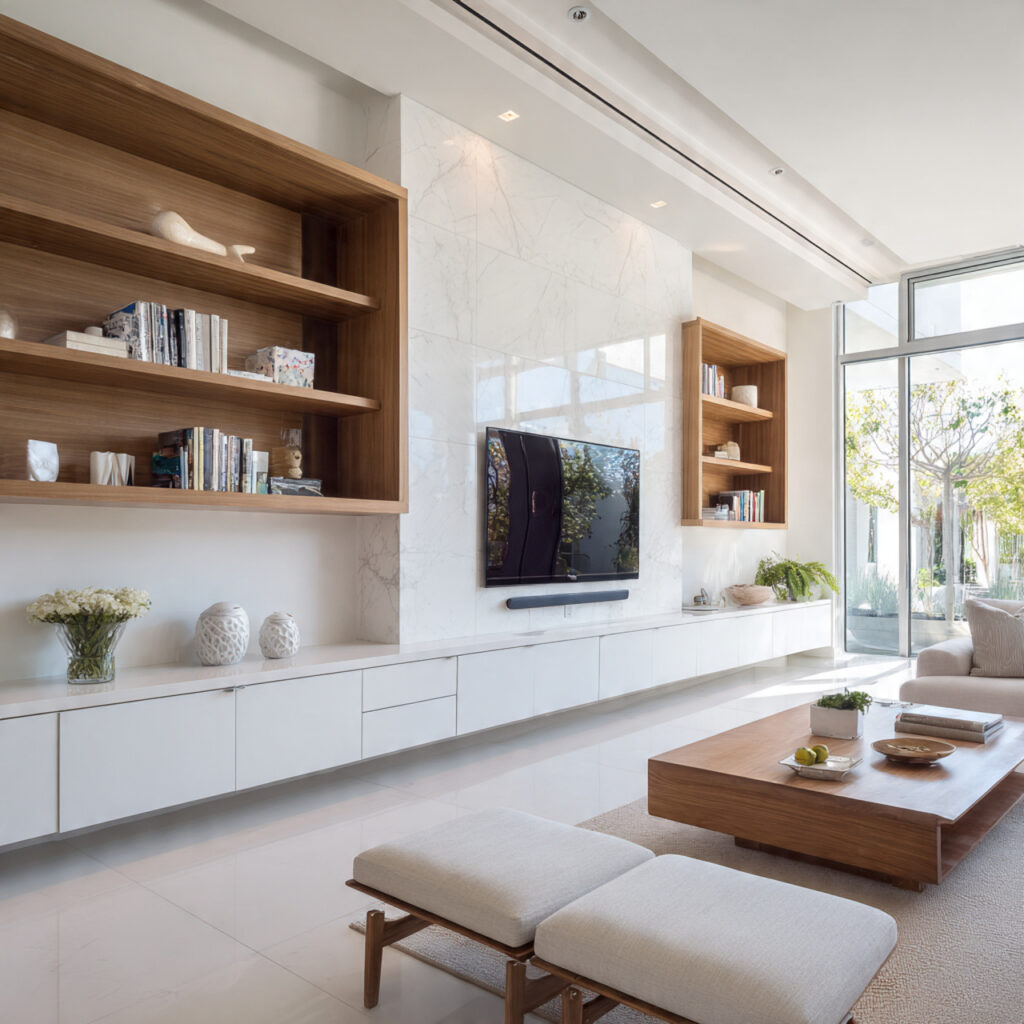
Clutter is the ultimate enemy of modern design, making integrated and closed storage mandatory for every single living space. Utilize low, horizontal cabinets with push-latch doors and handle-less facades for a seamless, floating effect.
Floating wall-mounted units not only provide necessary organization but also enhance the room’s strict clean lines by keeping the floor visible beneath them. This visual trick creates a visually lighter, more expansive, and open feeling.
Mid-Century Modern Accents
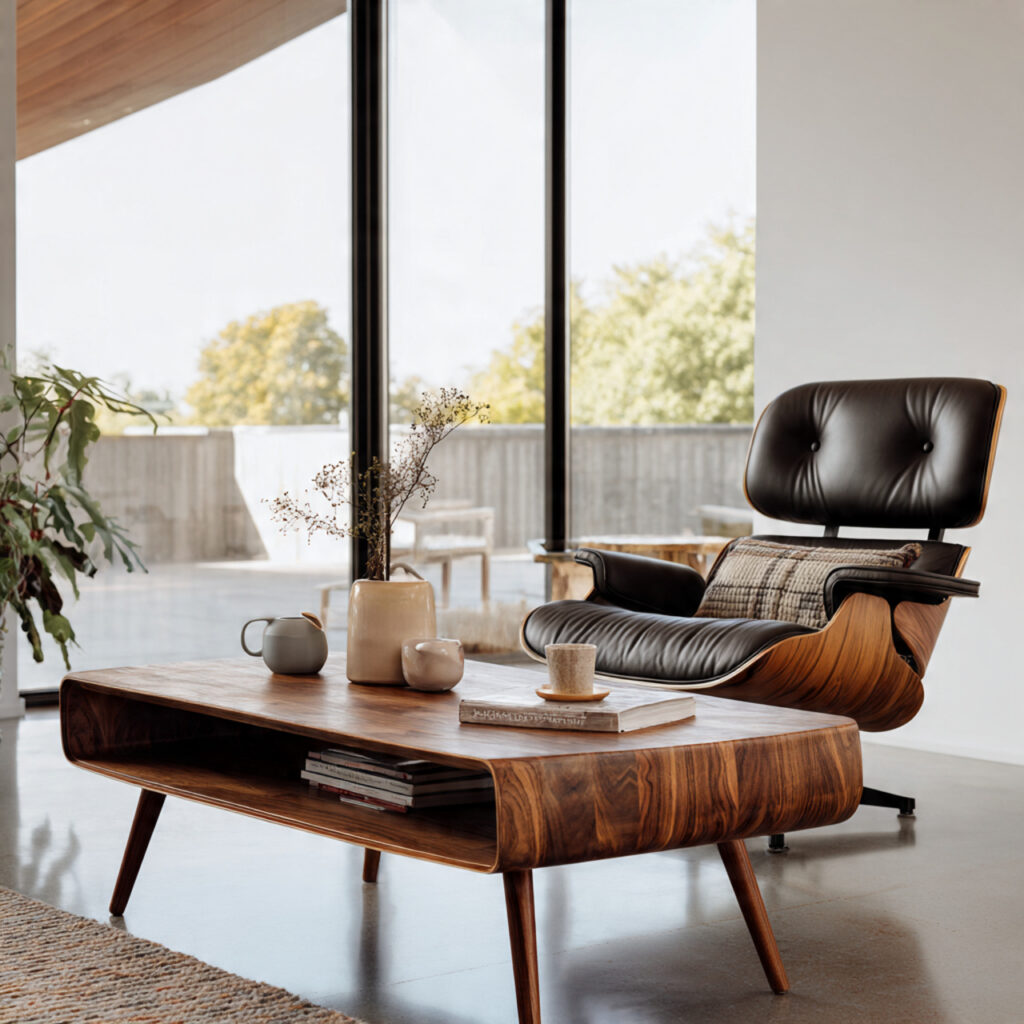
The organic curves and tapered legs of mid-century furniture blend seamlessly with stricter modern aesthetics, providing a welcome warmer, retro touch. A low Danish teak coffee table or an authentic Eames-style lounge chair can serve as a striking focal point.
These carefully selected accent pieces inject a timeless quality and successfully break up the severity of purely minimalist design without sacrificing sophistication. They are perfect additions for introducing personality into a refined contemporary setting.
Curved Sofas and Seating
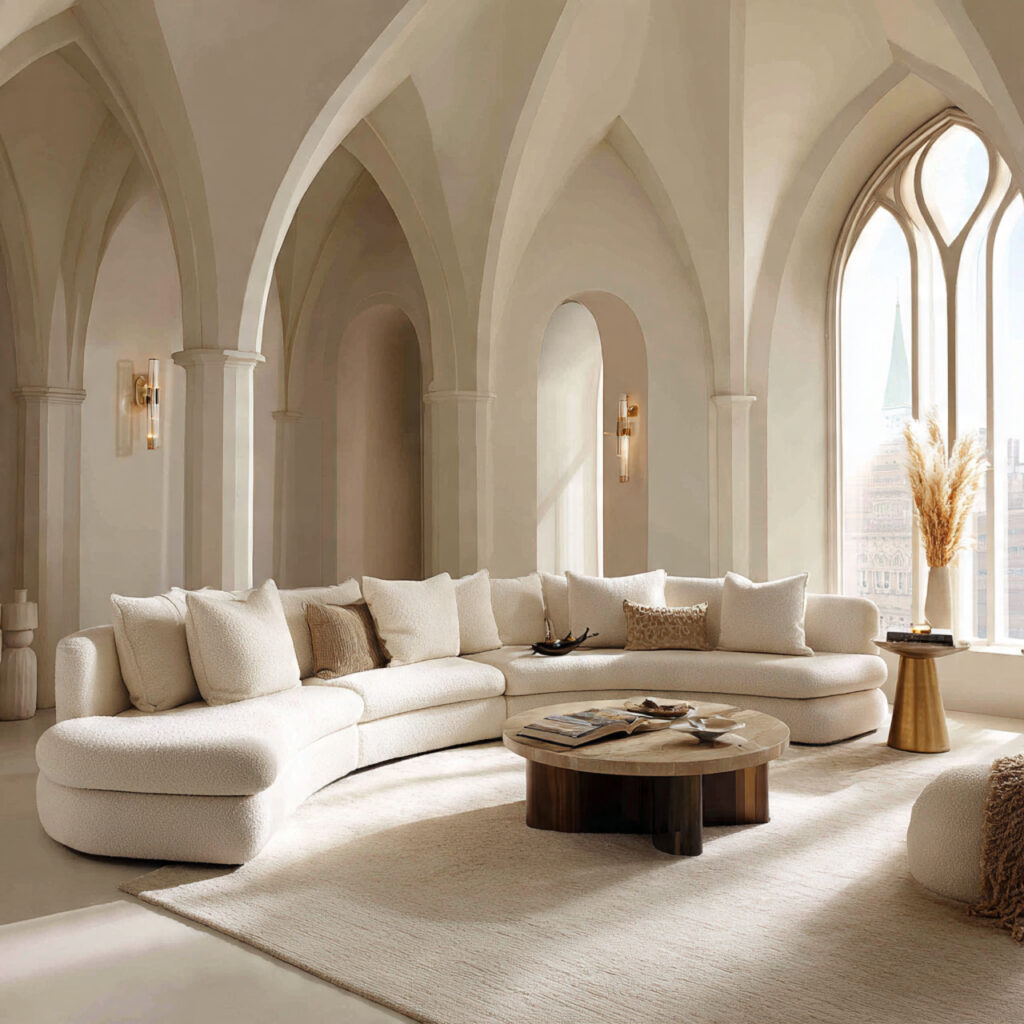
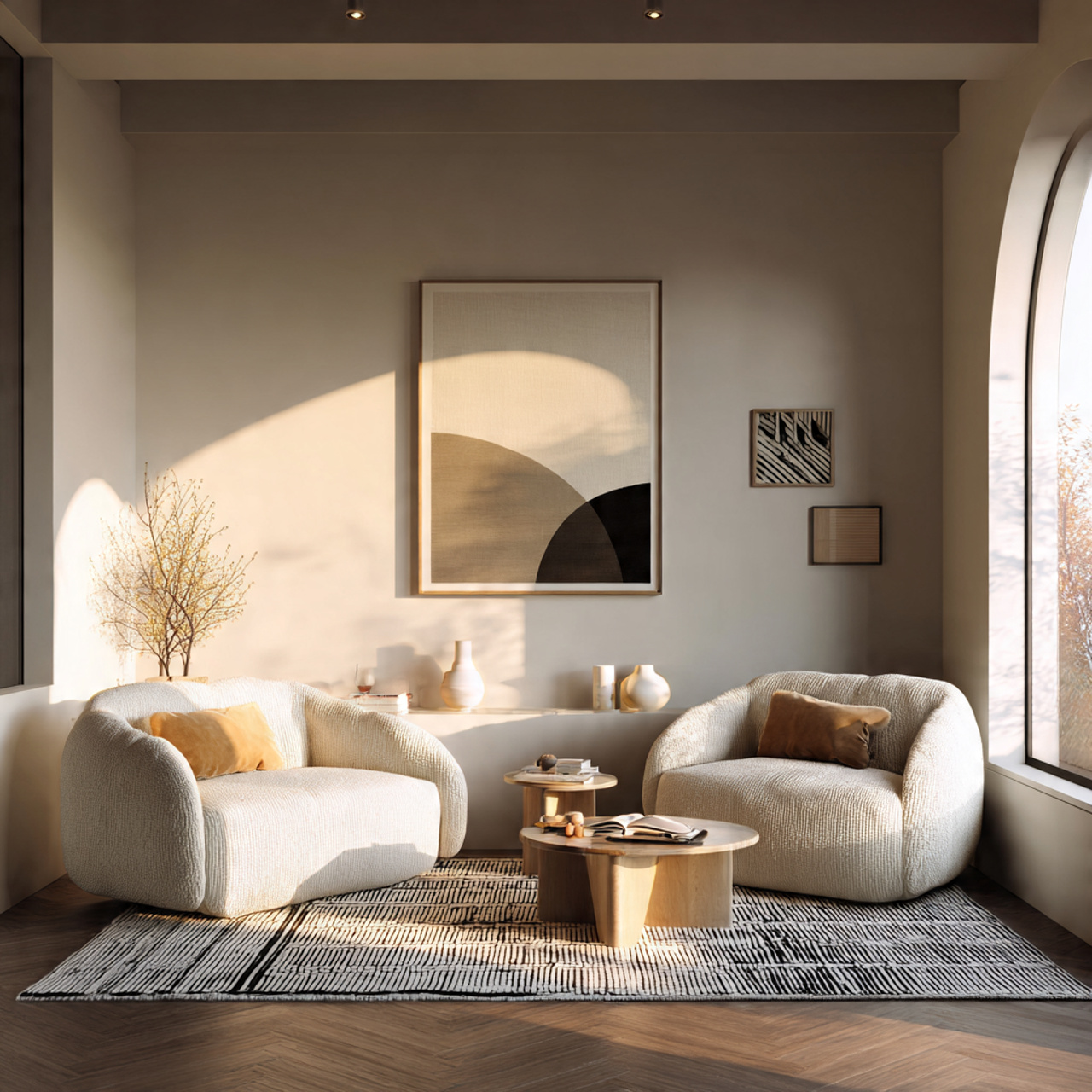
While straight lines dominate the architecture, introducing a large, sweeping curved sofa adds an essential softness and organic feel to the room’s composition. This unique shape encourages convivial conversation and breaks up the many hard angles typical of the style.
Ensure the upholstery remains simple and high-quality, preferring solid materials like boucle, durable linen, or a textured weave in a solid neutral tone. This material choice helps maintain the overall clean and sophisticated aesthetic.
Wall Art and Abstract Forms
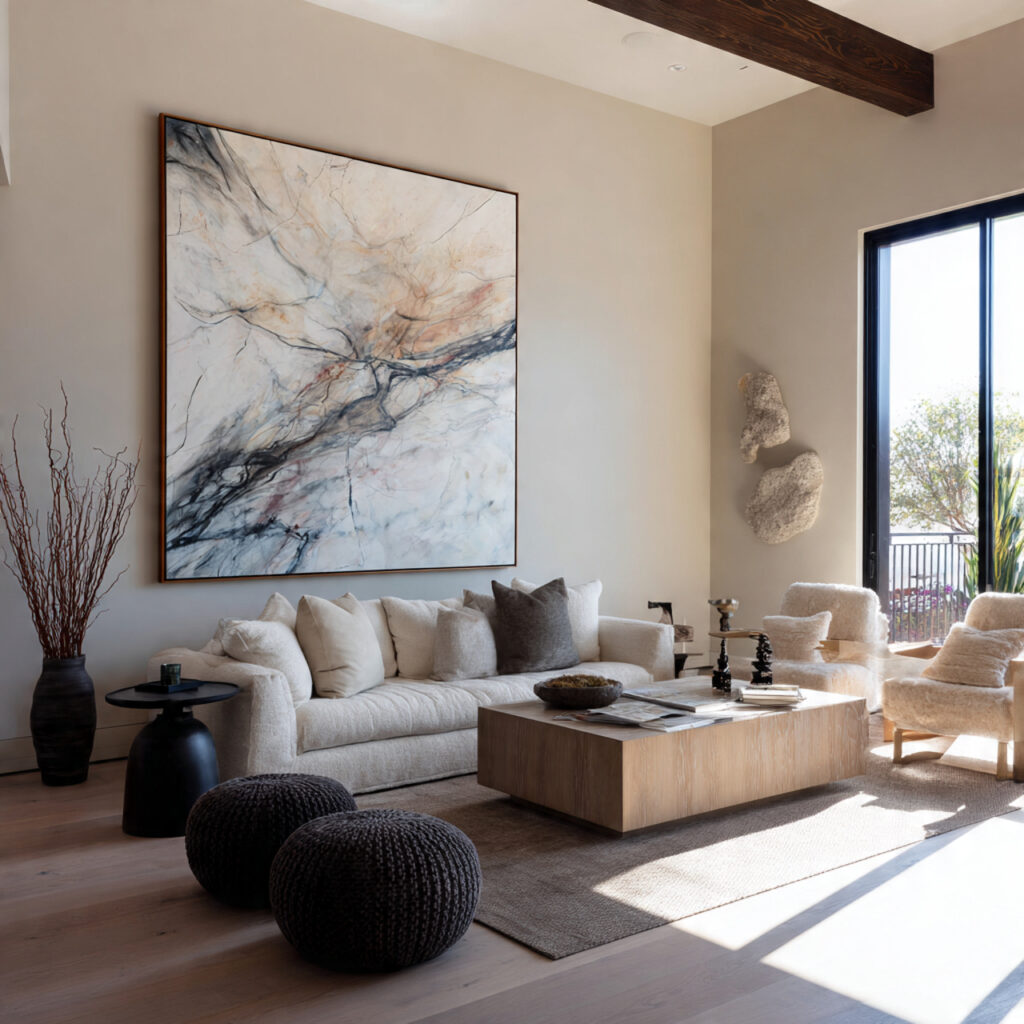
Opt for oversized abstract canvases or photographic prints with graphic simplicity, allowing the artwork to make a bold, singular statement on a primary wall. Gallery walls are generally avoided in favor of one large, impactful piece.
Framing should be kept minimal—think thin metal or simple black wood—to keep the focus entirely on the art itself. Sculptural wall hangings or massive, minimalist mirrors can also fulfill this decorative and focal-point role.
Large Format Tile Flooring
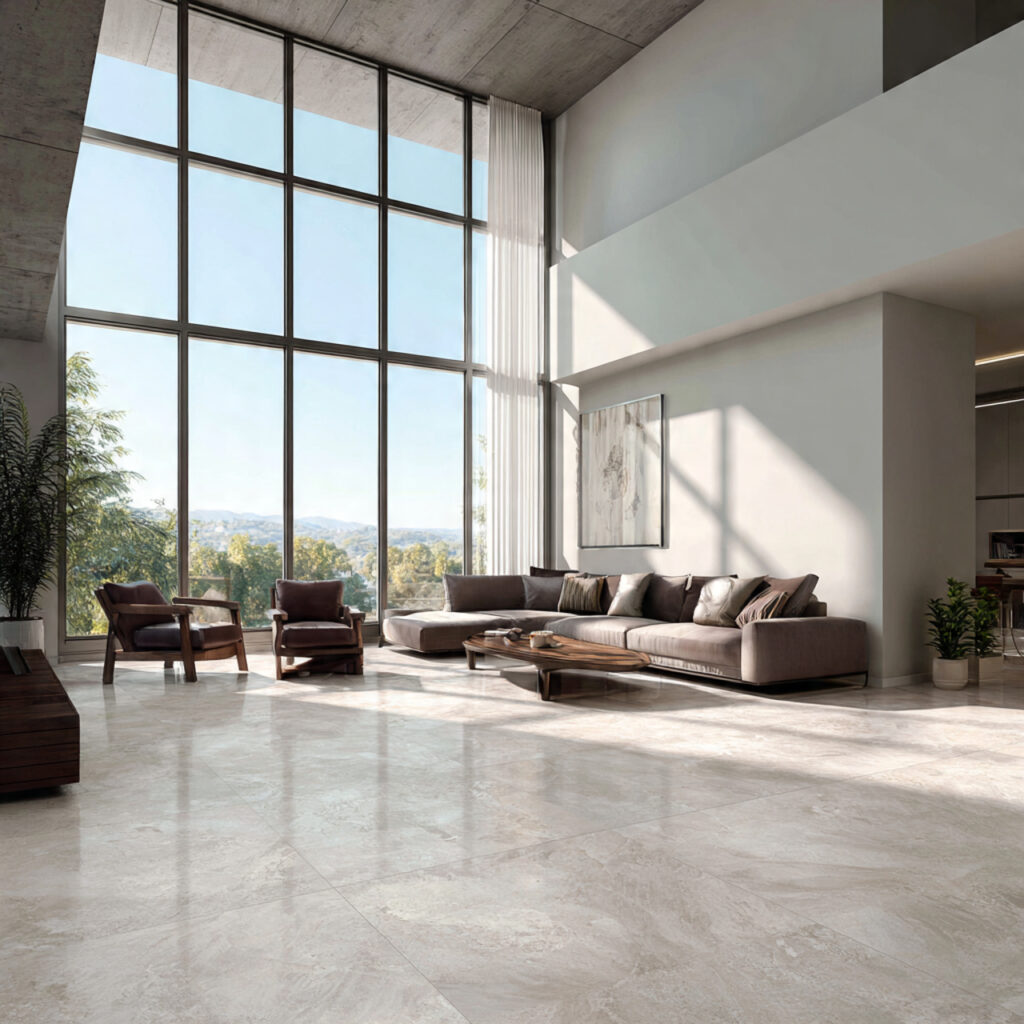
Seamless, extra-large format porcelain or ceramic tiles minimize grout lines, creating a monolithic, smooth surface that enhances the feeling of vastness. This continuous flooring choice is a common feature in upscale contemporary homes.
Neutral tones like bone white, subtle gray, or dark slate work best, providing a durable, easily maintained base that reflects light beautifully. This seamless surface significantly contributes to the room’s overall sleek finish.
Integrated Fireplace Designs
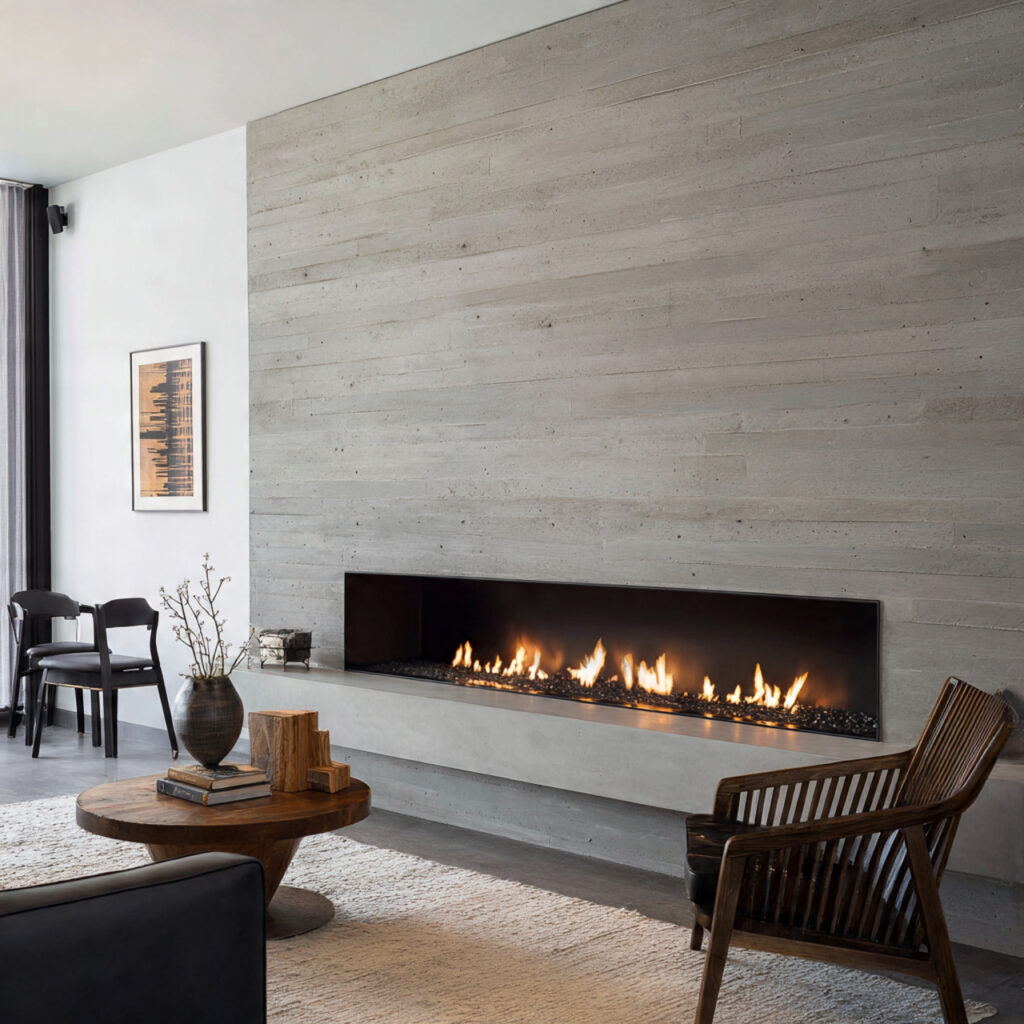
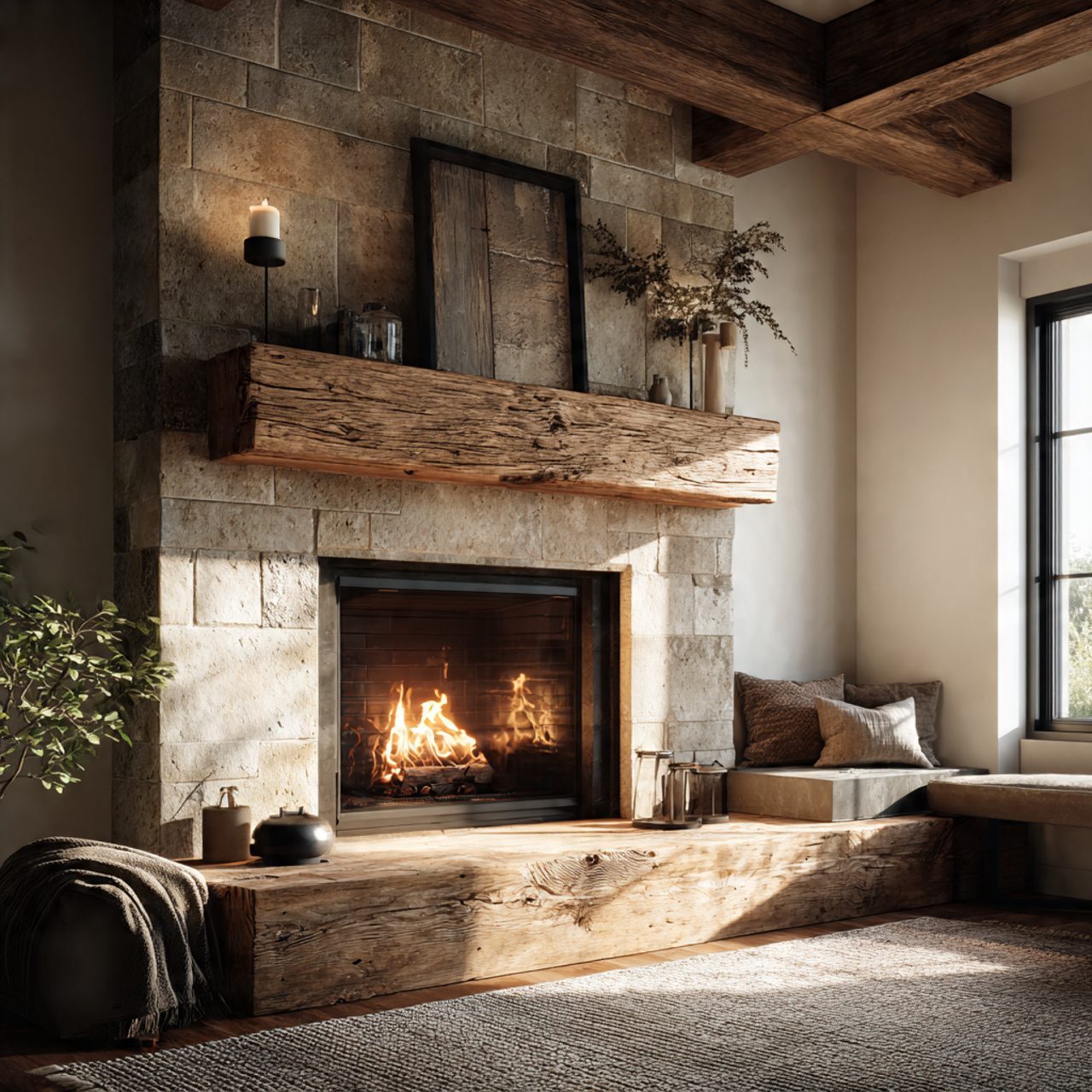
Modern Living Rooms often feature linear fireplaces that are completely flush with the surrounding wall, often encased in a continuous slab of concrete, stone, or polished plaster. The fire itself becomes a minimalist, horizontal feature.
Avoid traditional mantels or hearths that protrude into the space; the chimney breast should virtually disappear into the surrounding architecture. It should act merely as a subtle textural feature rather than a separate decorative element.
Statement Area Rugs
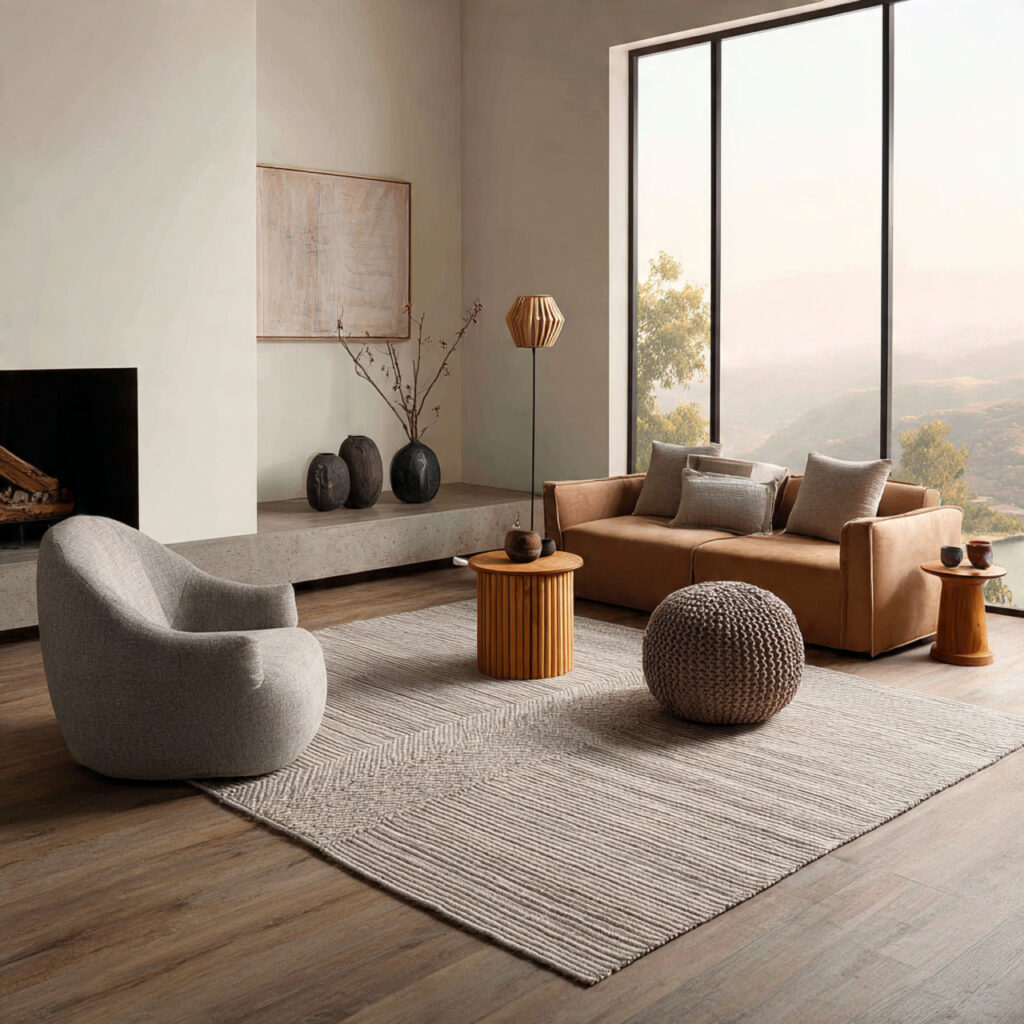
A well-chosen rug in a contemporary space should anchor the main furniture grouping and introduce necessary texture or a graphic element beneath the feet. Choose rugs made from natural, high-end fibers like pure wool or woven jute.
Geometrically patterned rugs or those with a subtle, distressed weave can add dynamic visual interest without conflicting with the room’s fundamental clean lines. The rug is essential for softening the hard surfaces beneath.
Floor-to-Ceiling Windows
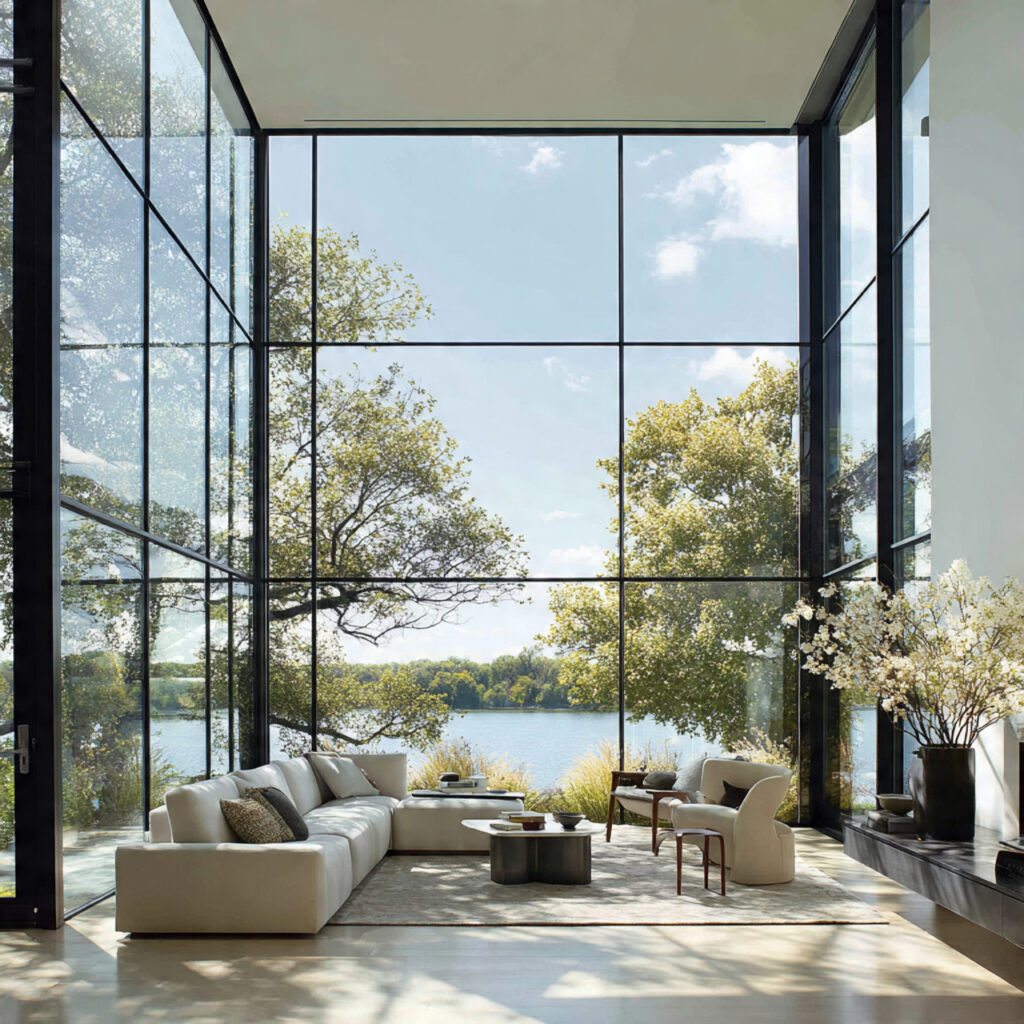
Maximizing natural light is paramount in modern design, and expansive windows frame the outside world as essential, living art. The ultimate goal is to completely blur the line between interior sanctuary and exterior landscape.
Ensure the window frames are minimal and narrow, often in a striking black or aluminum finish, to avoid distracting from the view. The sheer scale of these glass panes fundamentally defines the character of the space.
Visit Also : IDEAS THAT FEEL PERSONAL
Concrete and Stone Textures
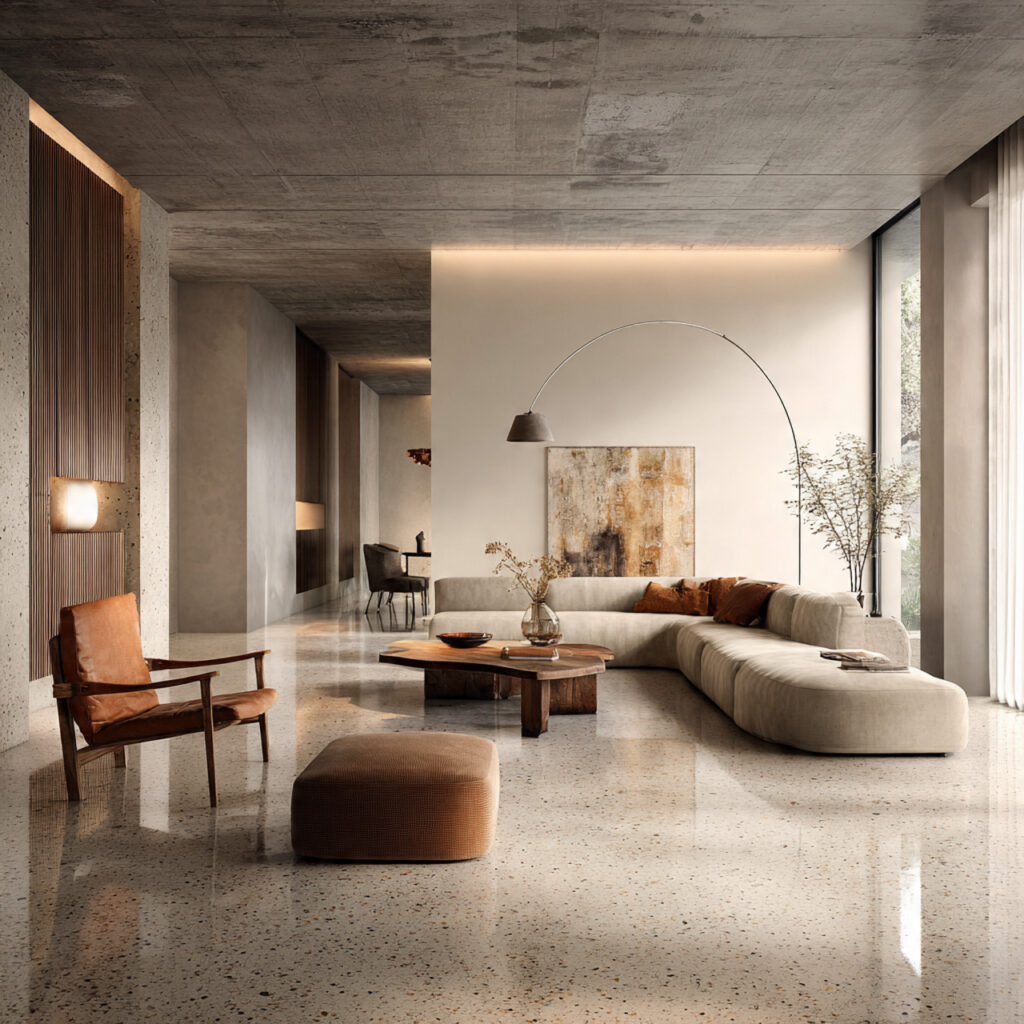
Incorporating raw, industrial materials like polished concrete, honed terrazzo, or smooth marble adds an organic rawness that contrasts beautifully with soft furnishings. These strong textures provide essential depth to the neutral palette.
This material contrast could manifest as a poured concrete floor, a raw stone coffee table, or a sharply textured wall finish behind the main seating area. The deliberate use of unrefined materials signals sophisticated weight.
Hidden Entertainment Centers
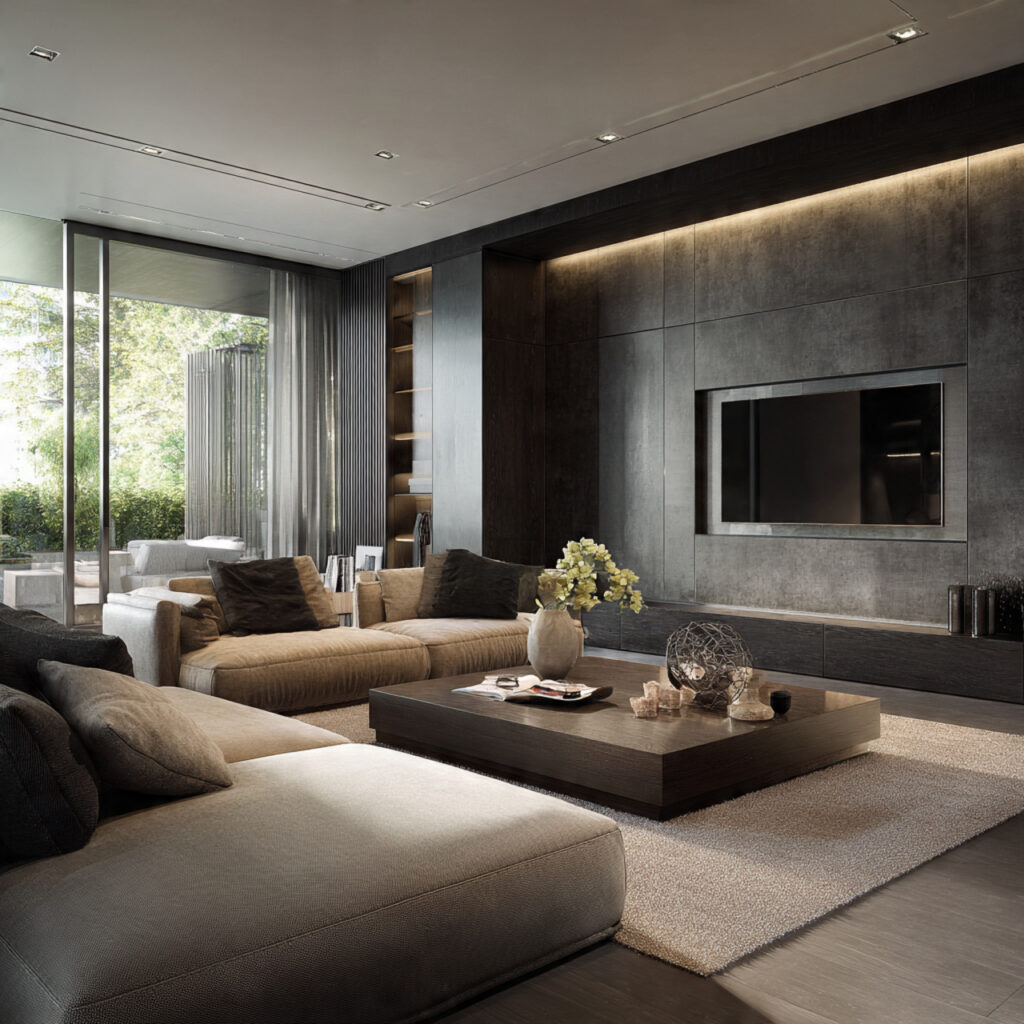
In truly functional Modern Living Rooms, the television and media components should not be the focal point of the room’s design. The best solutions involve mounting the screen flush to the wall or hiding it entirely behind sliding or pocketing panels.
Cabinetry should be custom-designed specifically to house all related equipment and speakers, ensuring that only the essential screen is visible when in use. This maintains a perfectly clean, uninterrupted wall plane when off.
Sustainable Design Choices
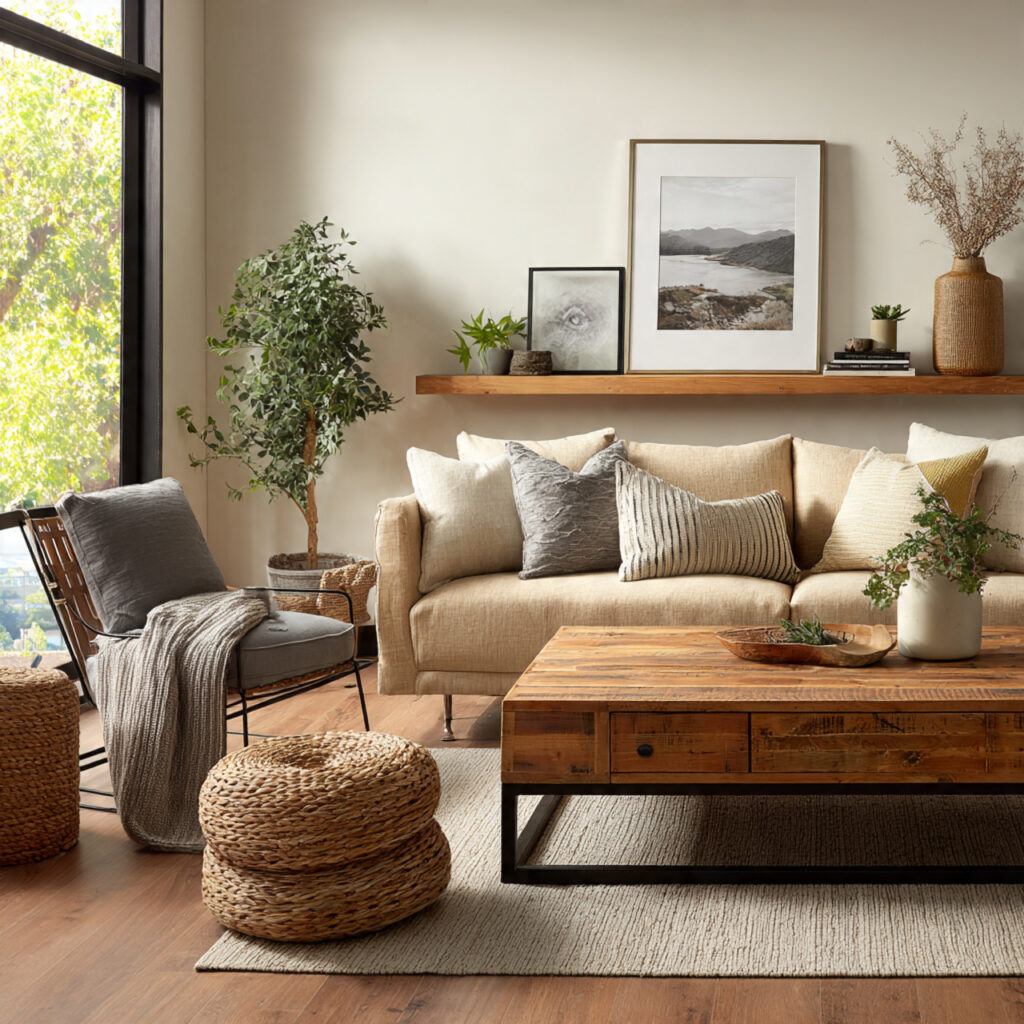
The ethos of modernity often aligns naturally with sustainability, favoring furniture crafted from reclaimed woods, fast-growing bamboo, or recycled metals. Seek out high-quality pieces from companies with transparent and ethical manufacturing practices.
Selecting fewer, high-quality, durable pieces built to last multiple decades is an inherently sustainable choice. This investment-focused approach perfectly aligns with the long-term philosophy of contemporary interiors.
Modular Seating Systems
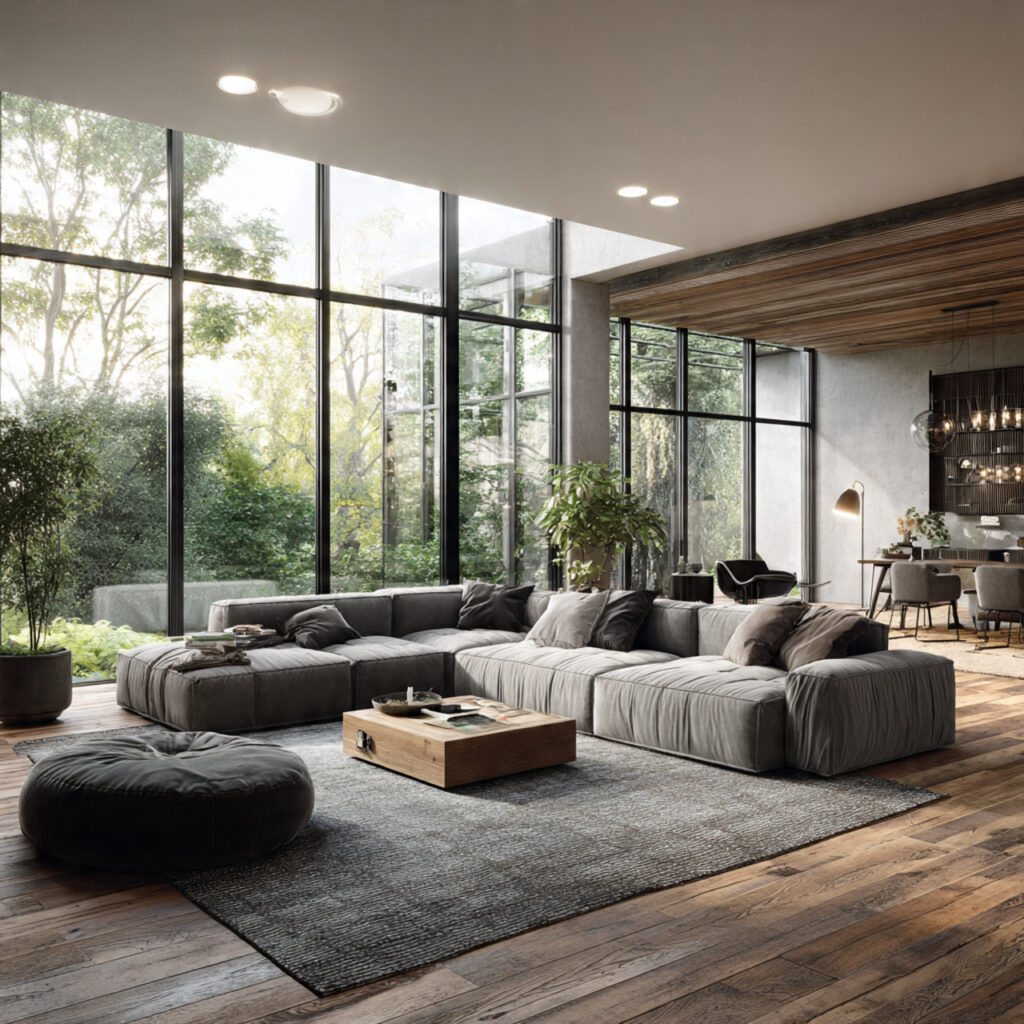
Sectional and modular sofas offer ultimate flexibility, allowing the homeowner to effortlessly reconfigure the layout to suit different social occasions or functional needs. Look for low-profile pieces with deep, comfortable seats.
This adaptable approach to seating complements the open-plan layout, providing adaptable comfort that is a critical hallmark of sophisticated, functional design. The pieces should easily clip together and separate as needed.
Geometric Patterns and Shapes
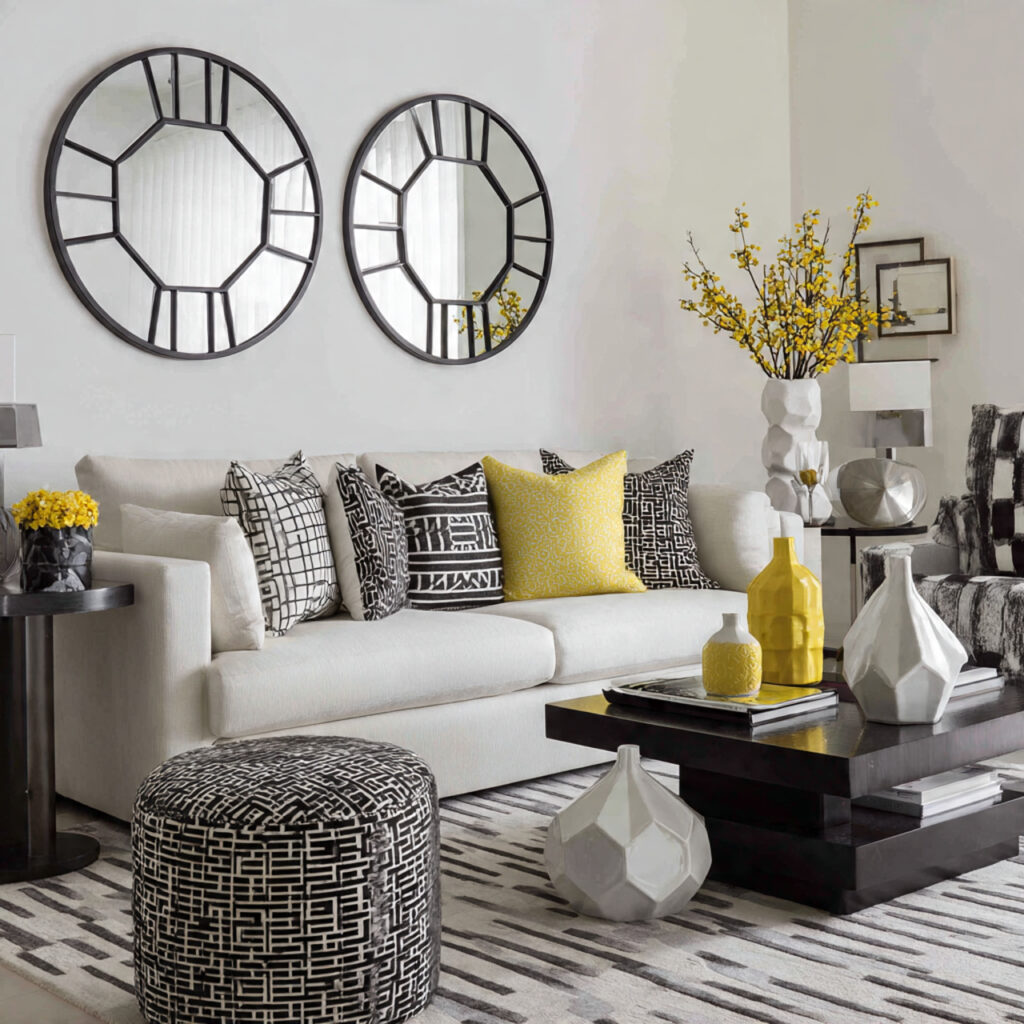
Introduce sharp, clean geometry through accessories like faceted vases, circular mirrors, or repeating linear patterns in throws or cushions. These consistent visual elements provide a necessary dynamic energy and structure.
Avoid overly busy, floral, or highly decorative patterns that distract from the main architecture. Instead, stick to bold, simple shapes and lines that reinforce the structural integrity of the room’s entire design.
Industrial Elements
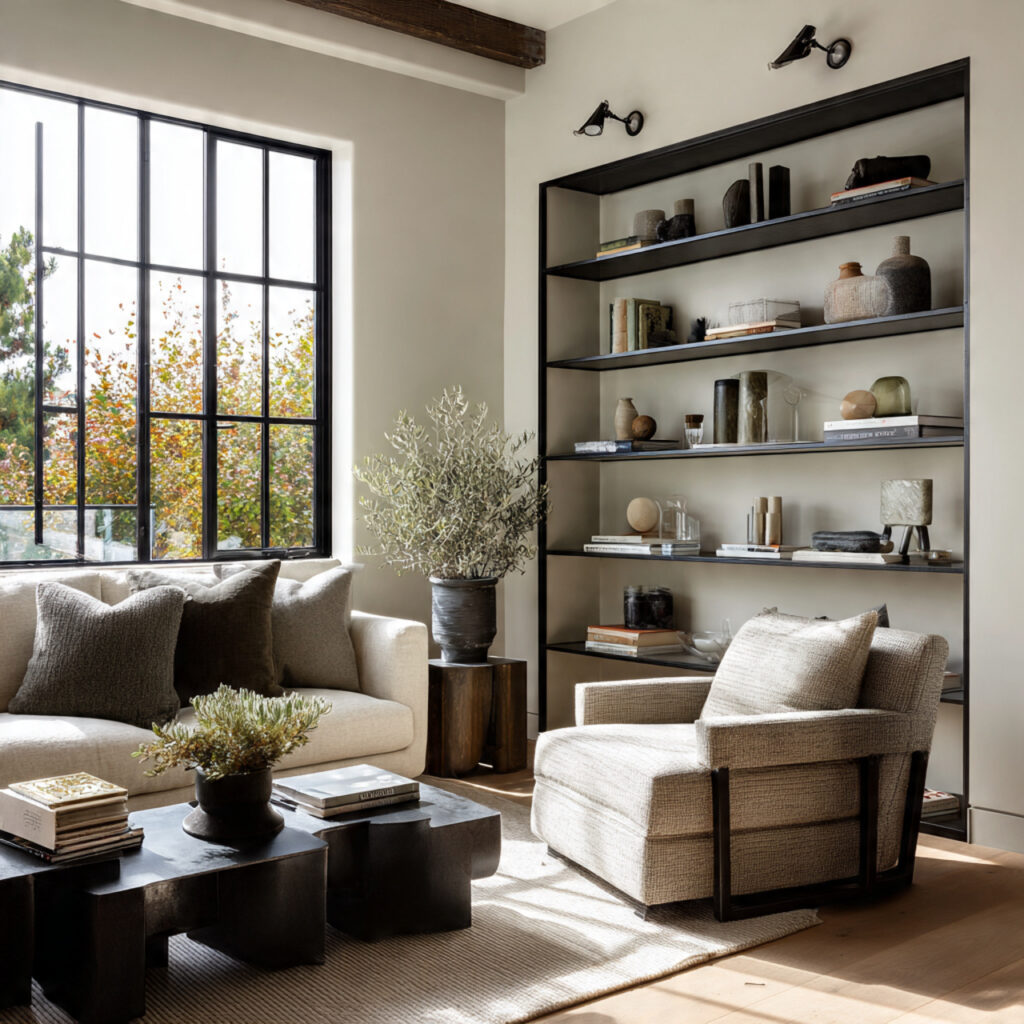
A subtle nod to the industrial aesthetic—such as exposed black steel window frames, matte black hardware, or custom metal shelving—can add a layer of necessary rugged texture. This works exceptionally well against softer, neutral upholstery.
The key to this style is absolute restraint; use only one or two industrial touches to prevent the space from feeling too cold or factory-like. This is strictly about curated and intentional contrast.
Scandinavian Design Principles
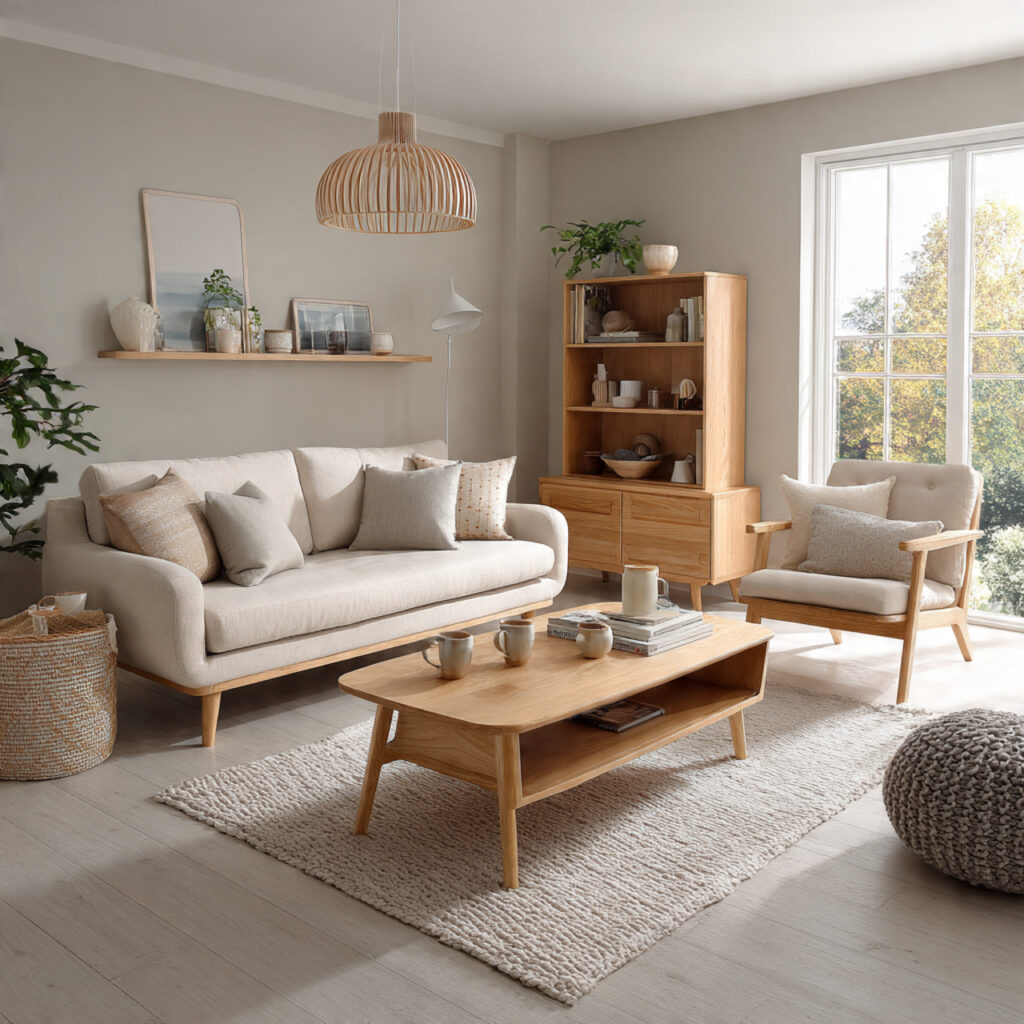
Borrowing key concepts from Scandinavian design introduces essential warmth through light, natural woods, functional simplicity, and soft, indirect natural lighting. This blend of ‘hygge’ and modernism is very popular in many Modern Living Rooms.
Focus on clean, unfussy wood furniture, such as light oak or pale ash, which complements the neutral color palette beautifully. This addition successfully prevents the entire room from feeling cold, stark, or clinical.
Floating Shelving Ideas
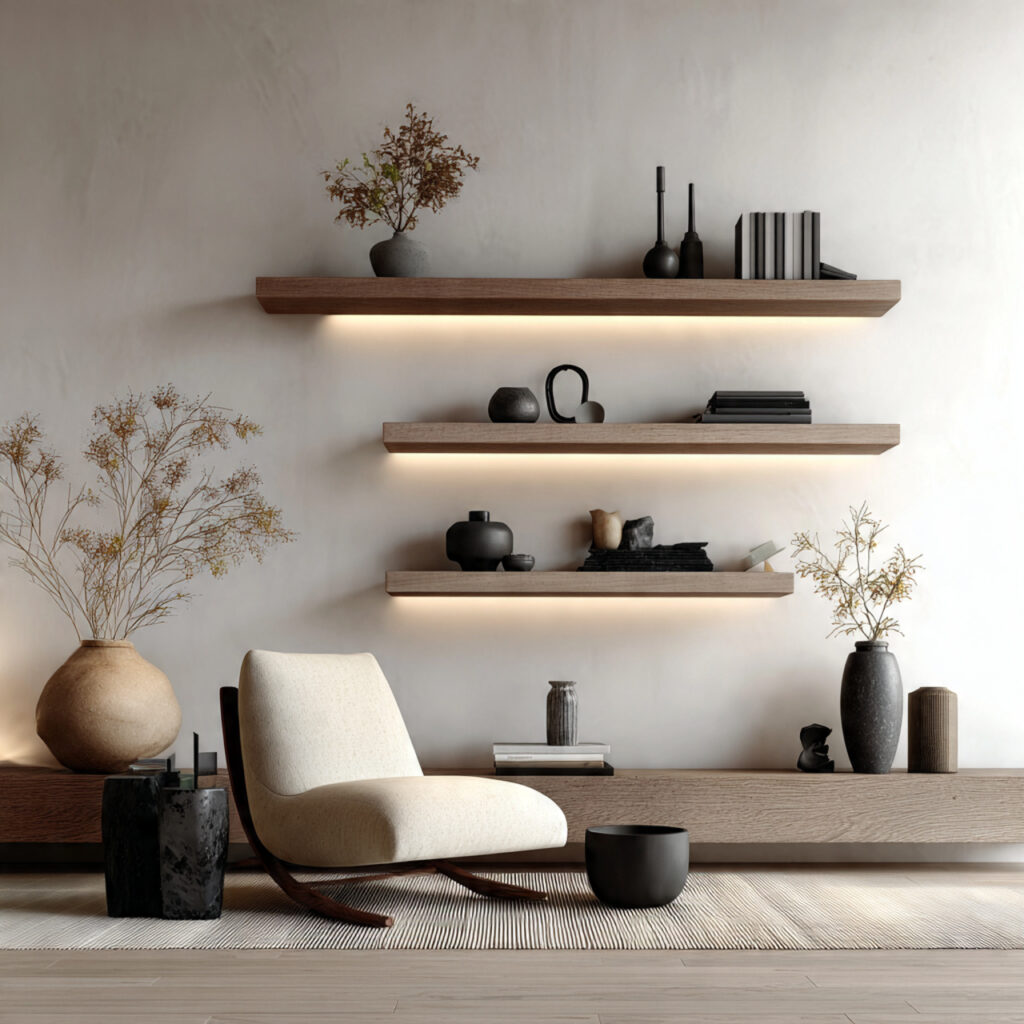
Instead of bulky, traditional bookcases, use thick, floating shelves to display a carefully curated collection of books and sculptural objects. The shelves themselves should appear to seamlessly emerge from the wall surface.
Ensure the items displayed follow the strict ‘less is more’ rule, using simple groupings of three or five and incorporating plenty of negative space. This ensures maximum visual impact from the curated display.
Metallic Finishes
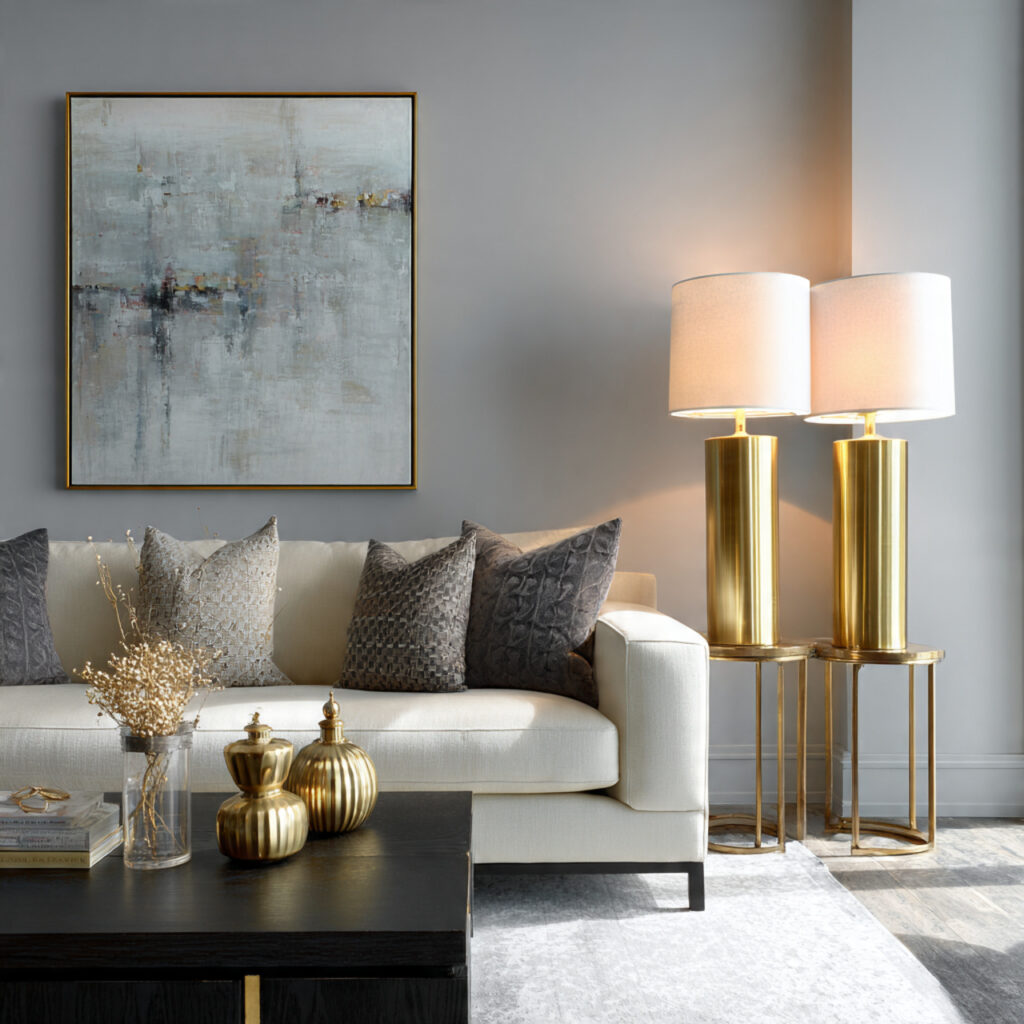
Introduce controlled pops of reflective metal, such as brushed brass, matte black stainless steel, or polished chrome, to catch the light and add a subtle luxurious sheen. These accents should be used strategically and sparingly.
Use these finishes on elements like lighting fixtures, the legs of side tables, or subtle cabinet hardware. They act as the jewelry for the room, offering small bursts of warmth or coolness depending on the metal chosen.
Acoustic Panel Integration
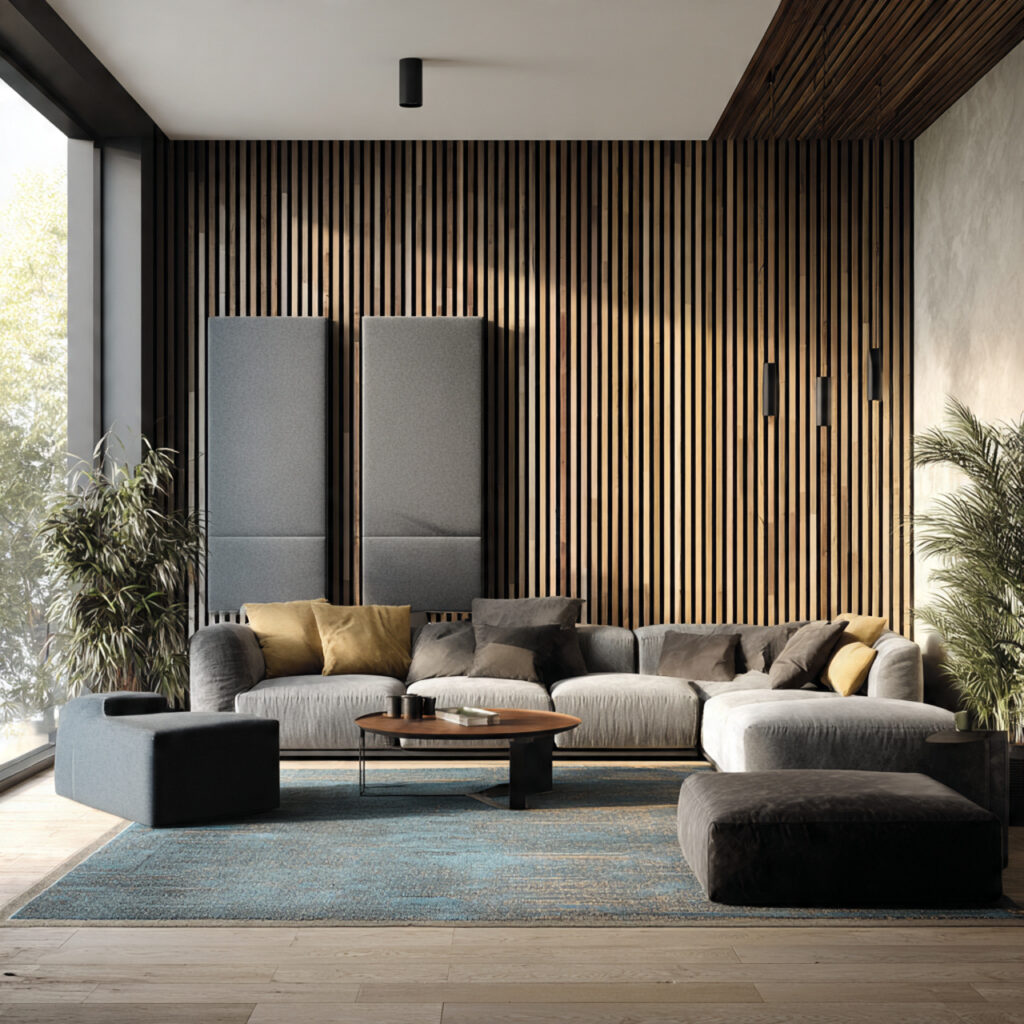
Often overlooked, acoustic comfort is vital in large, open-concept Modern Living Rooms where sound easily bounces. Integrate stylish acoustic panels, which come in sleek felt or slatted wood, as functional wall art.
These panels help significantly dampen echo and noise, making the conversation areas more comfortable and intimate. They simultaneously add a sophisticated, linear texture to the wall surface, merging function and form.
Indoor Plant Styling
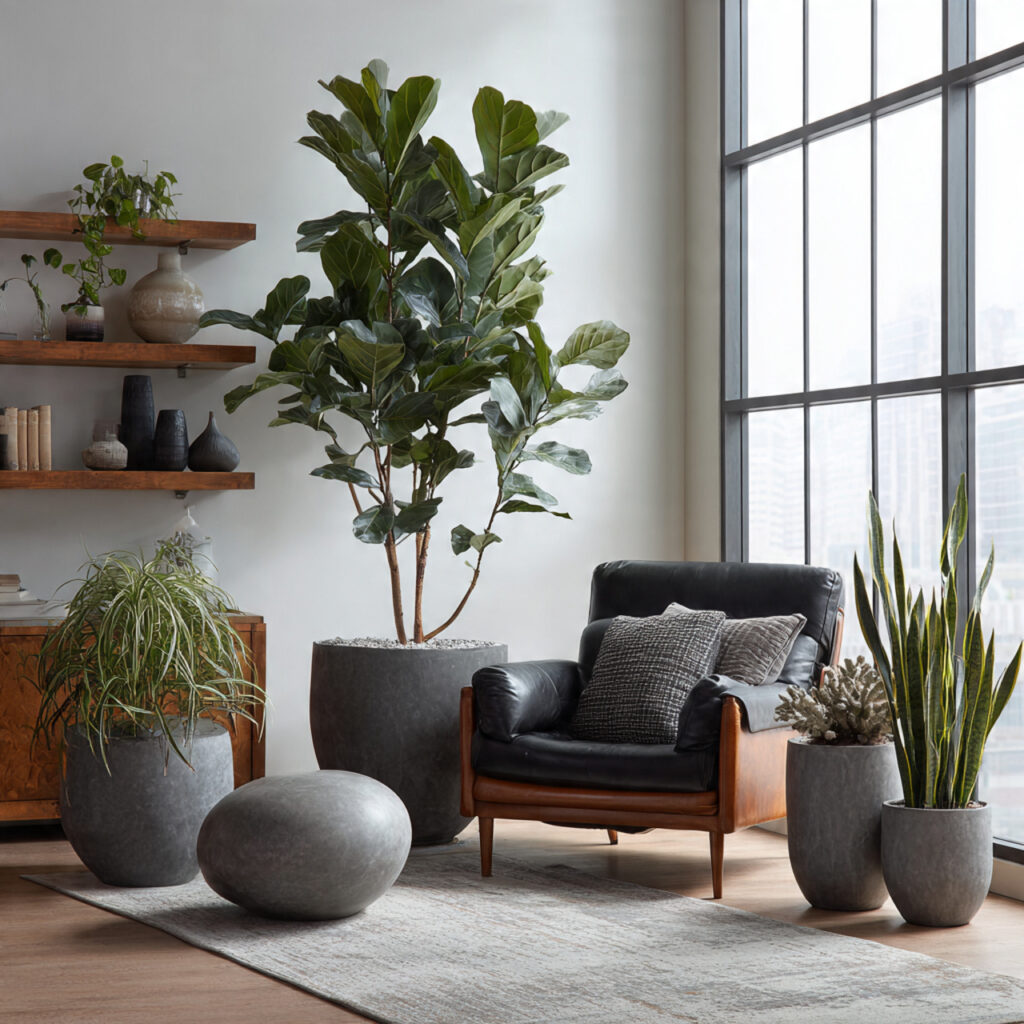
Plants introduce essential organic shapes and natural color that beautifully contrasts with the room’s rigid, geometric lines. Use large, architectural, sculptural plants like a Fiddle-leaf Fig or a Snake Plant in minimalist planters.
Plant groupings should be kept simple and clean, often using tall planters made of concrete, smooth terracotta, or matte black metal. This ensures the container maintains the core contemporary aesthetic.
Custom Built-in Cabinetry
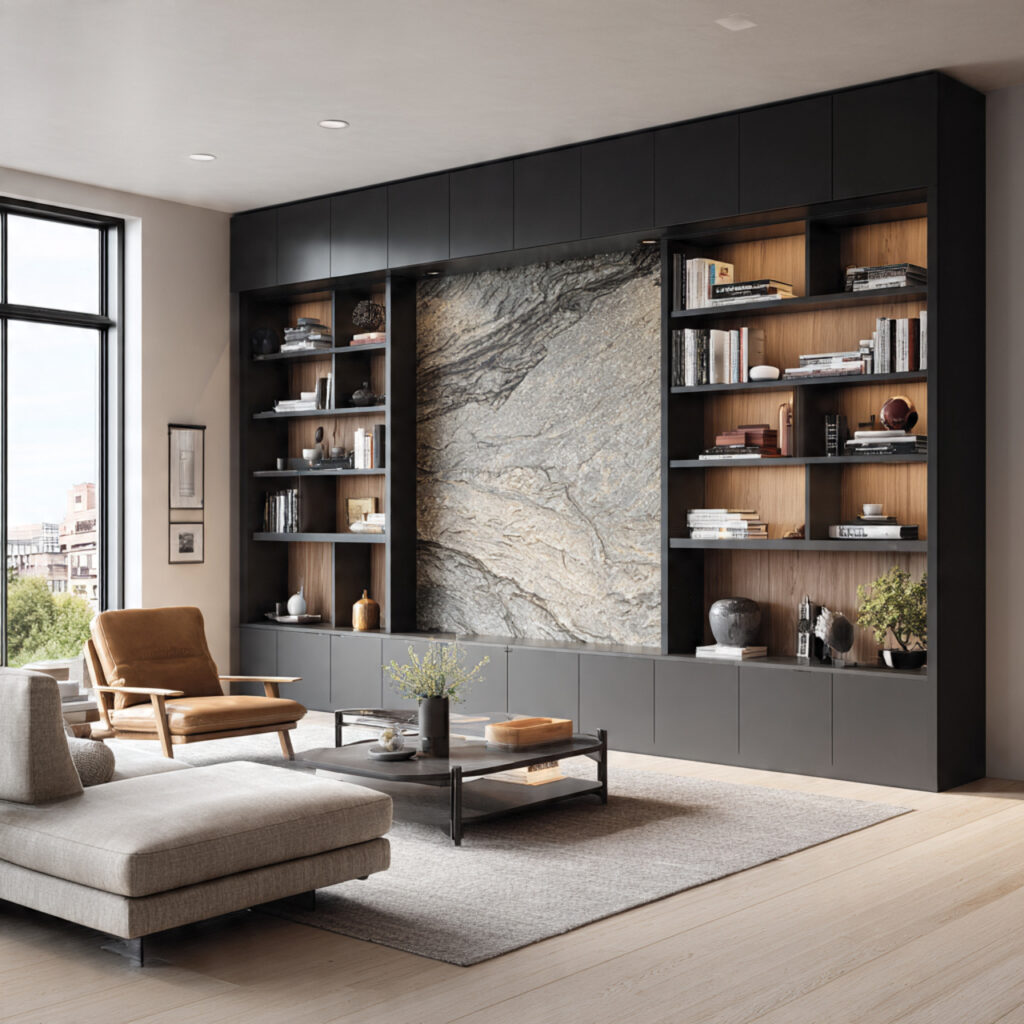
Built-in storage solutions offer the cleanest look possible, as they blend seamlessly into the walls and provide floor-to-ceiling organization. This is especially vital for media units, fireplaces, and extensive shelving.
By commissioning custom pieces, you ensure that every inch of the wall is utilized efficiently, resulting in a cohesive, architectural look that maximizes both storage and visual flow.
Maximizing Natural Light
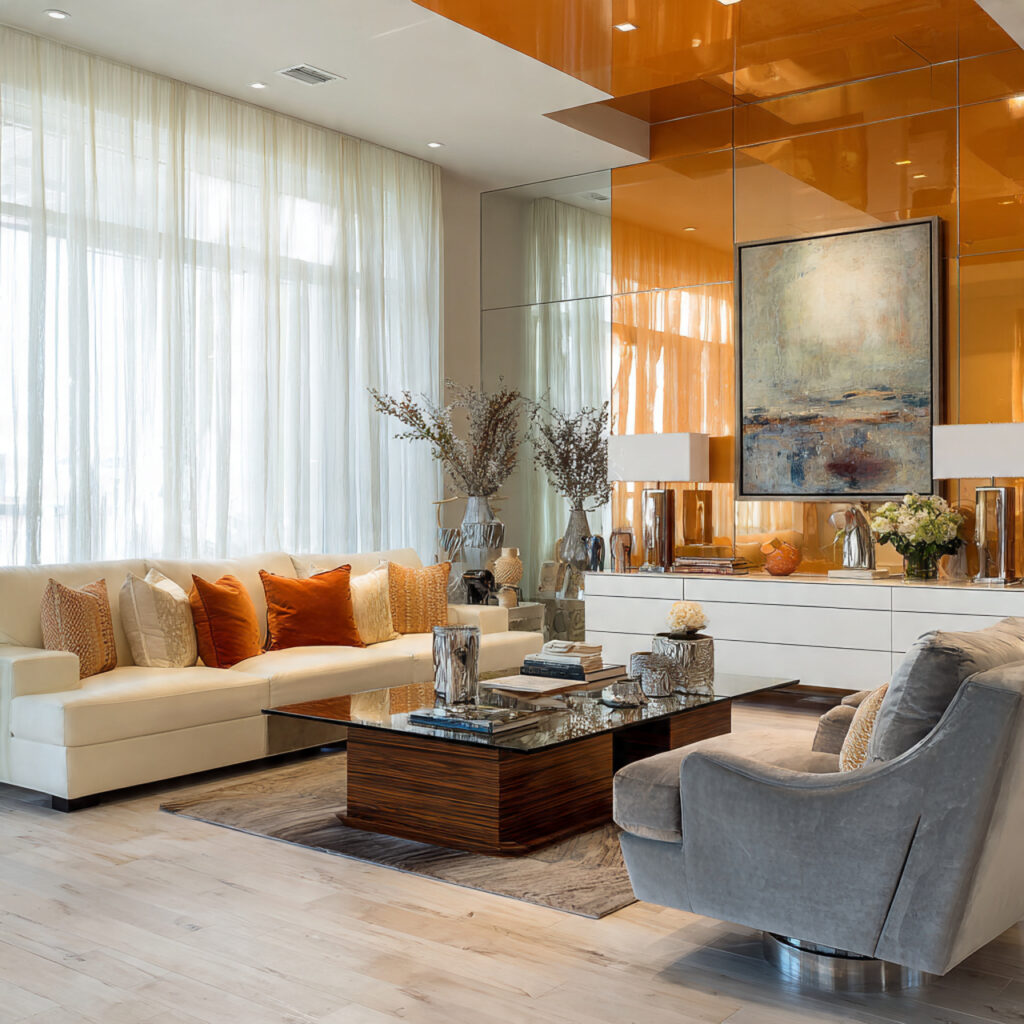
Beyond expansive windows, maximize light by using reflective surfaces, such as massive, frameless mirrors or high-gloss lacquer finishes on floating cabinets. These elements efficiently bounce light deep into the room.
Keep window dressings extremely minimal, opting for sheer linen curtains or simple, motorized roller blinds that can completely disappear when retracted. This ensures every available photon of sunlight is fully utilized.
Utilizing Vertical Space
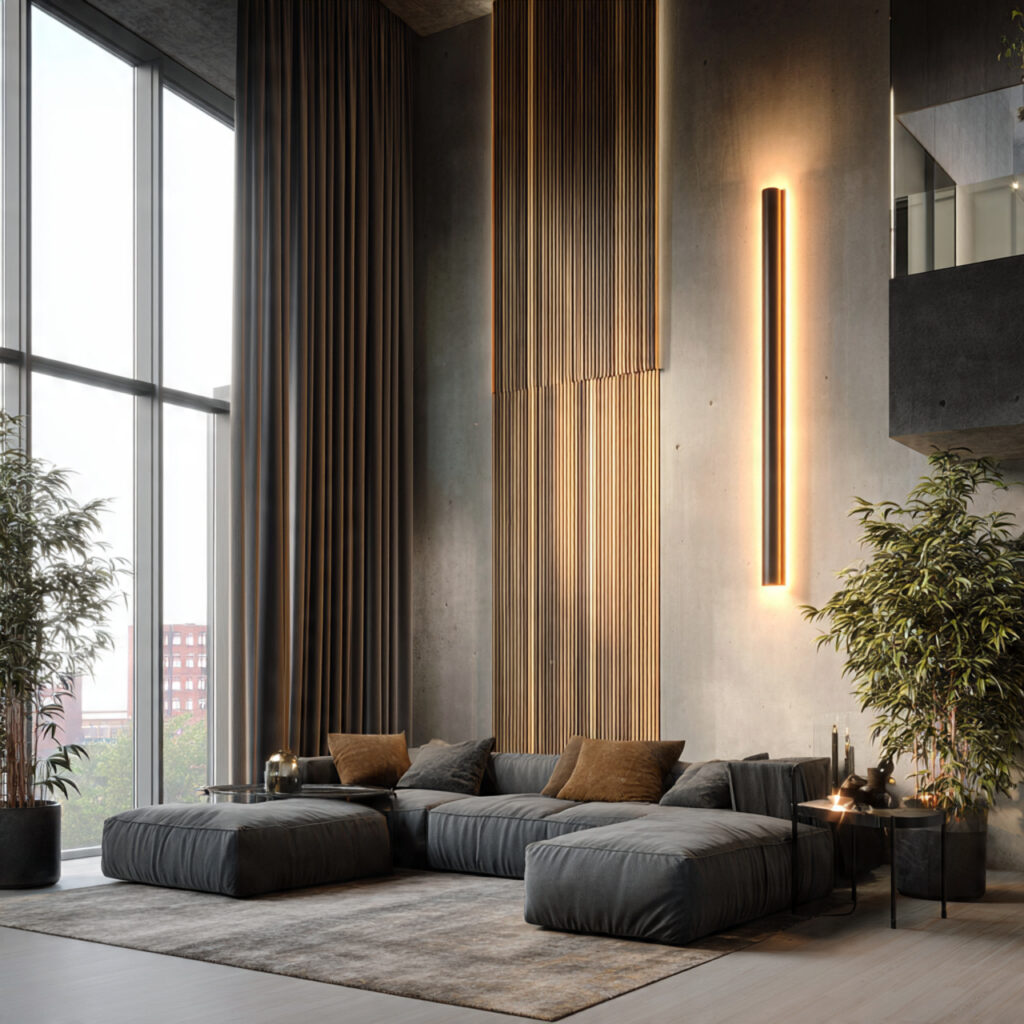
Draw the eye upward to enhance the feeling of height and drama, a signature characteristic of modern architecture. This can be achieved through floor-to-ceiling window treatments, tall architectural plants, or vertical wall paneling.
A large, dramatic light fixture with vertical lines or an integrated linear strip light can also effectively emphasize the ceiling height. This adds a critical sense of grandeur to your Modern Living Rooms.
FAQs About Modern Living Rooms
What type of window treatments work best for Modern Living Rooms?
The best window treatments for Modern Living Rooms are those that maintain clean lines and maximize natural light, such as motorized roller blinds or Roman shades in sheer, neutral fabrics (white, gray, or beige) which are ideal for their simplicity. For added softness and to enhance vertical space, consider floor-to-ceiling sheer linen drapes that filter light without blocking the view, ensuring that visually heavy or highly patterned treatments are completely avoided.
What is the difference between modern and contemporary design?
Modern design refers specifically to a fixed historical movement from the early to mid-20th century, characterized by clean lines, natural wood, and functional simplicity, based on the principles of architects like Le Corbusier. Contemporary design, conversely, is dynamic and refers to whatever styles are currently trending right now; it borrows heavily from modernism but incorporates elements from various current trends, making it fluid and constantly evolving.
How do I choose the right color scheme for a Modern Living Room?
The best color scheme for a Modern Living Room starts with a base of strict neutrals—crisp white, muted gray, or deep charcoal—to provide an architectural canvas that emphasizes the form and shape of your furniture pieces. You should then introduce color selectively through high-impact accents, such as a large, saturated abstract painting or a pair of cushions in a deep jewel tone like emerald or sapphire, as this strategic method maintains the sophisticated calm that defines the entire aesthetic.
What are the key furniture pieces every Modern Living Room needs?
The core elements required for Modern Living Rooms include a low-profile, clean-lined sofa or sectional to anchor the space, complemented by a simple, geometrically shaped coffee table, all prioritizing aesthetic simplicity and high-quality construction. Additionally, a functional space requires integrated, handle-less storage (like a sleek media console), an architectural floor lamp, and perhaps a single, iconic statement armchair to add unique visual interest.
How can I make a minimalist Modern Living Room feel cozy?
The secret to achieving a cozy feel in a minimalist Modern Living Room lies in layering natural textures and materials, such as combining a soft, thick-pile wool rug with linen curtains, and introducing throws made from cashmere, velvet, or chunky knit wool to invite touch and softness. Using warm-toned wood and architectural indoor plants also injects essential organic life, while warm, flexible lighting and dimmers are crucial for creating an intimate and inviting atmosphere.
Conclusion
Designing sophisticated Modern Living Rooms is ultimately a careful exercise in restraint, balance, and intentionality. By adopting the principles of minimalism, focusing relentlessly on quality materials, and integrating smart technology seamlessly, you can craft a space that is not only visually stunning but also profoundly comfortable and functional. This style powerfully prioritizes a calm, uncluttered lifestyle, making it a sustainable foundation for your home.
The 27 ideas explored here offer a comprehensive and executable roadmap to achieving that perfect contemporary aesthetic. Remember that the best Modern Living Rooms reflect the personalities of their occupants while maintaining a steadfast adherence to clean lines and architectural integrity, creating a timeless space that will serve you beautifully for years to come.