Create the Perfect Japandi Home Office Design
Japandi Home Office is the perfect convergence of Japanese efficiency and Scandinavian comfort, offering a workspace that promotes focus, calm, and well-being. This highly popular interior trend synthesizes the sleek minimalism of Wabi-Sabi with the cozy, natural textures of Hygge, creating an aesthetic that is both functional and deeply relaxing. It’s an antidote to the chaotic, digitally saturated modern office environment.
Achieving the Japandi look in your dedicated workspace is about intentionality, not expenditure. It prioritizes natural materials, clean lines, and an absolute commitment to decluttering, ensuring that every object serves a purpose or provides serene beauty. By focusing on quality over quantity, you can transform a spare room or corner into a sanctuary of productivity that feels like a permanent retreat.
Designing the Ultimate Japandi Home Office: A Deep Dive into Minimalism and Hygge
A Japandi Home Office embodies the perfect balance between Scandinavian warmth and Japanese refinement. The essence of this design philosophy lies in harmony—marrying the rustic comfort of Nordic interiors (light woods, soft textiles, earthy textures) with the minimal, elegant symmetry of Japanese aesthetics. The result is a workspace that feels grounded yet airy, uncluttered yet soulful, making it the ideal environment for deep, focused work.
The foundation of any Japandi-inspired workspace begins with subtraction. Remove anything non-essential. Technology should be present but subtle; cables hidden, paperwork stored away, and surfaces left clean and visually quiet. Treat the Japandi Home Office as a calming canvas where every piece serves a purpose, reflects craftsmanship, and honors natural materials and gentle imperfections.
Natural Wood Desk Selection
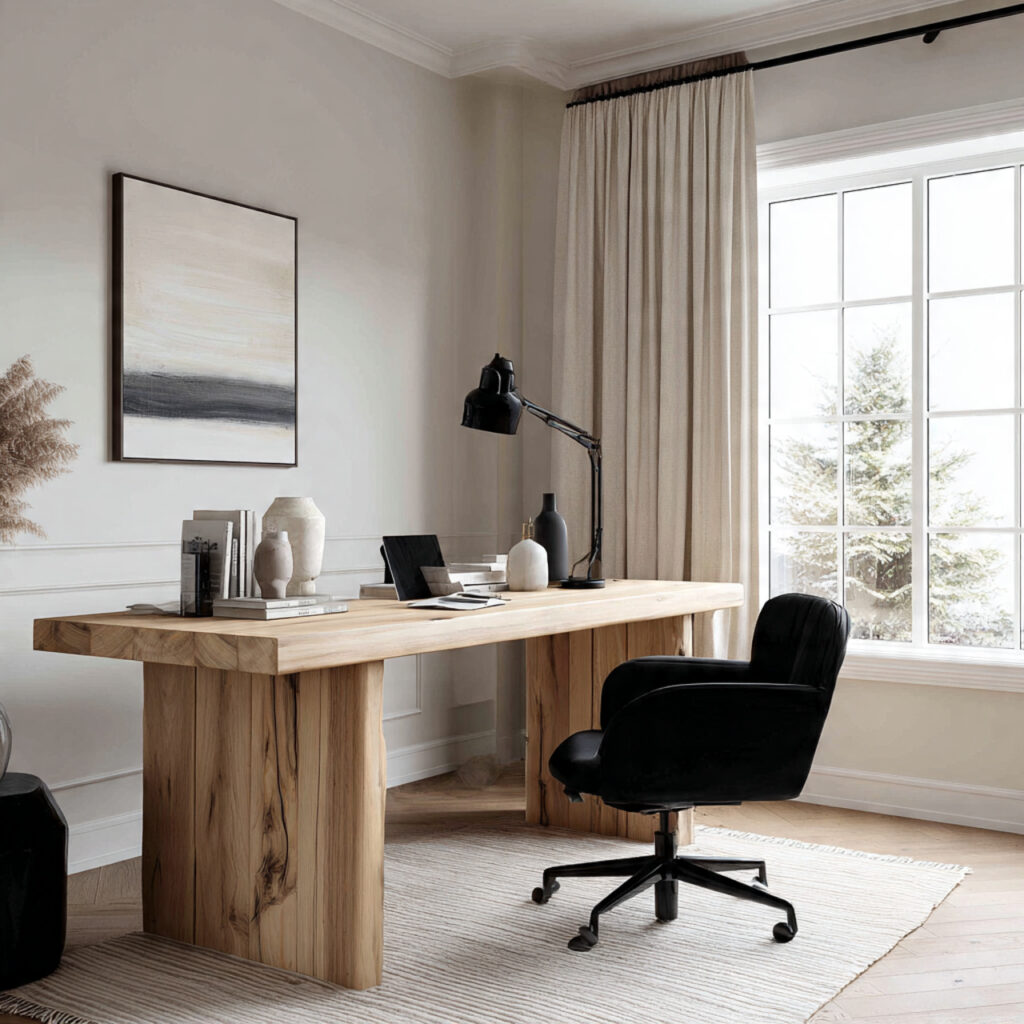
Opt for desks crafted from solid, unvarnished wood like oak, ash, or birch, emphasizing the material’s inherent beauty. The surface should be large enough for essential tasks but free of elaborate detailing or complex storage. The goal is to let the wood grain be the primary decorative element, connecting you to nature even while working indoors.
Wabi-Sabi Office Decor
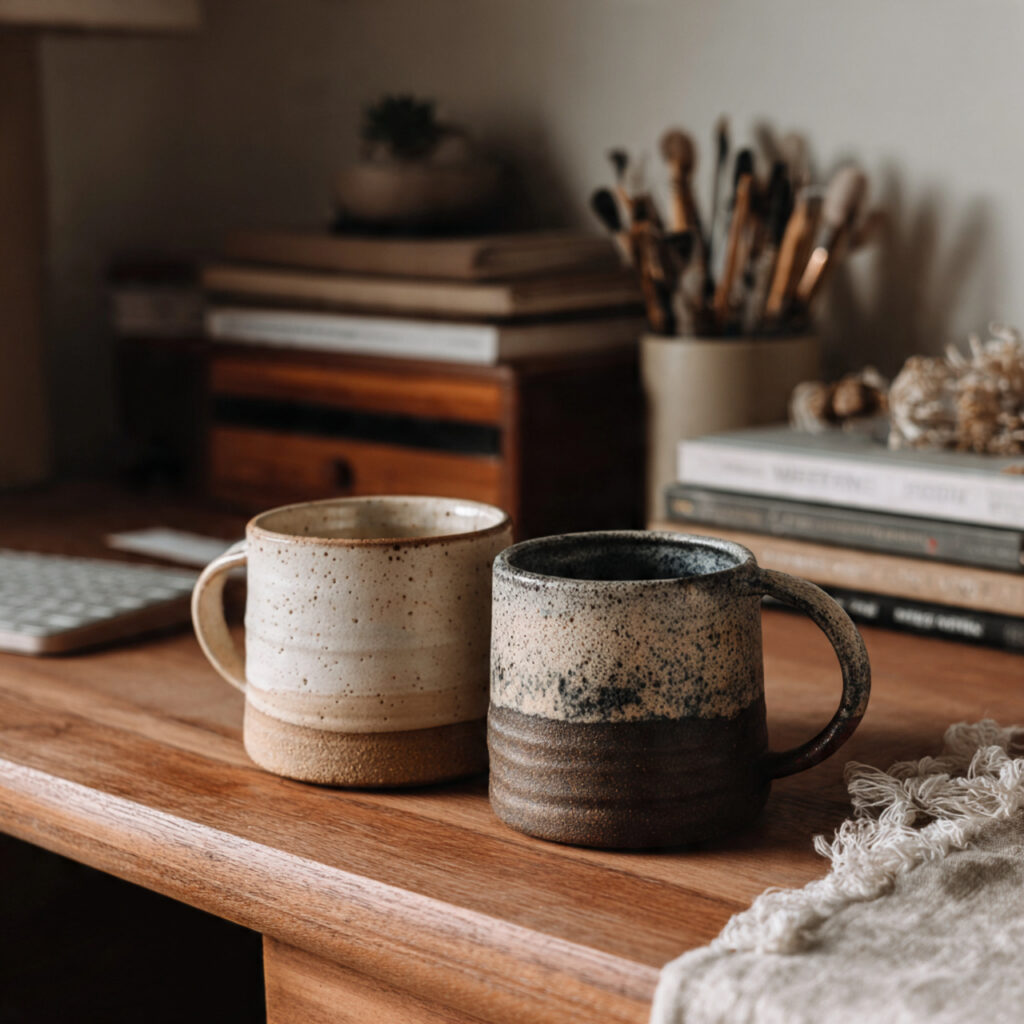
Embrace the Japanese concept of Wabi-Sabi, finding beauty in imperfection and transience. This translates to choosing objects that are handmade, slightly asymmetrical, or show signs of age, like a hand-thrown ceramic mug or a linen textile with natural wrinkles. These elements add soul and character, countering the clinical feel of pure modernism.
Minimalist Storage Solutions
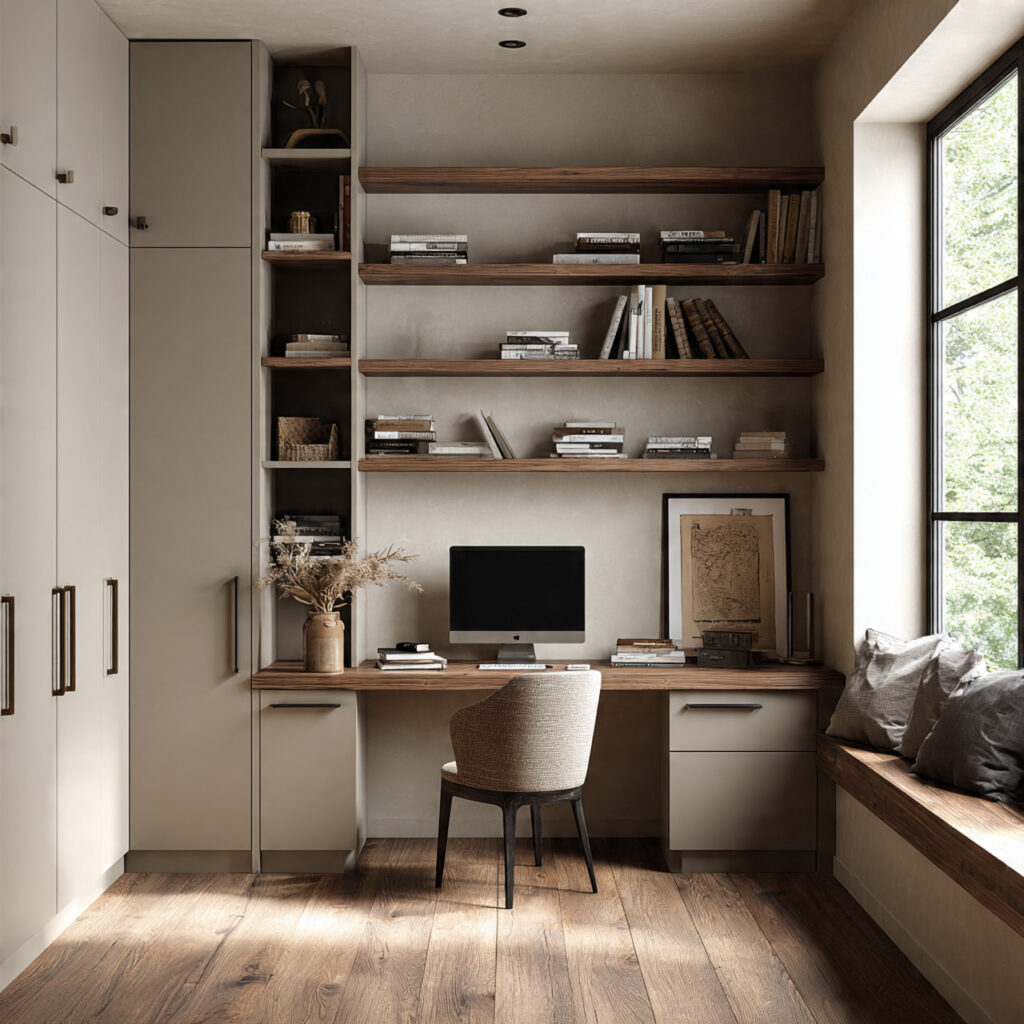
Storage should be invisible yet highly effective. Look for closed cabinets, drawers built into the desk structure, or simple floating shelves that match the wall color. The objective is to contain office supplies, files, and cables, presenting a completely smooth, visually uninterrupted surface area that promotes mental clarity.
Incorporating Shōji Screens
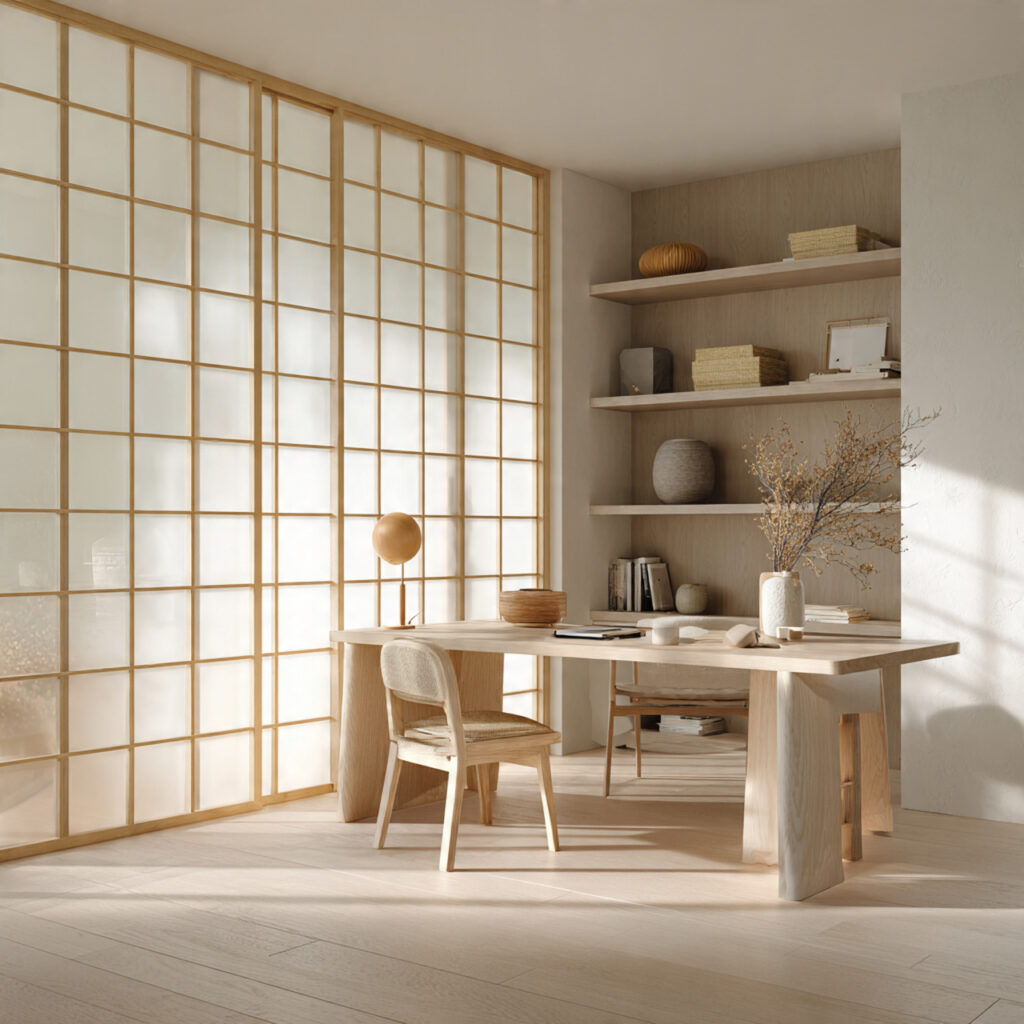
To add privacy and softness to your Japandi Home Office, consider Shōji-style room dividers. Their translucent surfaces filter light beautifully, creating diffused illumination while giving the area a sense of structure. They echo traditional Japanese interiors and help define zones within open-plan homes without feeling heavy or obstructive.
The Art of Decluttering Your Workspace
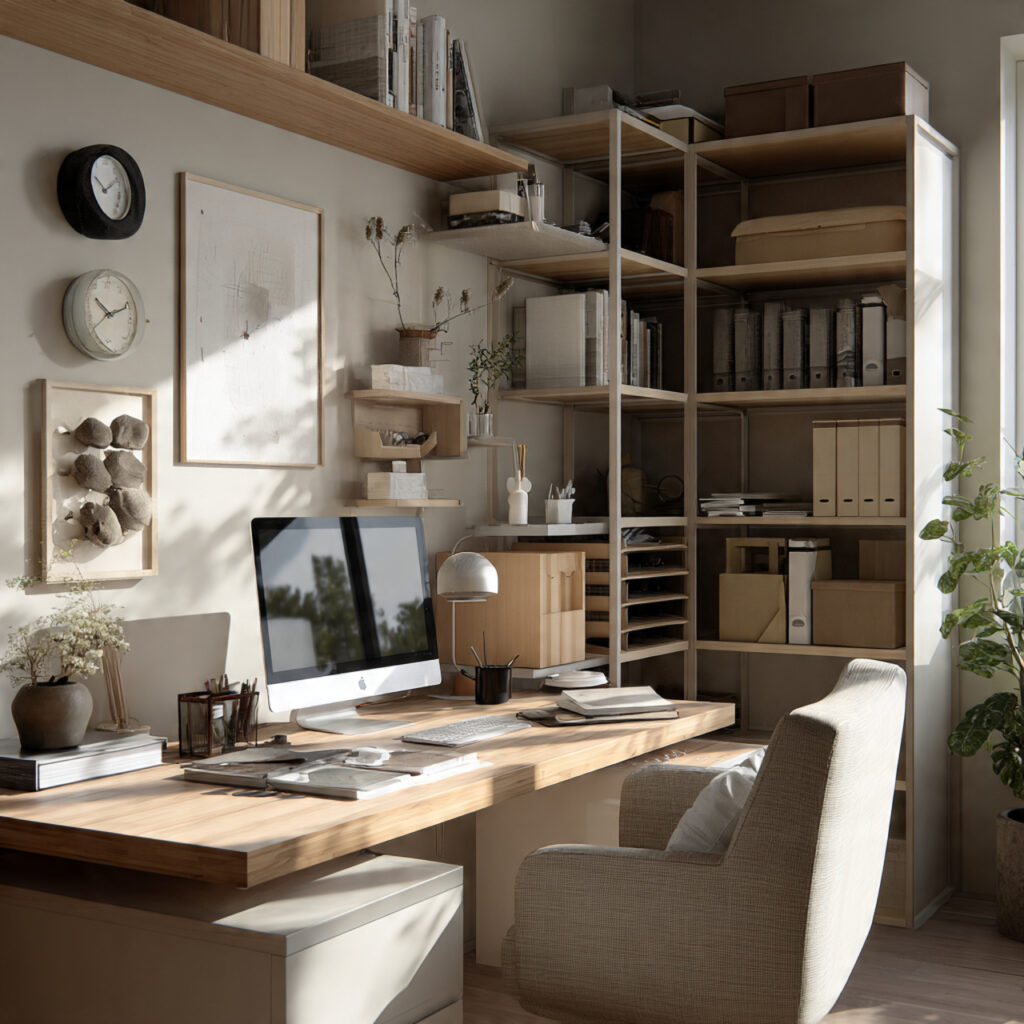
Decluttering is an ongoing lifestyle in Japandi design. Practice the “one in, one out” rule for office supplies and adopt a mindful daily tidy routine. A successful Japandi Home Office keeps only the items required for current tasks on the desk, storing everything else the moment it’s no longer in use. The discipline pays off in mental calm and productivity.
Neutral Color Palette for Focus
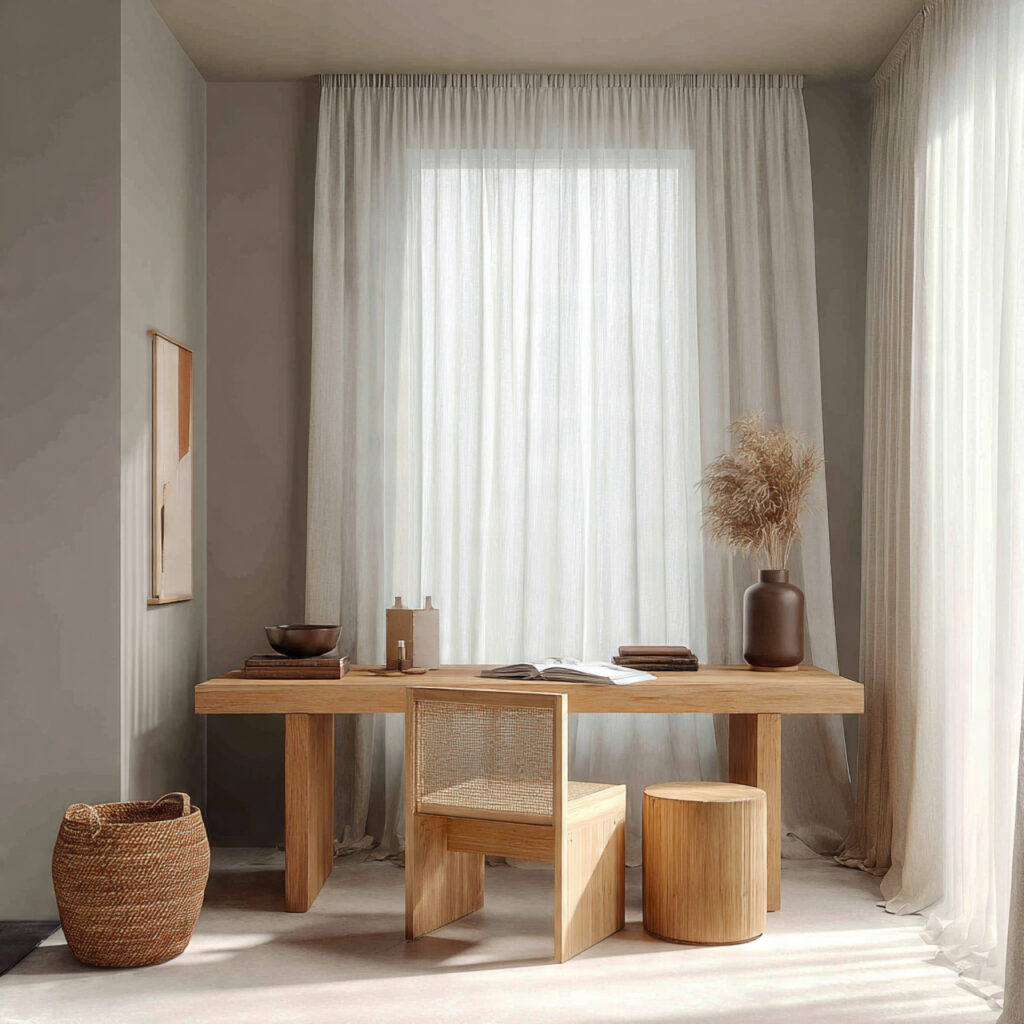
Stick to an earthy palette of off-whites, warm greys, soft taupes, and muted browns. This subdued scheme minimizes visual noise and helps anchor the space, encouraging concentration and preventing distraction. Use deeper tones like charcoal or black only as subtle, contrasting accents.
Ergonomics in Japandi Style
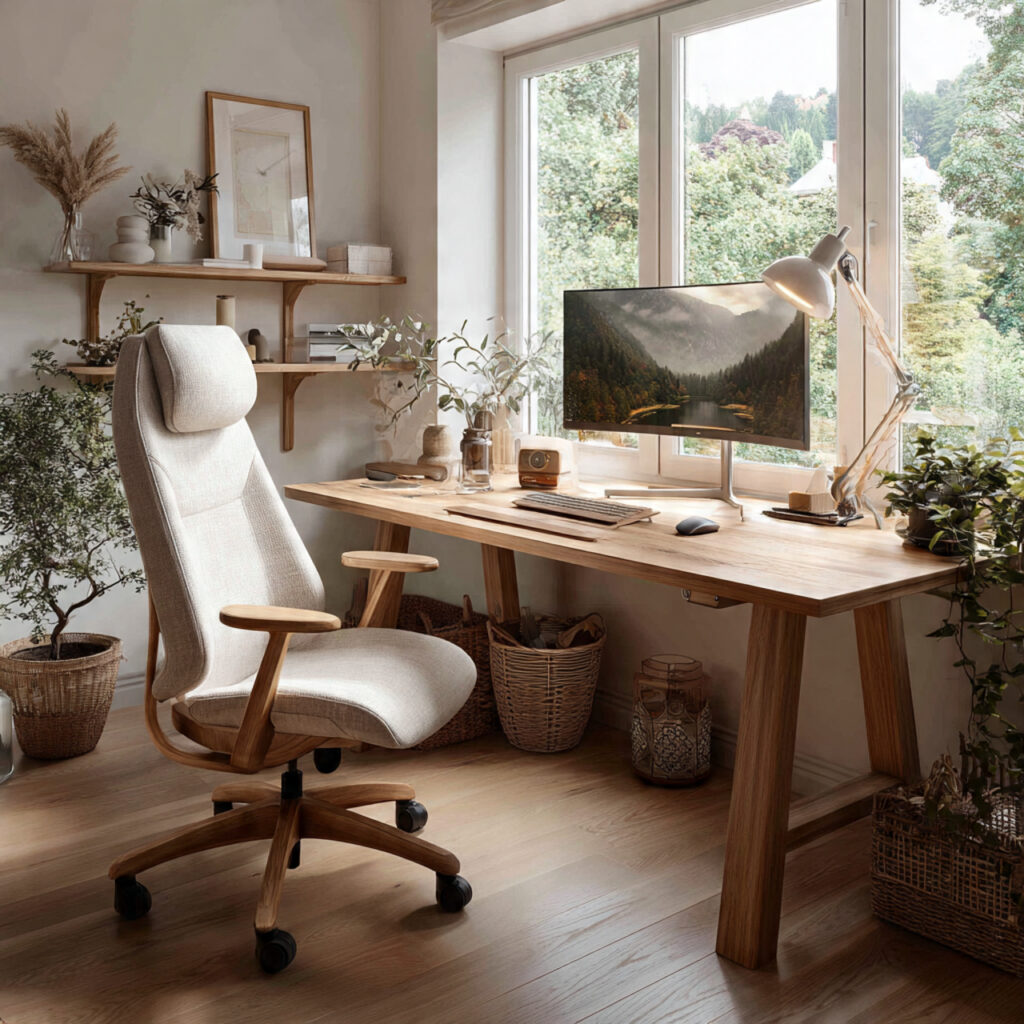
While style is important, functionality, including good posture, is paramount. Choose an ergonomic chair with a simple profile, ideally upholstered in a natural fabric like wool or linen, matching the neutral palette. Ensure monitors are at eye level and key equipment is placed to encourage a healthy, comfortable working position.
Low-Profile Seating Choices
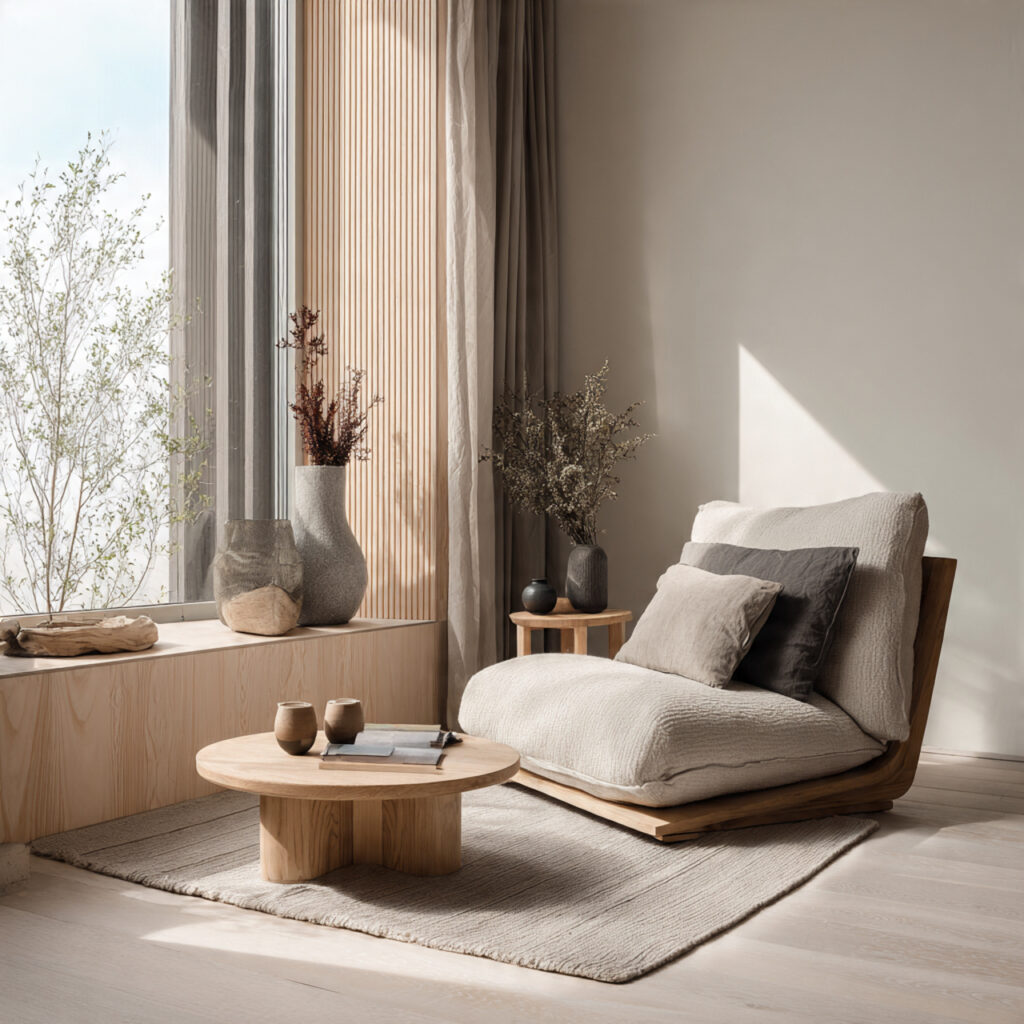
In addition to the main task chair, incorporate a low-slung, comfortable armchair or bench for reading and contemplation. Low-profile furniture is characteristic of Japanese interiors, creating a grounding effect and making the ceiling appear higher, enhancing the feeling of spaciousness and calm.
Rattan and Woven Accents
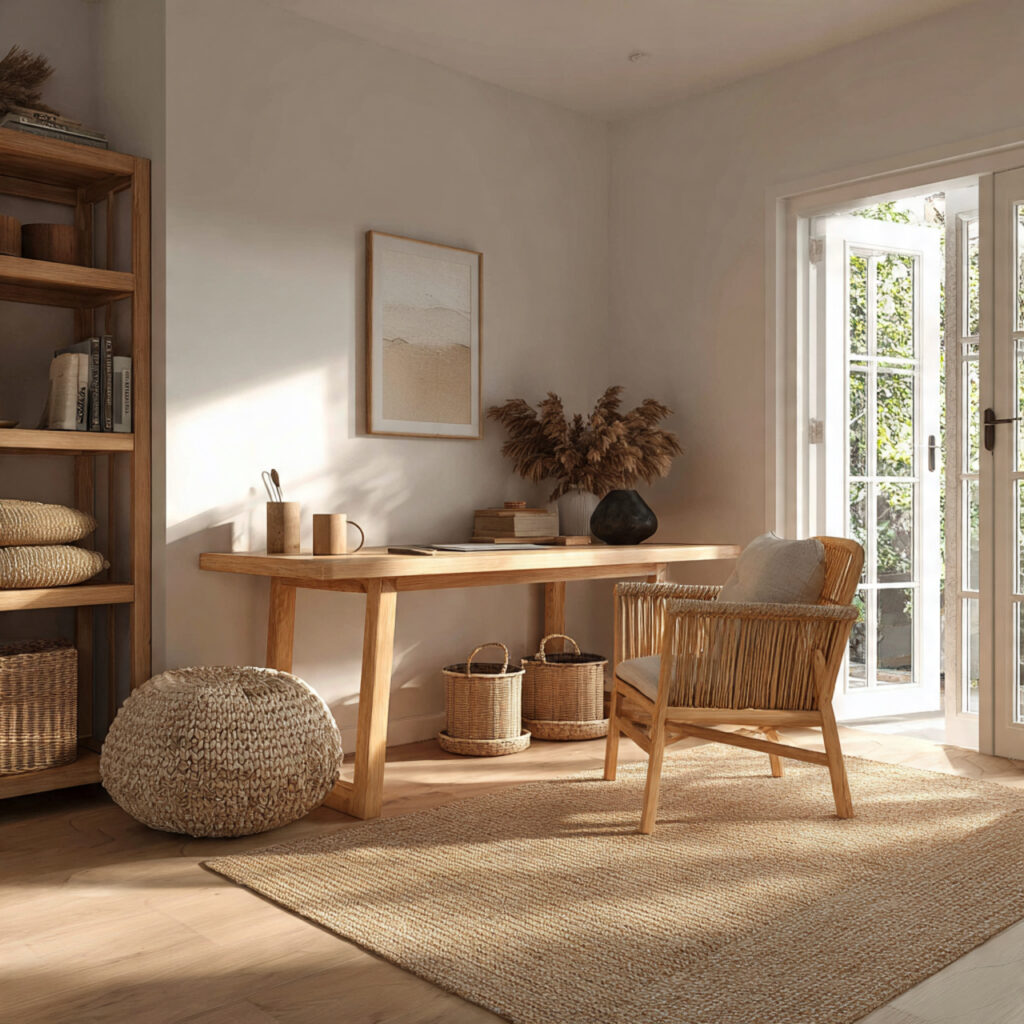
Introduce Scandinavian texture through rattan baskets, woven floor mats, or light wood accessories. These natural, textured elements provide the ‘Hygge’ warmth and softness that prevents the minimalist design from feeling cold. They are excellent for discreet, lightweight storage options.
Japanese Ink Art Prints
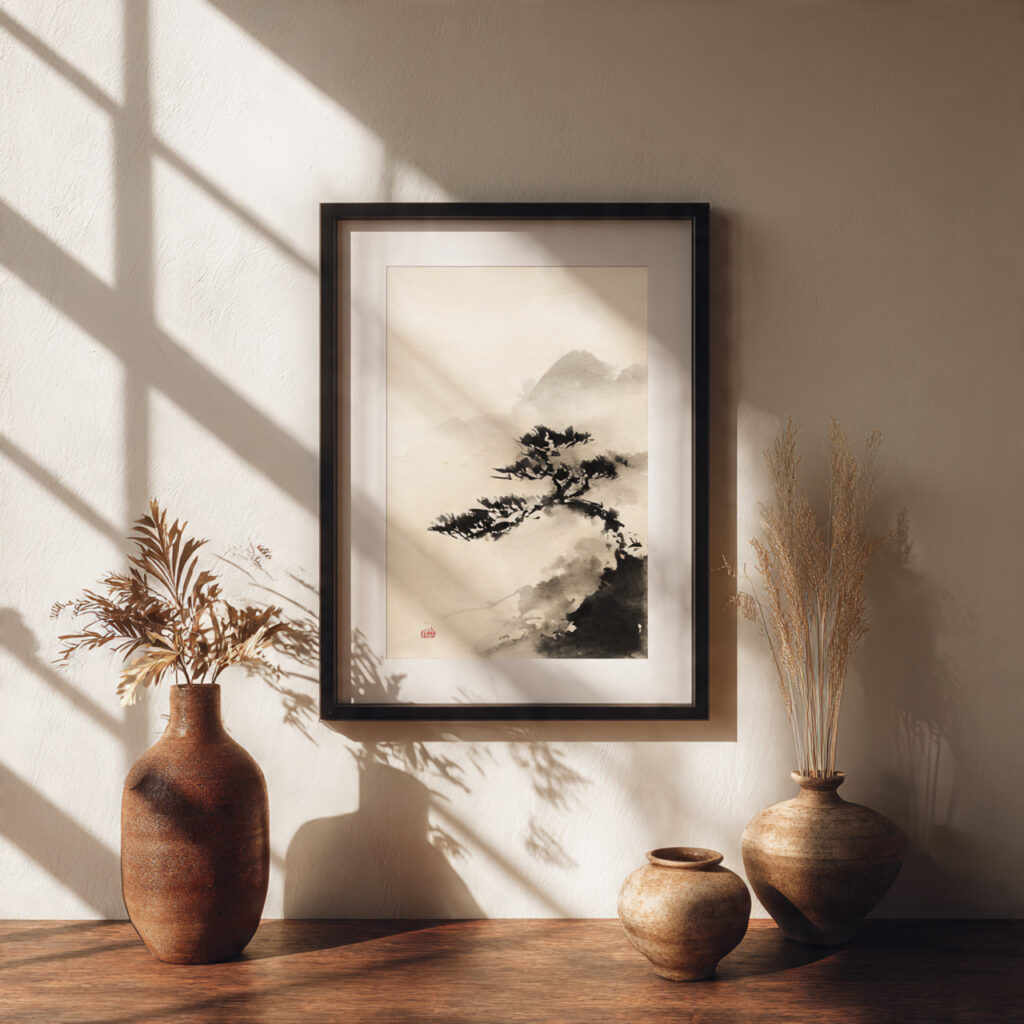
Select simple, striking artwork, such as Sumi-e (Japanese ink wash painting) or abstract prints featuring subtle black lines on white paper. The artwork should be unframed or minimally framed in black or raw wood, providing a contemplative focal point without overpowering the room’s serenity.
Scandinavian Lighting Fixtures
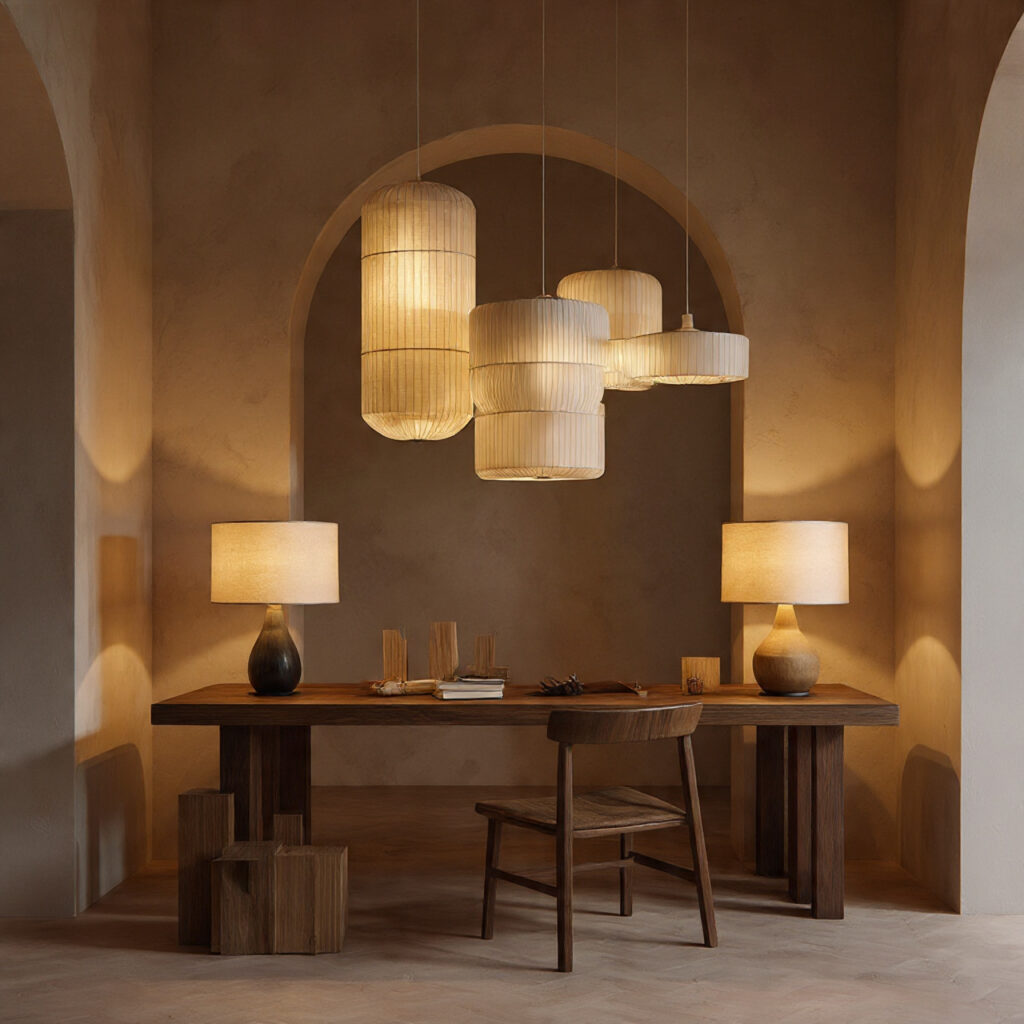
Lighting should be soft, layered, and indirect. Choose fixtures with geometric, minimalist shapes made from materials like matte metal, paper, or natural wood veneer. Avoid harsh overhead lighting and rely instead on strategically placed floor and table lamps to create warm pools of light.
Choosing the Perfect Task Lamp
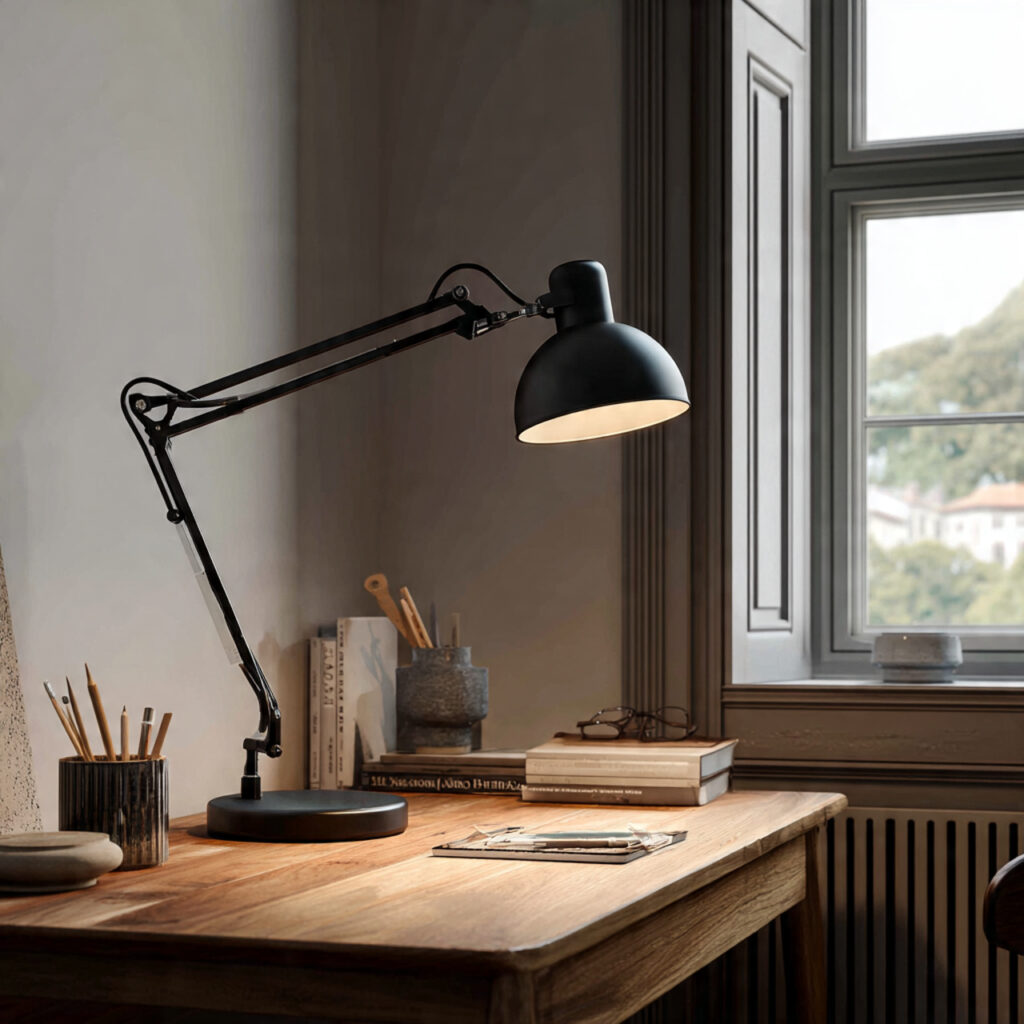
A task lamp should be functional but visually unobtrusive. Look for designs with flexible arms and heads, finished in a matte black or white. Its purpose is to provide concentrated light for working, fitting seamlessly into the minimalist design without becoming a statement piece.
Textured Linen Curtains
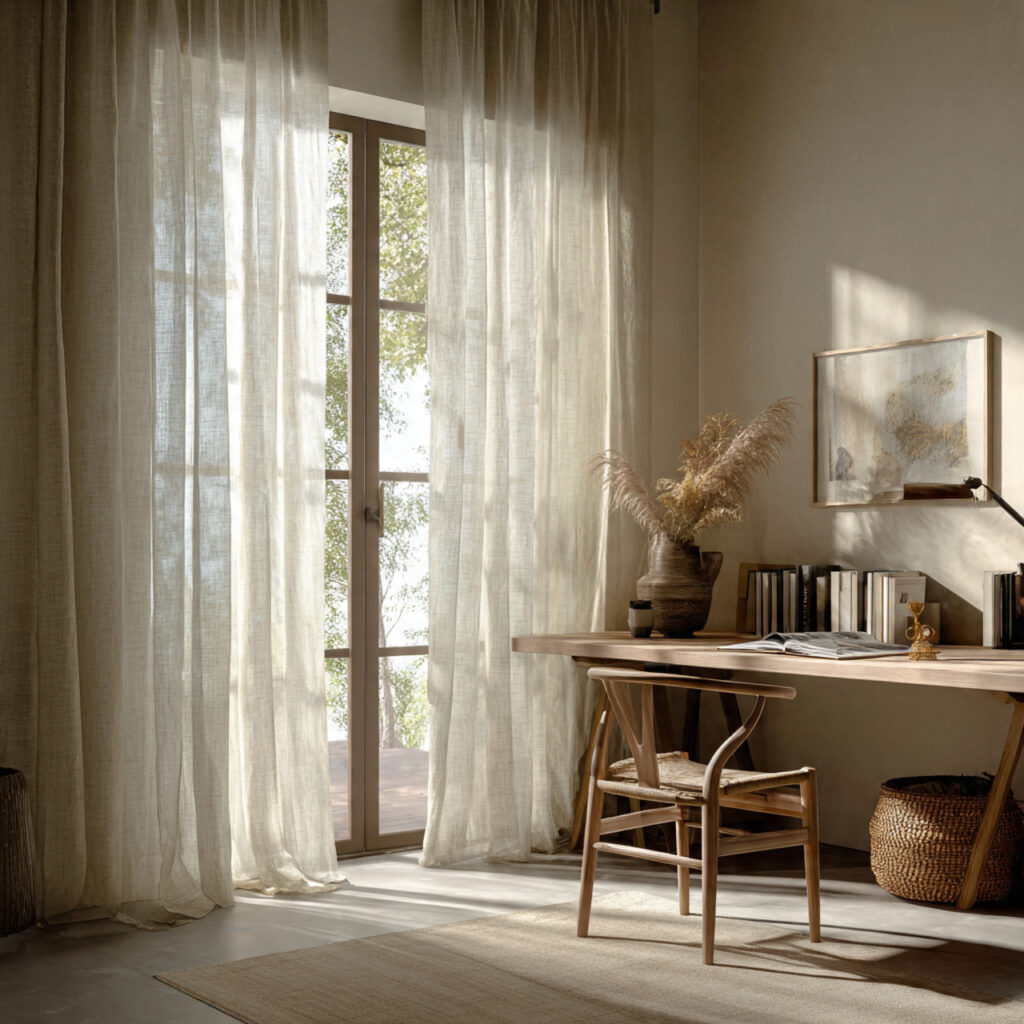
Replace heavy drapes or harsh blinds with sheer linen or cotton voile curtains. These textiles filter natural light softly, enhancing the ethereal quality of the room and reinforcing the natural, organic textile theme. They provide privacy while maintaining a bright, airy atmosphere.
Bringing Biophilic Design Indoors
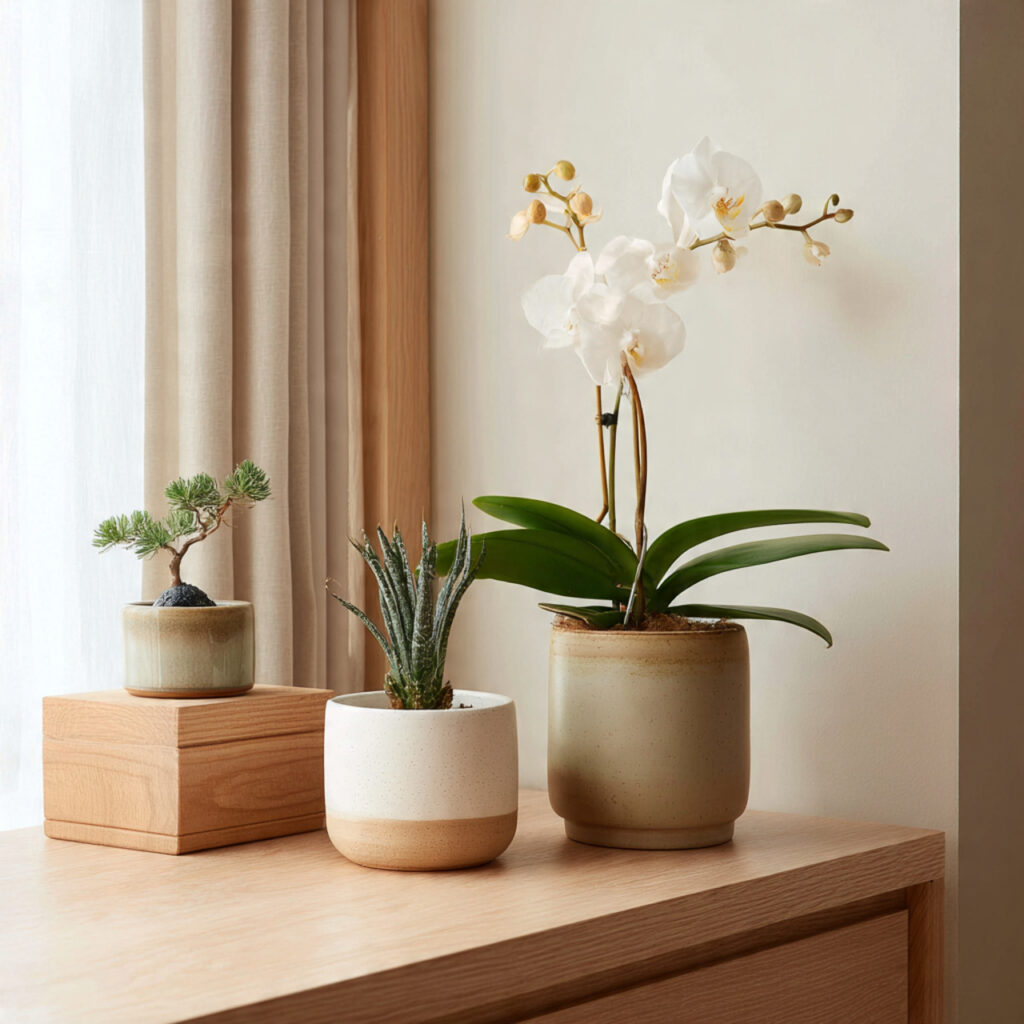
Integrate nature subtly but deliberately. Select plants with simple, architectural forms, such as bonsai, snake plants, or a single-stemmed orchid. The presence of living things connects the office to the natural world, a core principle of both Japanese and Nordic design philosophies.
Simple Ceramic Planters
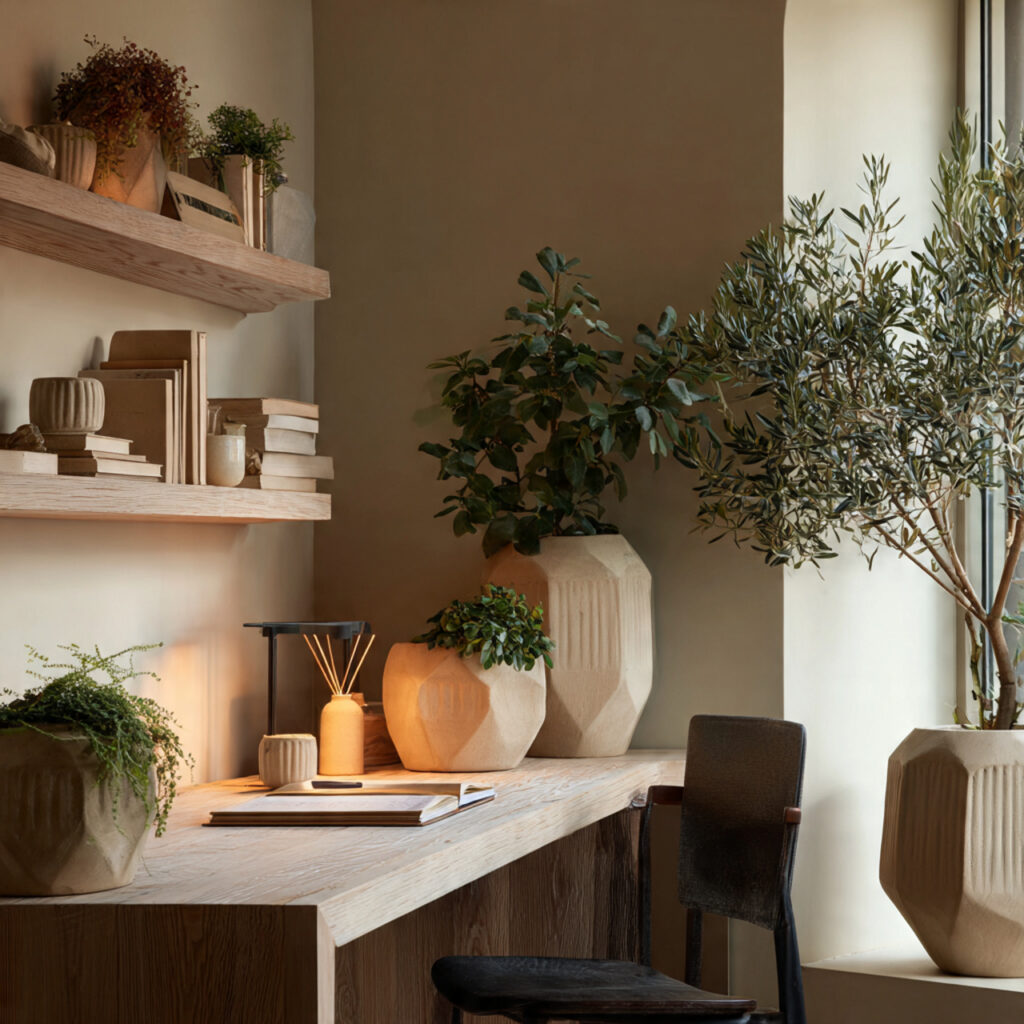
The container for the plant is as important as the plant itself. Use unglazed, handmade ceramic planters in neutral tones—off-white, terracotta, or muted grey. The slightly imperfect texture and handmade nature of the ceramics adhere perfectly to the Wabi-Sabi appreciation of the natural world.
The Importance of Negative Space
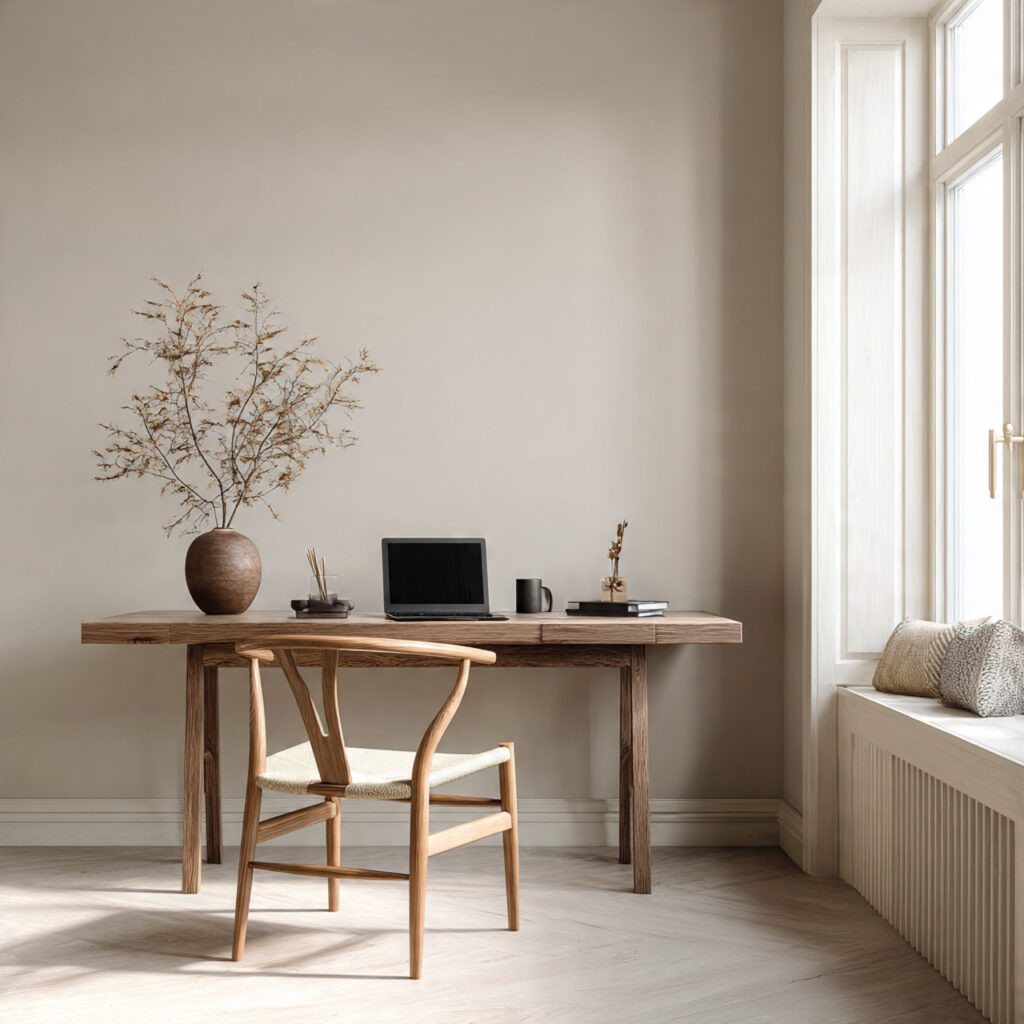
Negative space, or blank areas, is a deliberate design component in Japandi style. Do not feel compelled to fill every corner. Allowing walls and surfaces to breathe draws attention to the few, high-quality items present and gives the mind room to focus without visual interruption.
Tatami Mats for Zoning
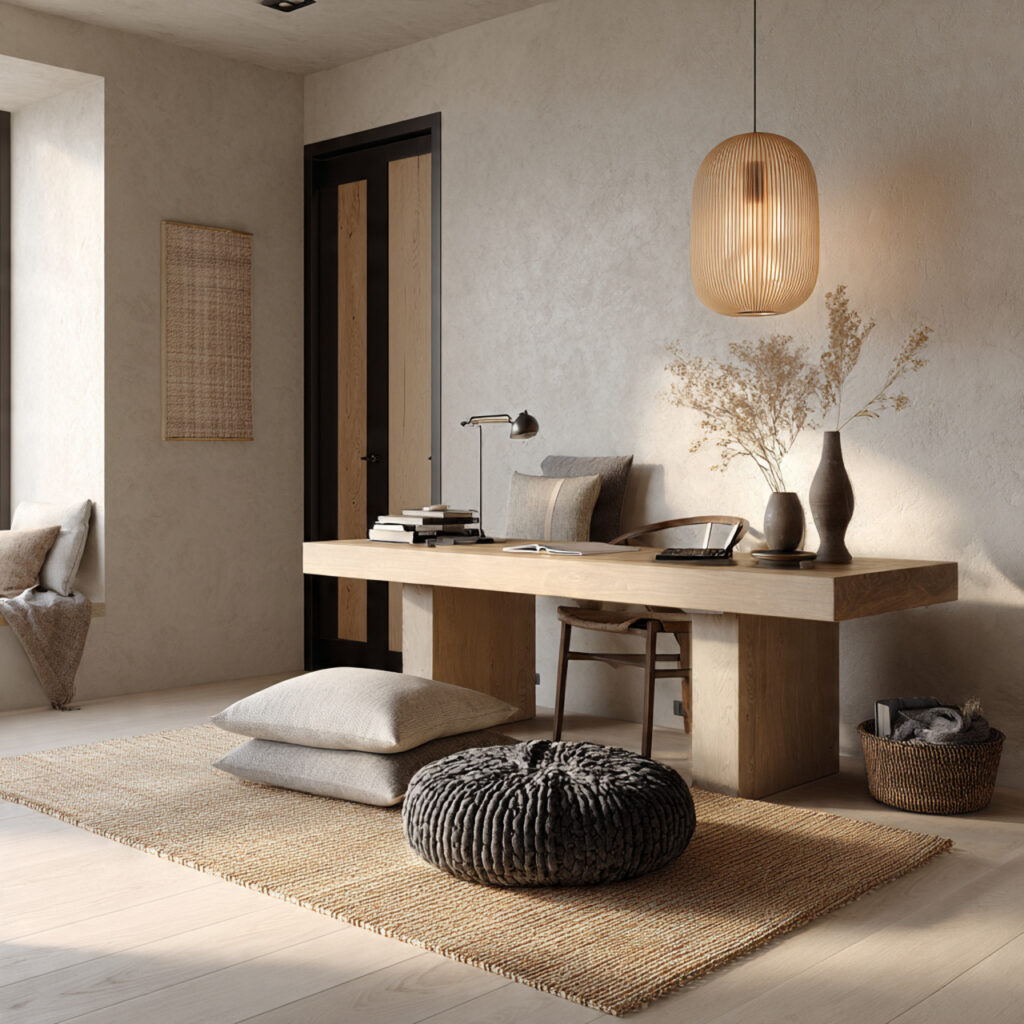
Use a traditional, natural-fiber Tatami-style rug or mat to define the main working area within a larger room. This serves as a warm, textural contrast to hard floors and subtly separates the office zone from the rest of the home, aiding in mental separation between work and leisure.
Visit Also : Bedroom Headboard Ideas
Exposed Wood Grain Furniture
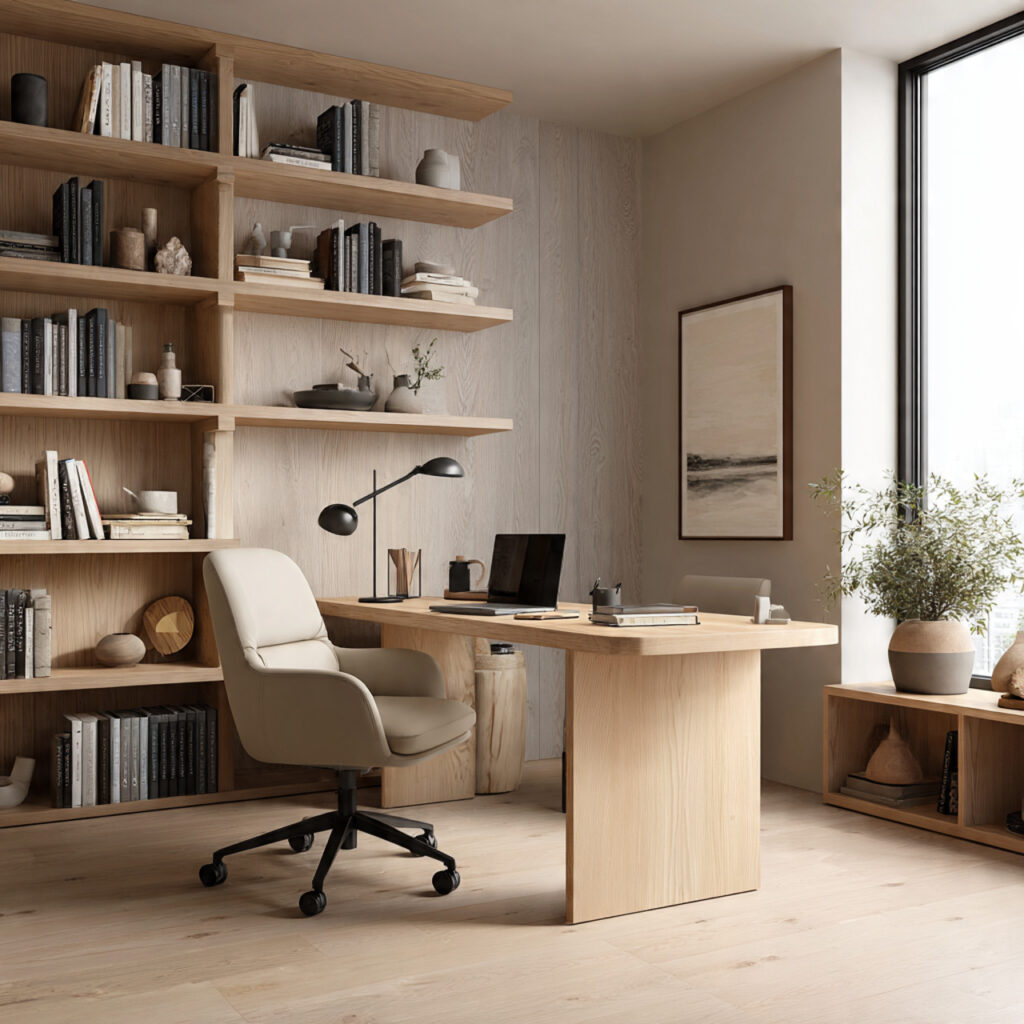
Furniture pieces should openly display their construction and material. Avoid painted surfaces and instead choose pieces where the wood grain is visible and palpable. This honesty in material promotes a grounding feel and highlights the beauty of natural imperfections.
Handmade Pottery Accessories
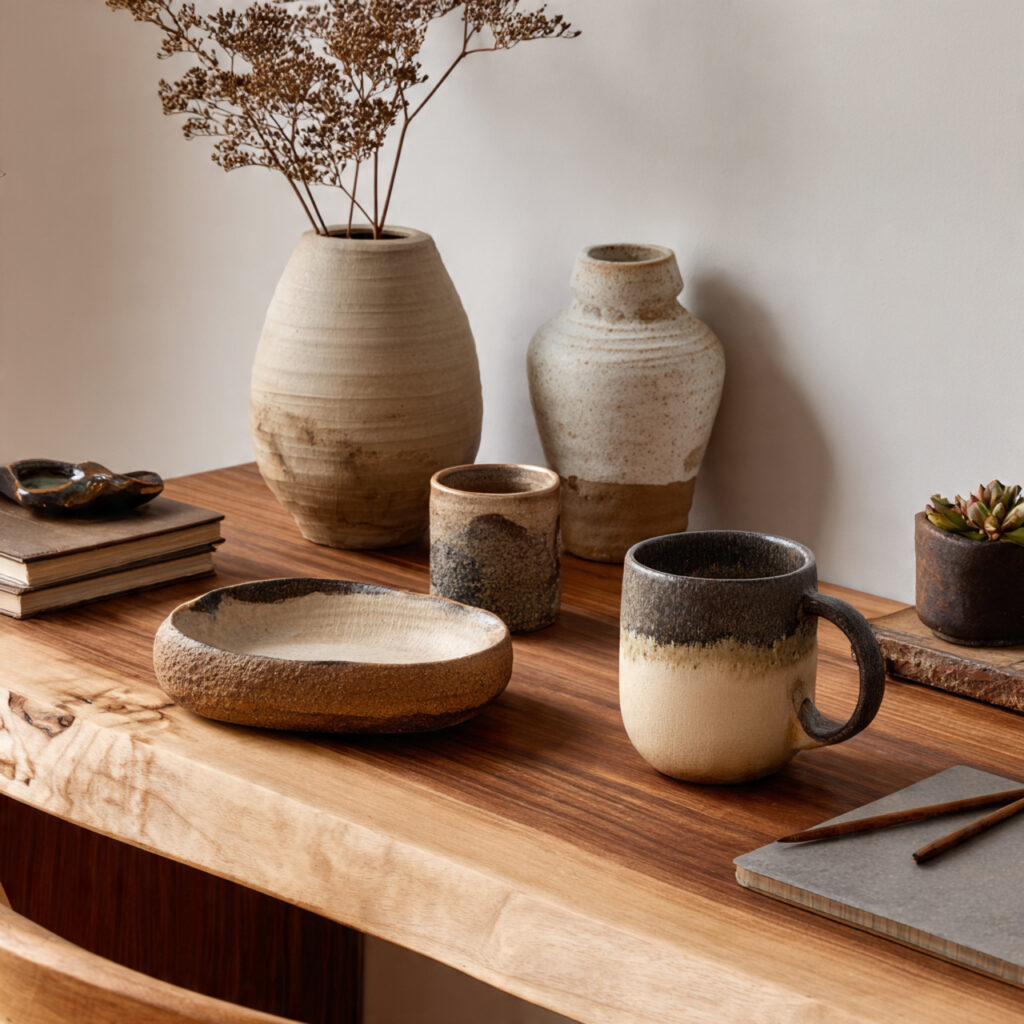
Incorporate small pottery items—a shallow dish for paperclips, a mug for pens, or a simple vase—to hold desk essentials. These accessories introduce tactility and the human element, making the office feel less sterile and more like a cherished personal space.
Vertical Organization Principles
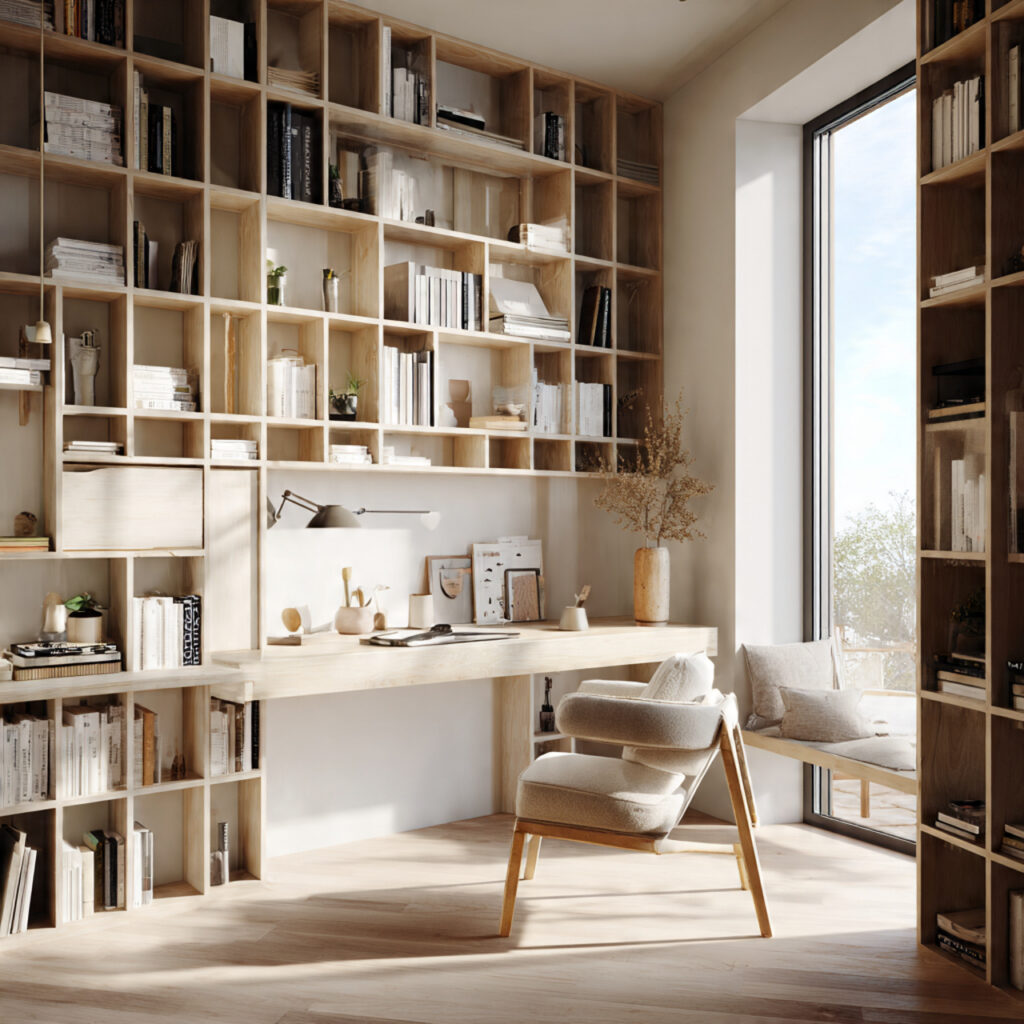
Utilize vertical space wisely, but keep it covered or highly organized. Use tall, narrow shelving units with clean, flat fronts, or employ a modular wall system. The key is to draw the eye upward without creating visual clutter, using height to maximize storage without sacrificing floor space.
Sustainable Materials for Desks
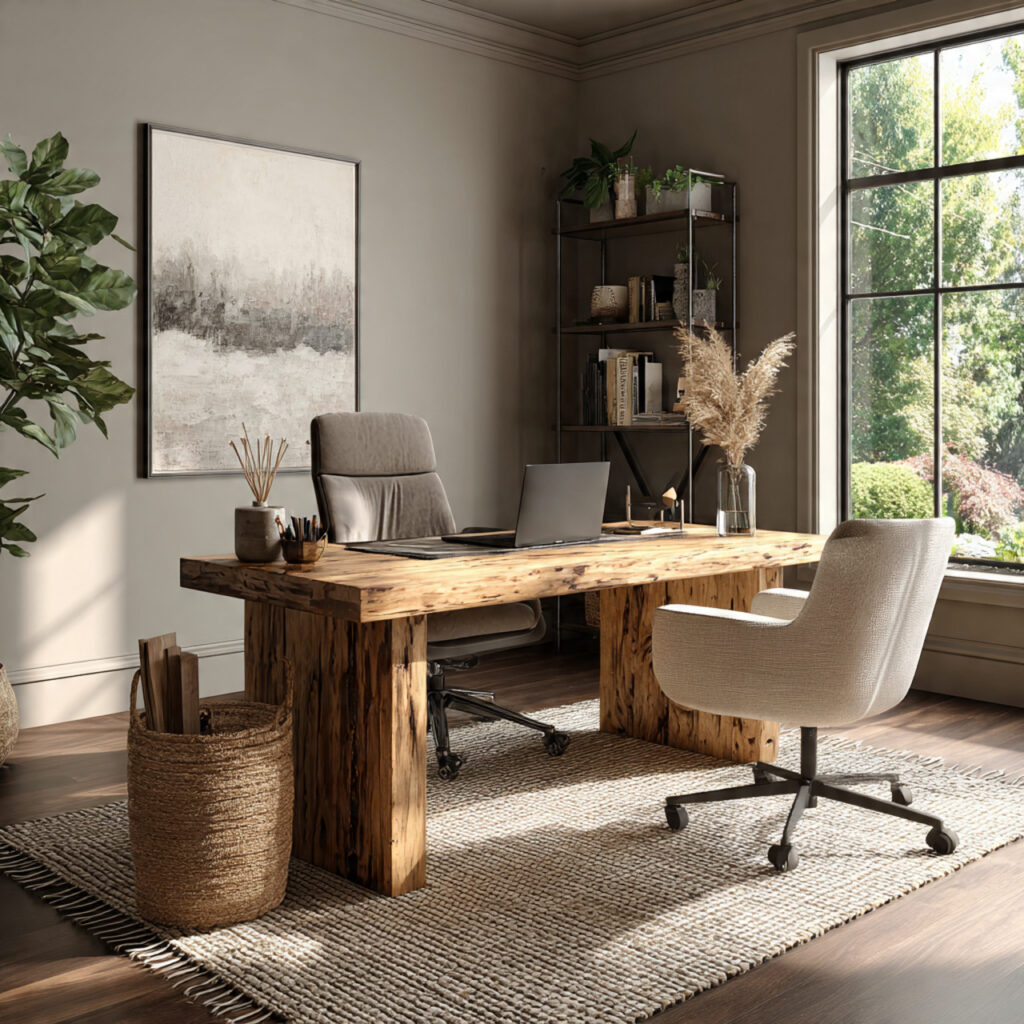
Prioritize sustainability by choosing furniture made from reclaimed or locally sourced wood, bamboo, or recycled materials. This commitment reflects the Nordic emphasis on ecological consciousness and the Japanese reverence for nature, making your office ethically sound as well as aesthetically pleasing.
Zen Garden Desk Elements
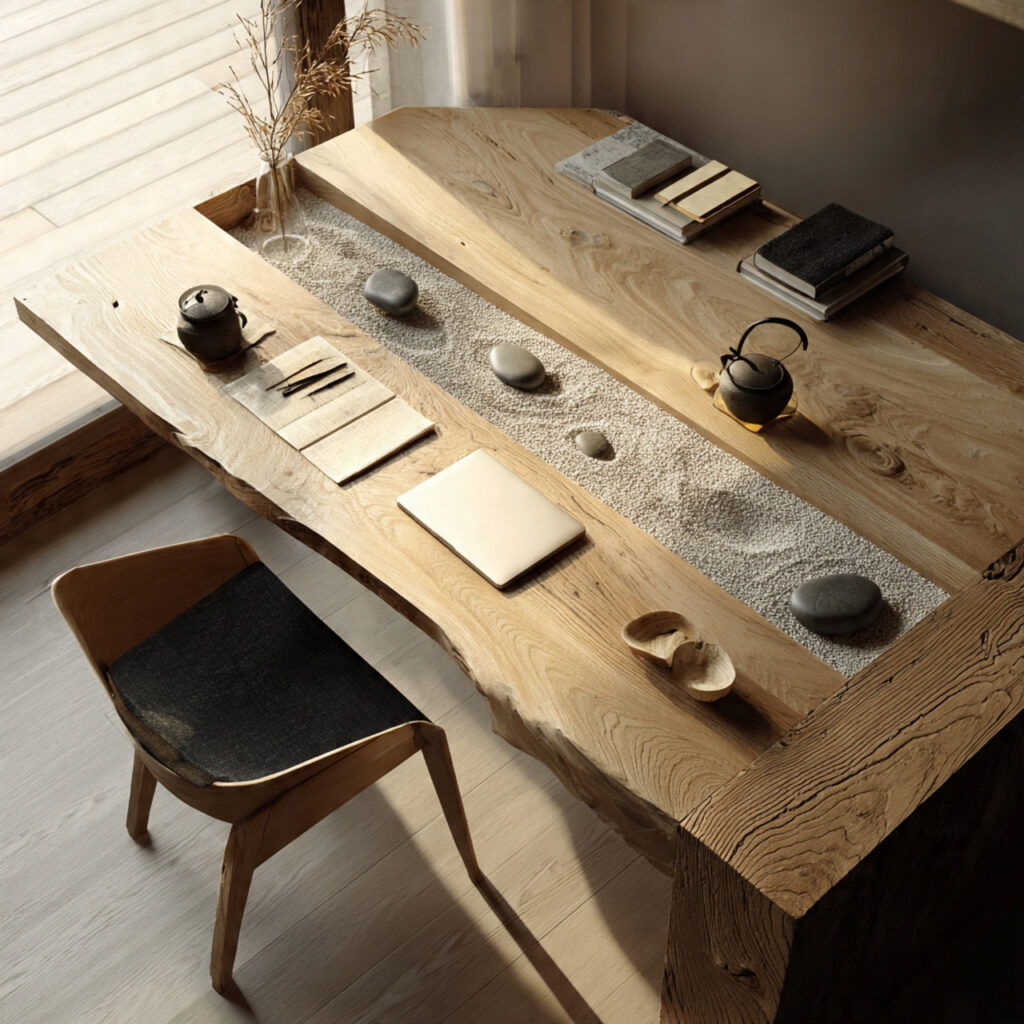
For a moment of mindfulness, place a small, contained Zen garden or a tray of river stones on a corner of your desk. This micro-landscape provides a subtle, tactile distraction for short breaks, encouraging mental reset and reinforcing the overall theme of tranquility and balance.
The Use of Black Accents
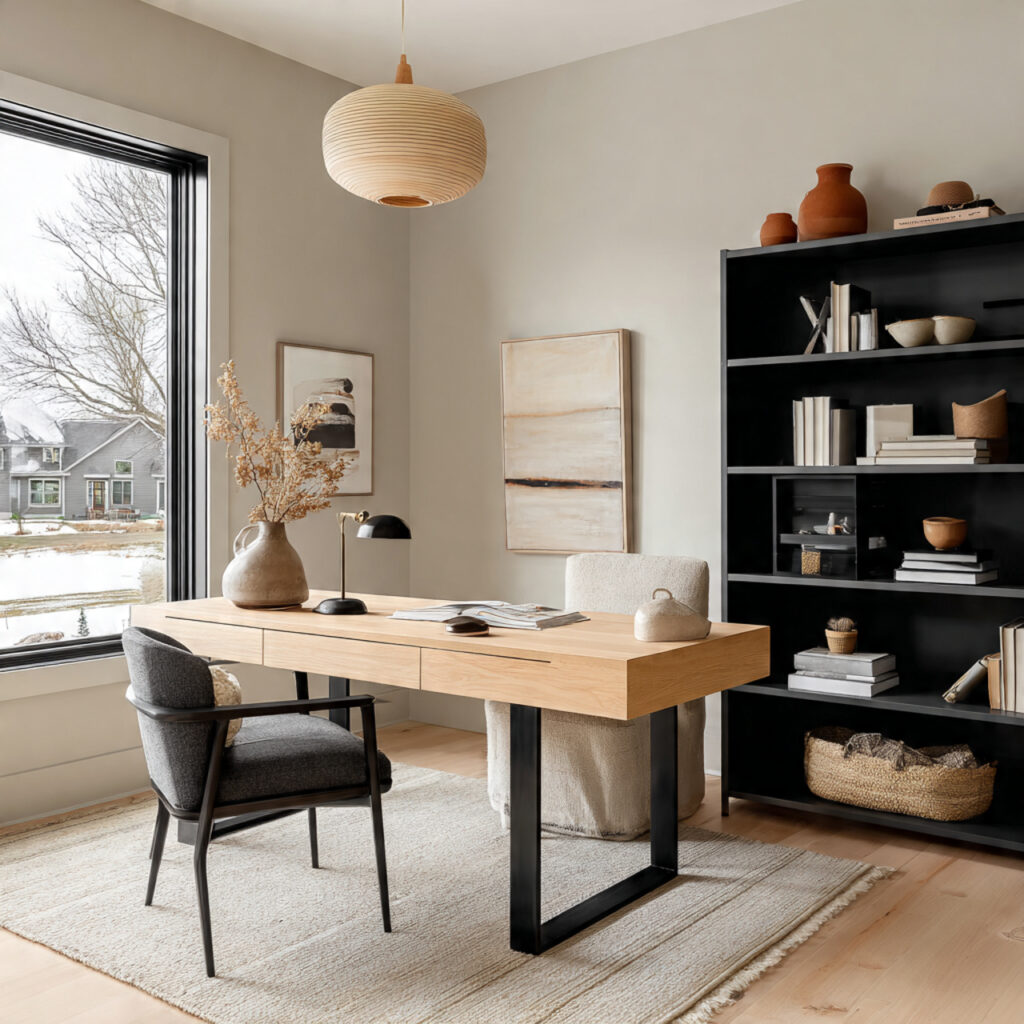
Introduce sharp contrast using matte black metal in frames, hardware, or thin table legs. This nod to traditional Japanese architecture (where black is often used structurally) defines edges and grounds the otherwise light, airy Scandinavian elements, adding sophistication and visual structure.
Integrating Hidden Cables
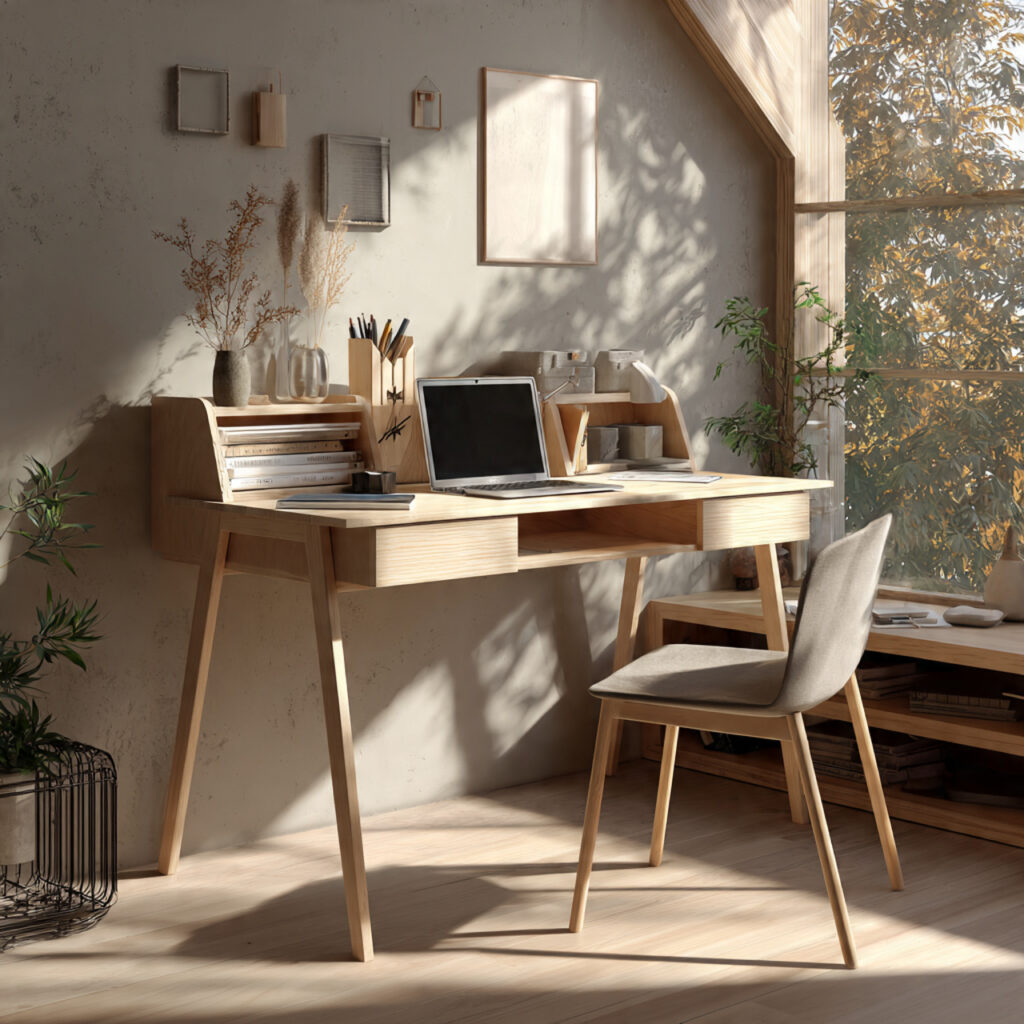
Nothing detracts from the serenity of a Japandi office like messy cables. Invest in cable management solutions—wraps, sleeves, desk grommets, or channels fixed to the underside of the desk. The workspace should appear wireless, allowing energy and attention to flow unobstructed.
Floor Cushions for Breaks
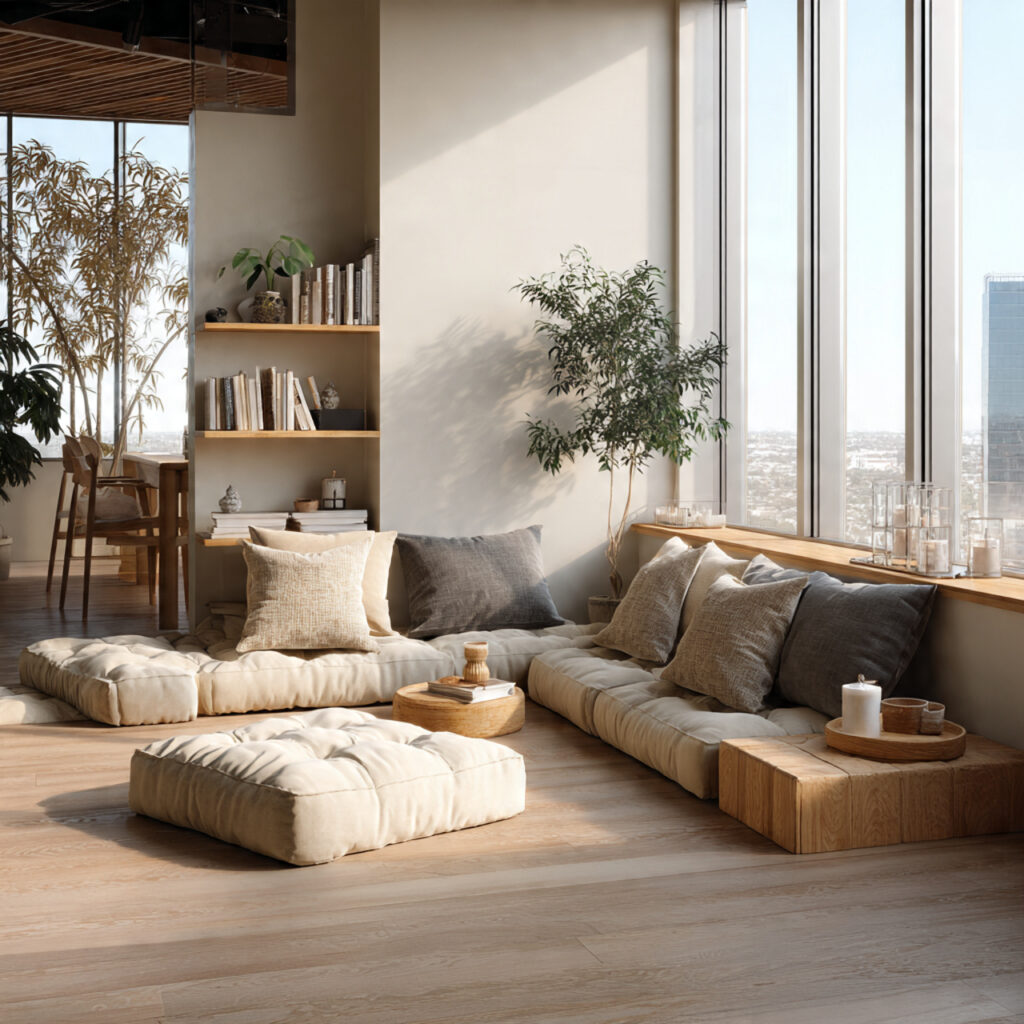
Place large, simple, solid-colored floor cushions (Zabuton-style) in a corner. These are perfect for brief stretching, meditation, or just shifting posture away from the desk. They embody the relaxed, comfortable aspect of Hygge while maintaining the floor-level living favored in Japan.
Off-White Wall Treatments
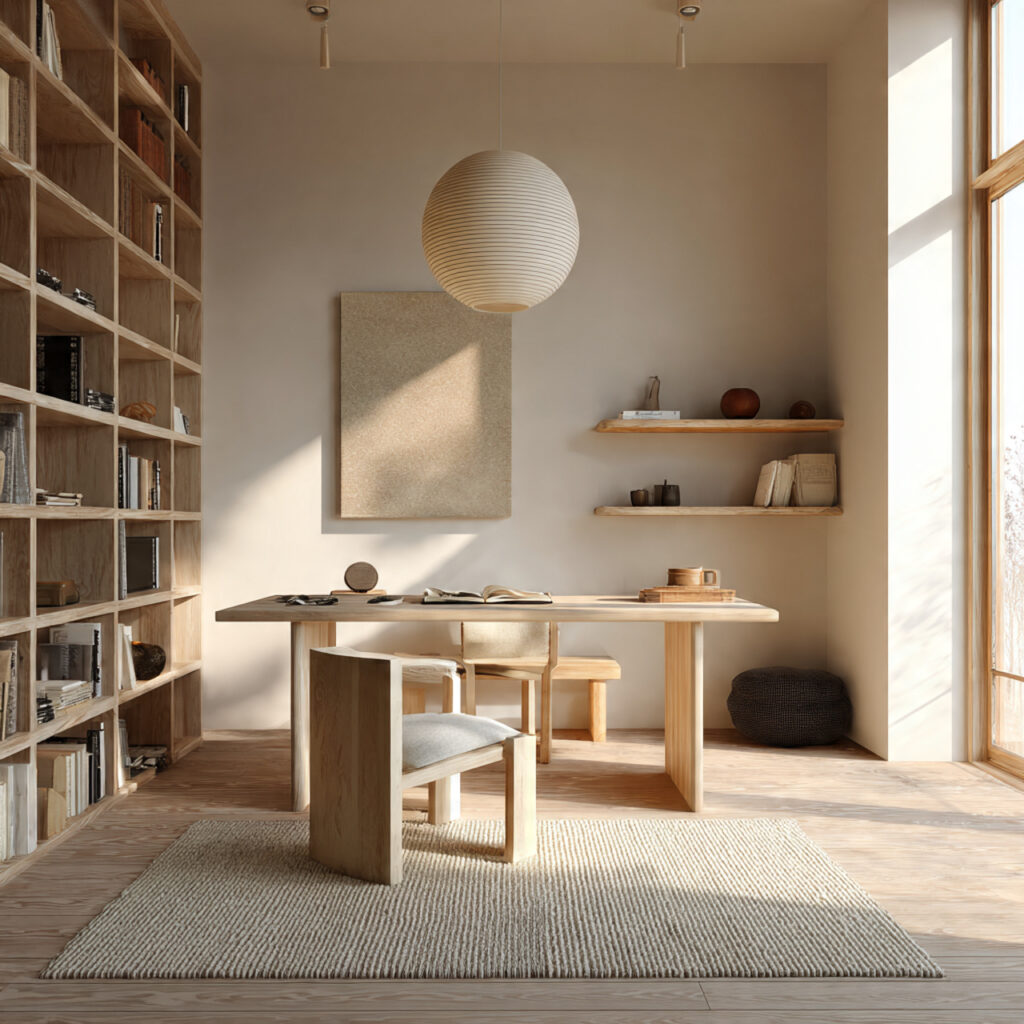
Instead of stark, cold white, use off-white, cream, or very pale beige paints on the walls. These warmer, subtle tones help reflect light and provide a softer, more inviting backdrop for the wood and textile elements, enhancing the overall feeling of calm and warmth.
Clean Lines and Geometric Shapes
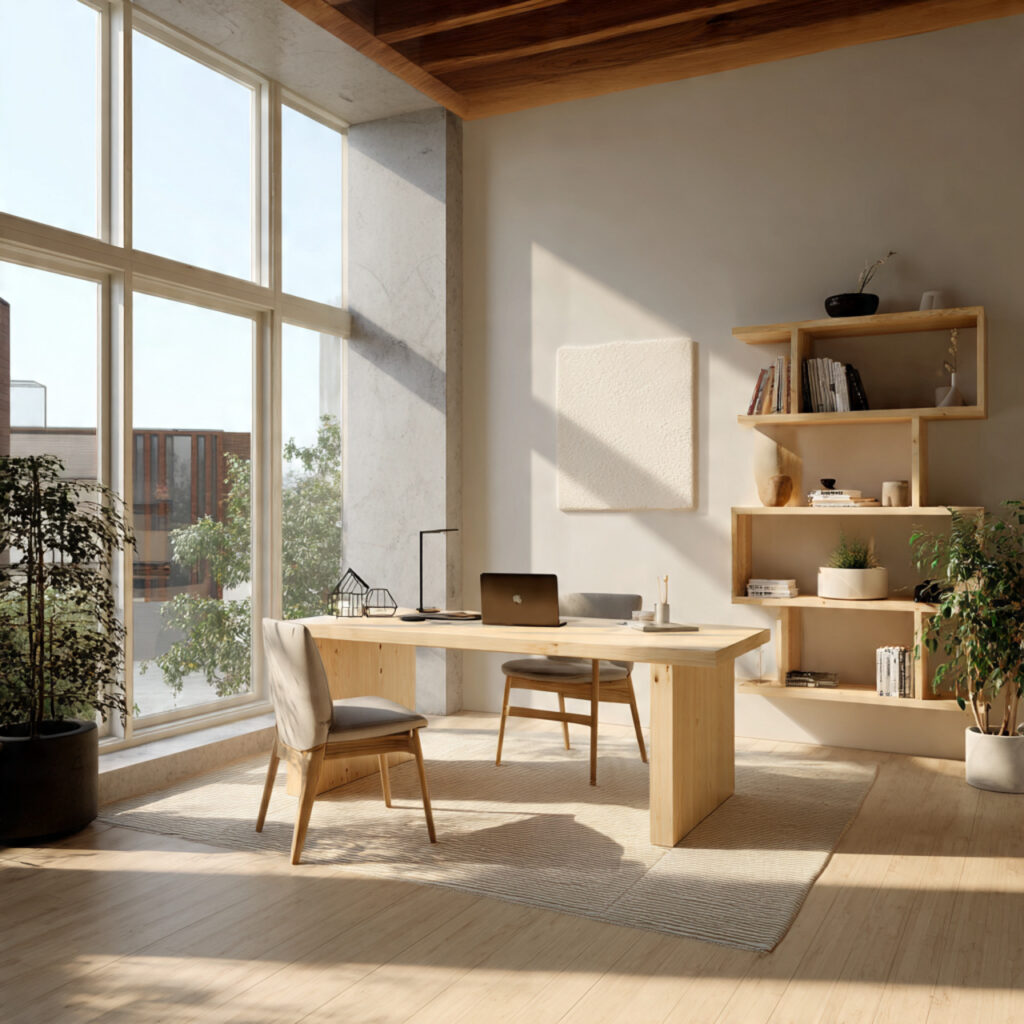
Furniture and decor should feature simple, straight lines and basic geometric forms (squares, circles, rectangles). Avoid overly ornate carvings, curves, or excessive embellishment. This strict adherence to pure form reinforces the design’s focus on functionality and timeless quality.
FAQs About Japandi Home Office
What is the difference between Japandi and Scandinavian design?
Scandinavian design (Hygge) is inherently warmer, often using lighter woods, white walls, and bright pops of color, focusing on comfort and coziness. Japandi is a hybrid that brings in the Japanese aesthetic of Wabi-Sabi and Ma (negative space). It incorporates darker, moodier accents, more raw, imperfect textures, and a stricter focus on stark, functional minimalism, creating a more refined balance.
What colors should I use for a Japandi home office?
The core palette is primarily neutral and earthy. Think soft taupes, muted browns, oatmeal, cream, and warm greys. These are accented by the dark, grounding tones of charcoal or matte black. You should strictly avoid bright, saturated colors, preferring instead the natural hues found in raw wood, stone, and plant life.
Are plants necessary for a Japandi workspace?
While not strictly necessary, plants are highly recommended and fit perfectly into the Japandi philosophy, which values biophilic design and connecting with nature. Choose plants that require minimal care and have a sculptural, architectural quality, such as a bonsai, snake plant, or a single large Monstera leaf in a minimalist vase to reinforce the natural element.
What are the key furniture pieces for a Japandi home office?
The most critical pieces are a simple, solid wood desk (often low-profile), an ergonomic chair covered in a natural fiber, and closed, discrete storage units. Every piece must be high-quality, functional, and devoid of unnecessary visual complexity. The focus is on form following function with a clean, low-slung silhouette that grounds the room.
How do I make a Japandi office feel cozy, not stark?
The coziness (Hygge) is introduced through texture. Layer natural fabrics like linen, wool, and cotton through throw blankets, seat cushions, and window treatments. Use warm-toned wood and indirect, soft lighting from Scandinavian-style lamps. These textures and light sources provide the essential warmth that balances the clean, stark lines of the Japanese minimalist elements.
Conclusion
The Japandi Home Office is more than just a trend; it’s a philosophy for productive, peaceful living. By integrating the Japanese reverence for nature and imperfection with the Scandinavian focus on light, warmth, and simple comfort, you create a space that actively supports your mental well-being and professional focus.
Embracing the Japandi aesthetic means committing to intentionality—choosing quality over quantity and prioritizing silence over noise. The ultimate reward is a workspace that not only looks beautiful but acts as a daily reminder to slow down, appreciate the simple things, and find harmony in your everyday environment.